Quranic Answer
The concept of truthfulness and honesty is a central tenet within the teachings of the Holy Quran, where the values of integrity and sincerity are illuminated, and falsehood is condemned as a deeply negative trait. This article will explore the implications of truthfulness and the perils of lying as articulated in the Quran, particularly in Surah Al-Baqarah and Surah Al-Hajj, while discussing the psychological and social ramifications of these concepts in our daily lives. At the heart of these teachings lies a profound understanding of the human condition and the fundamental struggle between truth and deception. In Surah Al-Baqarah, verse 10, Allah states, "In their hearts is a disease, so Allah has increased their disease." This verse serves as a poignant reminder that those who habitually engage in lying are not merely engaging in a harmful behavior but are also suffering from a deeper malaise. The "disease" referenced signifies emotional and spiritual turmoil that stems from dishonesty. In essence, lying may represent a weakness of character—a reaction driven by fear, insecurity, or a desperate attempt to escape the burdens of reality. The Quran does not only highlight the spiritual consequences of deception but also emphasizes the psychological pathways leading to such behavior. When a person becomes accustomed to lying, they may find themselves trapped in a cycle of deceit where truth becomes obscured. The initial act of lying may stem from a specific circumstance; however, as this behavior is repeated, it gradually evolves into a habit. Over time, individuals may feel compelled to continue lying merely to preserve their existing situation, even if it requires constructing a web of further deceit. This illustrates a profound psychological shift, where honesty becomes uncomfortable or unfeasible, and the individual may become more estranged from their own values and beliefs. Turning our attention to Surah Al-Hajj, verse 30, we encounter another compelling directive: "So shun false statement; for veracity and integrity empower the individual and safeguard him from misguidance." This verse underscores that lying not only harms the individual but also acts as a barrier to the pursuit of truth. Within the context of this verse, the Allah articulates the empowering nature of honesty—it is through truthfulness that we can reinforce our moral compass and navigate through the complexities of life without straying into misguidance. To further understand the significance of these teachings, it is crucial to consider the social implications of lying and truthfulness. In a society laden with misinformation and deceit, honesty stands as a bedrock of trust and cooperation. When individuals prioritize honesty in their interactions, they cultivate a sense of reliability that strengthens community ties and fosters healthy relationships. Conversely, widespread dishonesty can lead to a breakdown of trust, resulting in societal fragmentation and conflict. Moreover, the psychological effects of dishonesty, on both individual and collective levels, merit deeper examination. When individuals engage in deception, they often experience feelings of guilt, shame, and anxiety. The internal conflict between their actions and their moral compass can lead to emotional distress and a lack of inner peace. This psychological toll is not only detrimental to the liar but can also affect relationships with those around them, as trust is eroded and genuine communication is compromised. Encouragingly, the Quran advocates for a return to truthfulness as a means of fostering emotional and spiritual health. When individuals embrace honesty, they experience a sense of liberation and authenticity that empowers them to face life's challenges with resilience. In practice, this means making conscious decisions to communicate openly and transparently, fostering an environment where truth is valued and celebrated. In conclusion, the teachings of the Holy Quran provide a profound framework for understanding the virtues of honesty and the detrimental effects of lying. As articulated in Surah Al-Baqarah and Surah Al-Hajj, truthfulness is depicted as a vital component of emotional, spiritual, and social wellbeing. Individuals are urged not only to seek the truth but also to actively shun falsehood to create a life filled with integrity, trust, and genuine connections. In a world where deception can easily take root, the teachings of the Quran serve as a guiding light, reminding us that the path to true peace and happiness lies in our steadfast commitment to the truth. Ultimately, the pursuit of honesty enriches our lives and the lives of those around us, granting us the clarity and stability needed to navigate through life's complexities with grace and purpose.
Related Verses
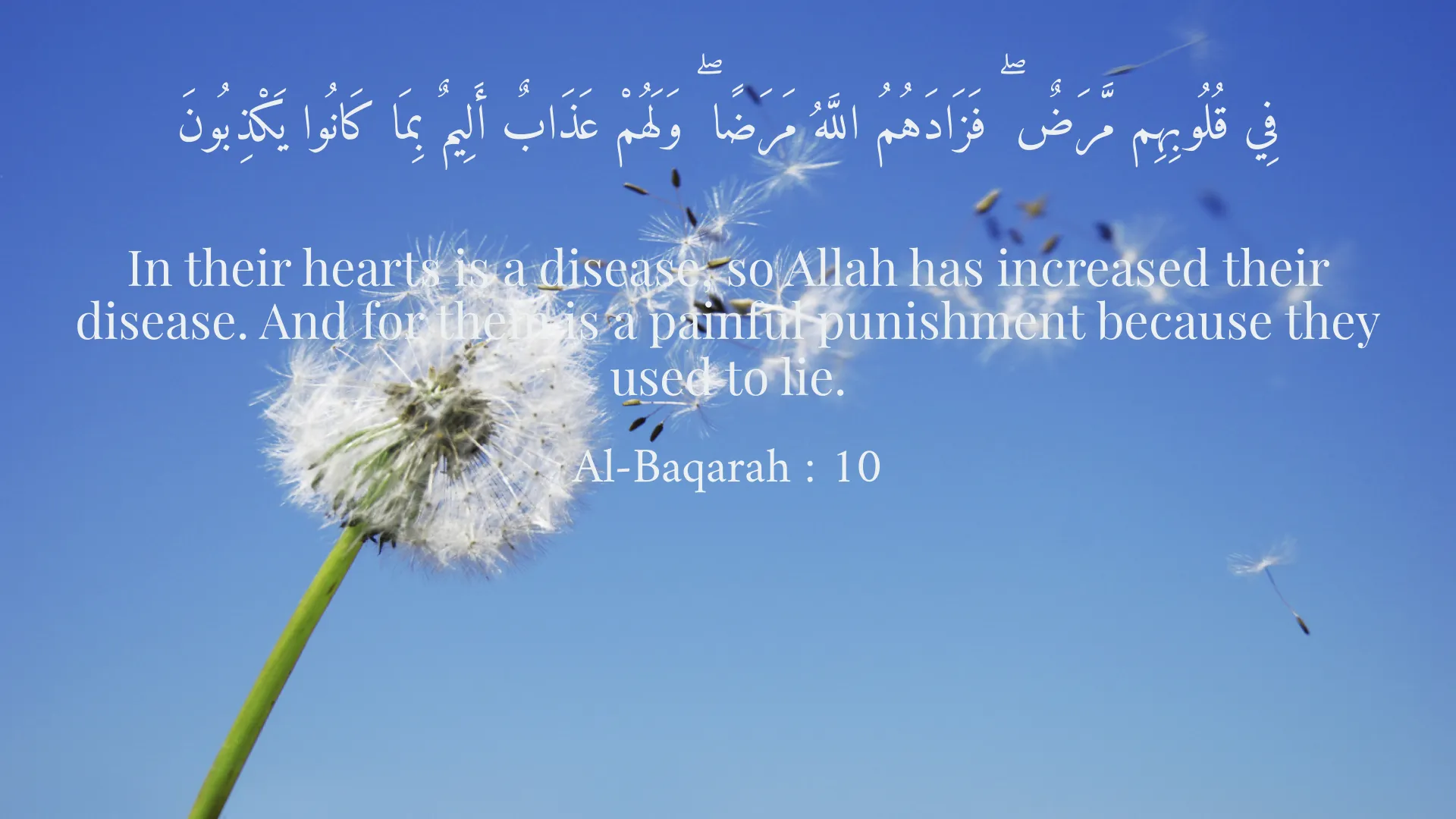
فِي قُلُوبِهِم مَّرَضٌ ۖ فَزَادَهُمُ اللَّهُ مَرَضًا ۖ وَلَهُمْ عَذَابٌ أَلِيمٌ بِمَا كَانُوا يَكْذِبُونَ
In their hearts is a disease, so Allah has increased their disease. And for them is a painful punishment because they used to lie.
Al-Baqarah : 10
فَاجْتَنِبُوا الرُّجْسَ مِنَ الْأَوْثَانِ وَاجْتَنِبُوا قَوْلَ الزُّورِ
So shun false statements.
Al-Hajj : 30
Short Story
Once there was a man named Saeed who had a habit of lying. One day he told a friend how easy it was to lie and how each time he did, he felt relaxed. But after a while, he came across a verse from the Quran that said, 'Truthfulness is the path to salvation.' He realized that honesty brings him freedom and peace, and from that day forward, he tried to speak the truth and stay away from lying.