Quranic Answer
The exploration of hypocrisy and the pursuit of attention within the context of the Holy Quran reveals profound insights into human behavior and morality. Hypocrisy, or insincerity in one's actions, is specifically cautioned against in numerous verses of the Quran. This concept extends beyond merely lip service; it delves into the intention behind deeds, especially those of a religious nature. In Surah Al-Baqarah, verse 264, Allah instructs believers not to invalidate their charitable acts through reminders of their generosity or by inflicting harm upon those they assist. The verse states: 'O you who have believed, do not invalidate your charities with reminders or injury.' This clear and direct admonishment emphasizes a crucial principle in Islamic ethics—that the act of giving should stem from a pure heart, motivated by genuine compassion rather than the desire for recognition or praise from others. The emphasis on sincerity ties back to a broader Islamic teaching that prioritizes the internal state of a believer over their outward actions. People may engage in religious acts intending to seek fame or social recognition; however, such motivations are fundamentally at odds with the essence of Quranic teachings. The Quran consistently reminds followers that the quality and intention behind their actions far outweigh any public acknowledgment they might receive. To perform good deeds for the sake of societal approval undermines the authenticity of those deeds, and Allah is well aware of the intentions behind every action, as reiterated in multiple Quranic verses. In Surah Al-Ma'idah, verse 54, Allah states: 'O you who have believed! Whoever of you should revert from his faith – his faith has certainly become a burden to him, and Allah will bring forth a people He will love and who will love Him.' This verse reinforces the idea that faith should not merely be a public display or a matter of convenience; it must be a true commitment rooted in sincere belief and action. Those who may abandon their faith or practice it superficially due to societal pressures or personal gain lose sight of the true essence of spirituality. Furthermore, Allah promises to replace those who lack sincerity with individuals who genuinely embrace their faith, emphasizing that divine love is reserved for the sincere believer. The Quran adeptly navigates around the theme of hypocrisy not only by presenting admonitions but also through the stories of past communities and their downfalls due to insincerity. The consequences of hypocrisy are often portrayed in a manner that showcases Allah’s displeasure towards those who misrepresent their faith. The Quran acknowledges that while humans might sometimes be tempted by worldly desires, the focus must remain on cultivating an honest relationship with Allah. By examining these narratives, believers gain insight into the importance of remaining steadfast and sincere, regardless of external circumstances. Moreover, the distinction between genuine faith and the façade of belief draws parallels to contemporary societal dynamics. In a world that increasingly values social media presence and public image, many might unknowingly fall into the trap of performing religious acts for the sake of appearances. The quest for validation through likes, shares, or public acknowledgment can dilute the depth of one’s spiritual journey. The Quran serves as a perennial reminder that human hearts are the ultimate judges of authenticity. One’s worth in the eyes of Allah transcends transient fame or social validation. Intention, or Niyyah in Arabic, plays a pivotal role in determining the value of any act, especially in matters of faith. The Prophet Muhammad (peace be upon him) stated, 'Actions are judged by intentions, and each person will be rewarded according to their intention.' This hadith underpins many Quranic teachings, reinforcing the need for true sincerity in all actions—be they rituals like prayer or charitable deeds. When believers act with the sole intention of pleasing Allah and fulfilling their faith, they nourish a connection that serves as a refuge from the superficial norms of society. Thus the concept of religious fame, when stripped away from its glamor, reveals a core principle of Christian ethics: that one must strive for inner purity while extending kindness and charity to others. The focus should not be on how others perceive these acts but rather on the individual's relationship with God. In this, believers are called to elevate their souls and engage in acts of goodness that reflect their understanding of their faith. Additionally, the Quran provides the framework for individuals to assess their own motivations regularly. Self-reflection is a crucial process for a genuine believer; it aids individuals in evaluating whether their actions stem from a place of authenticity or if they have succumbed to the lure of hypocrisy. Engaging in authentic worship and deeds without the cloud of public scrutiny will forge a stronger bond with the Creator. Through self-assessment, individuals can realign their paths toward sincerity, dispel vanity, and find fulfillment in the genuine practice of their faith. Conclusively, the notions presented in the Holy Quran regarding hypocrisy and the pursuit of attention remind believers that sincerity is paramount. The intrinsic value of actions lies not in public acknowledgment but in the content of one’s heart and intention. Worship and good deeds should be untainted by the desire for recognition—rooted in love and fear of Allah, serving as a compass for a life led in accordance with divine principles. The reminders illustrated through various verses serve not only as warnings but as guiding lights that encourage believers to tread the path of authenticity and integrity in their spiritual journey.
Related Verses
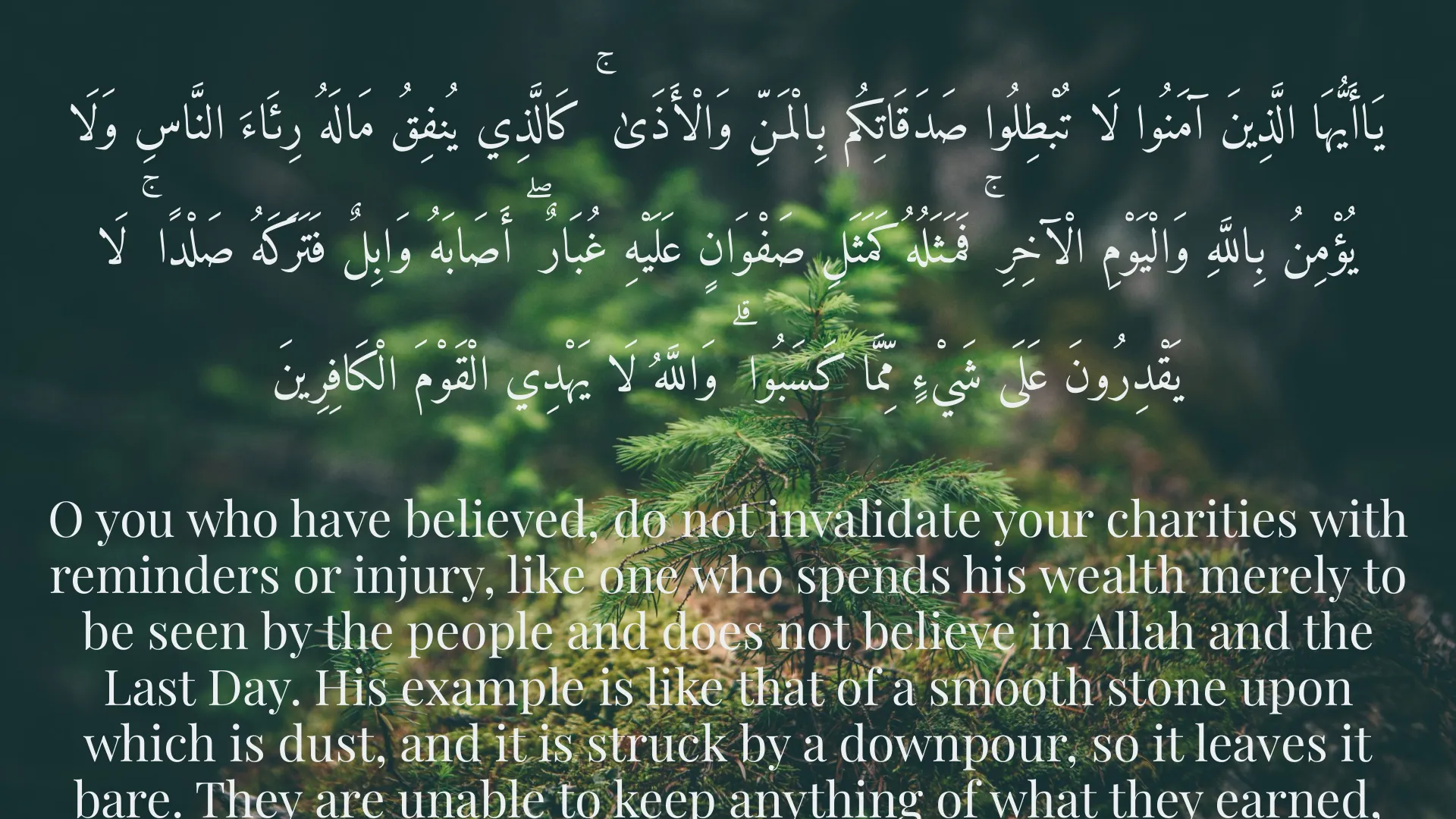
يَاأَيُّهَا الَّذِينَ آمَنُوا لَا تُبْطِلُوا صَدَقَاتِكُم بِالْمَنِّ وَالْأَذَىٰ ۚ كَالَّذِي يُنفِقُ مَالَهُ رِئَاءَ النَّاسِ وَلَا يُؤْمِنُ بِاللَّهِ وَالْيَوْمِ الْآخِرِ ۚ فَمَثَلُهُ كَمَثَلِ صَفْوَانٍ عَلَيْهِ غُبَارٌ ۖ أَصَابَهُ وَابِلٌ فَتَرَكَهُ صَلْدًا ۚ لَا يَقْدِرُونَ عَلَى شَيْءٍ مِّمَّا كَسَبُوا ۗ وَاللَّهُ لَا يَهْدِي الْقَوْمَ الْكَافِرِينَ
O you who have believed, do not invalidate your charities with reminders or injury, like one who spends his wealth merely to be seen by the people and does not believe in Allah and the Last Day. His example is like that of a smooth stone upon which is dust, and it is struck by a downpour, so it leaves it bare. They are unable to keep anything of what they earned, and Allah does not guide the disbelieving people.
Al-Baqarah : 264
يَا أَيُّهَا الَّذِينَ آمَنُوا مَن يَرْتَدَّ مِنكُمْ عَنْ دِينِهِ فَسَوْفَ يَأْتِي اللَّهُ بِقَوْمٍ يُحِبُّهُمْ وَيُحِبُّونَهُ أَذِلَّةٍ عَلَى الْمُؤْمِنِينَ أَعِزَّةٍ عَلَى الْكَافِرِينَ يُجَاهِدُونَ فِي سَبِيلِ اللَّهِ وَلَا يَخَافُونَ لَوْمَةَ لائِمٍ ۚ ذَٰلِكَ فَضْلُ اللَّهِ يُؤْتِيهِ مَن يَشَاءُ ۗ وَاللَّهُ وَاسِعٌ عَلِيمٌ
O you who have believed, whoever of you should revert from his faith – his faith has certainly become a burden to him, and Allah will bring forth a people He will love and who will love Him. They are humble toward the believers, powerful against the disbelievers. They strive in the cause of Allah and do not fear the blame of a critic. This is the favor of Allah; He bestows it upon whom He wills. And Allah is All-Encompassing and Knowing.
Al-Ma'idah : 54
Short Story
One day, a teacher asked his students what makes a person seek religious fame. One student replied, 'Perhaps they want to be seen or show others how good they are.' The teacher nodded and said, 'Yes, but they must understand that doing good should be sincere and come from the heart.' He taught them that the aim of performing good deeds is to attract God's attention, not that of others.