Quranic Answer
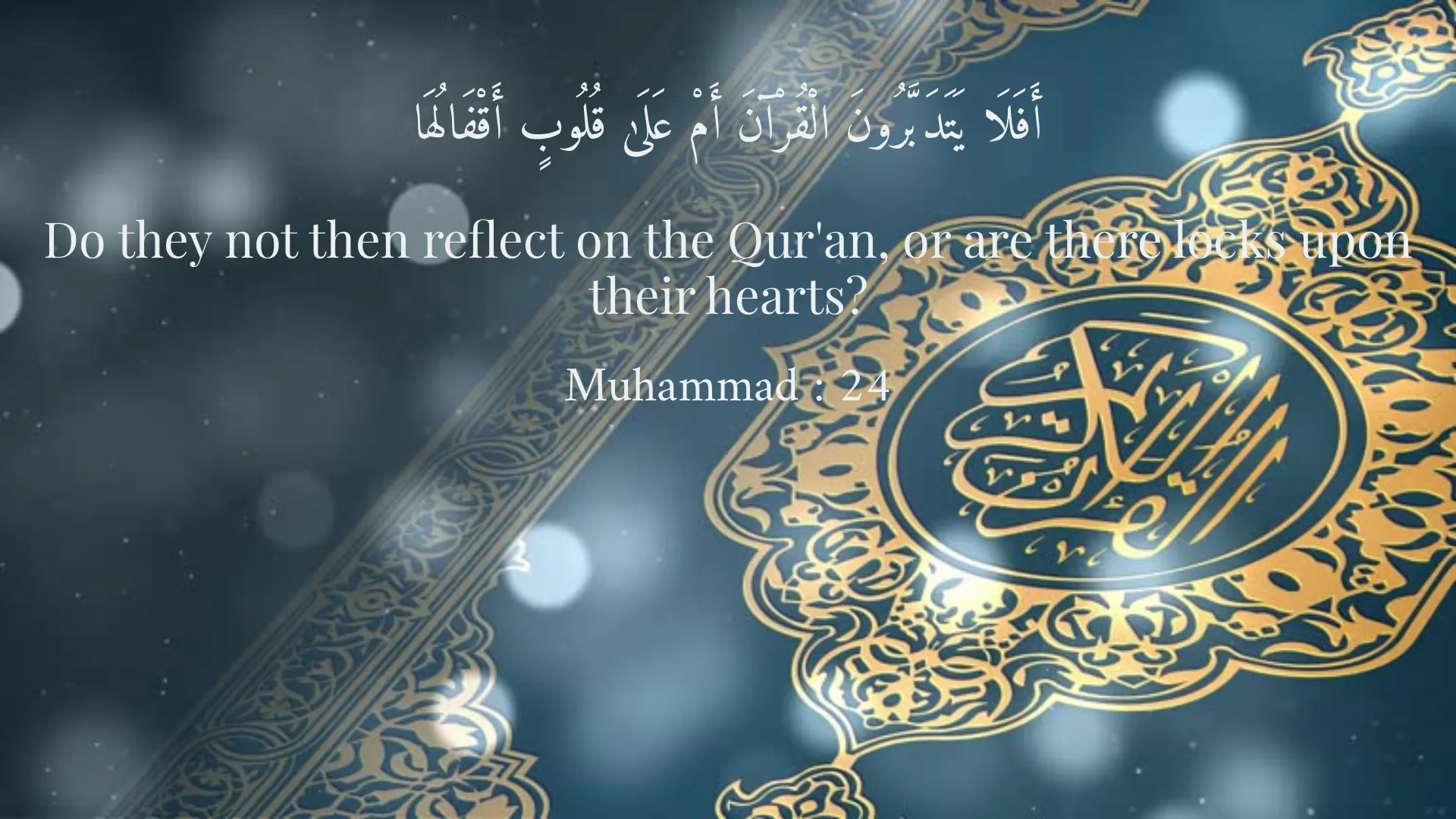
The Holy Quran, as the divine word of Allah, communicates with humanity through an unparalleled tone and a unique rhetorical style. One of the most eloquent and impactful methods employed in conveying truths and inviting contemplation is the use of interrogative sentences, frequently observed in many Quranic verses. This approach is not merely for enhancing the appeal of the discourse or capturing the listener's attention; rather, it pursues deeper and loftier objectives rooted in divine wisdom and the method of human upbringing. The Quran is not just a book of laws; it is a comprehensive guide for life, through which Allah establishes a dynamic and interactive relationship with humans, and questions play a key role in this interaction. The first and foremost reason for some verses beginning with a question is to create a fertile ground for 'reflection and contemplation.' The Quran does not intend to be merely a collection of rules and commands to be accepted without any profound thought or deliberation. Instead, it aims to challenge the human mind and guide it towards pondering and discovering truths. When a verse begins with a question such as, 'Do they not then reflect on the Qur'an, or are there locks upon their hearts?' (Surah Muhammad, verse 24), the listener or reader's mind is immediately engaged. This question is a direct invitation to deeply ponder the divine verses, and subsequently, it awakens an answer inherent within the individual. Such questions lead individuals towards self-awareness and the discovery of truth, moving them beyond a state of passivity and blind acceptance. The objective is for humans to reach 'understanding' and 'comprehension' rather than merely 'knowing.' This process solidifies the teachings in the mind and heart, transforming them into an integral part of one's character and beliefs, as the individual has arrived at the conclusion through their own reasoning. The second reason is to 'attract attention and arouse curiosity.' A question naturally draws the mind's focus and prepares the recipient for an answer or for the continuation of the discussion. For instance, the opening verses of Surah Al-Insan: 'Has there not come upon man a period of time when he was not a thing [even] mentioned?' (Surah Al-Insan, verse 1); this question instantly sparks curiosity, taking the audience on a journey into the depths of human existential history to grasp the magnificence of creation and humanity's place in existence. This interrogative method creates a strong prelude for the subsequent exposition of truths and teachings, ensuring that the audience receives the message with an open and eager mind. This is not merely a literary technique but an educational strategy aimed at activating the faculty of understanding and intellect in humans. By creating this state of suspense and curiosity, the Quran ensures that its message penetrates the heart and mind instead of merely passing through the ear of the listener, leaving a lasting impact. This method transforms the message from a one-sided lecture into a dynamic dialogue. The third purpose is to 'emphasize a truth or refute a false belief.' Many questions in the Quran are rhetorical; that is, questions whose answers are obvious, and their purpose is to put greater emphasis on a point or to decisively refute a misconception or false belief. For example, the verse 'Is not Allah sufficient for His Servant?' (Surah Az-Zumar, verse 36) is an interrogative denial, to which the answer is undoubtedly 'Yes.' This question strongly emphasizes Allah's absolute sufficiency and rejects any fear of or reliance on anything other than Him. Such questions are, in fact, a form of excellent argumentation with the audience, compelling them to reflect on self-evident truths and realities. This eloquence in posing questions demonstrates the strength of Quranic logic and the decisiveness in articulating truths, leaving no room for doubt and strengthening assurance in the hearts of believers. These questions, as powerful tools, not only challenge thoughts but also guide hearts towards certainty. The fourth application is to 'affirm and elicit acknowledgment from the audience.' Sometimes Quranic questions are phrased in a way that guides the audience towards acknowledging an obvious truth or accepting a responsibility. For instance, in Surah Ar-Rahman, the verse 'Then which of the favors of your Lord will you deny?' which is repeated multiple times. This question is effectively an invitation to acknowledge and be grateful for Allah's endless bounties and a reminder for those who are heedless of these blessings or deny them. This method not only helps strengthen faith but also enables the individual to reach their own conclusions and accept responsibility for their choices. These types of questions actually form a step-by-step educational process in which the audience actively participates in the learning process and draws conclusions from within themselves, leading to a deeper and more lasting understanding. The fifth reason is 'astonishment and reproach.' Occasionally, questions are used to express astonishment at a prevailing situation or to reproach individuals for their actions. 'So what is [the matter] with them that they turn away from the reminder (49) As if they were [frightened] donkeys (50) Fleeing from a lion?' (Surah Al-Muddaththir, verses 49-51). These questions, with a reproaching tone, denounce heedlessness and defiance against truth, serving as a wake-up call. Such questions, due to their admonishing tone, leave a deep impact on the audience, compelling them to re-evaluate their behavior and beliefs, perhaps awakening them from heedlessness to embrace the path of truth. This method is a powerful tool for behavioral correction and return to the guided path. In conclusion, the use of questions in the Quran is a sublime rhetorical art that serves multiple purposes: from attracting attention and arousing curiosity to encouraging deep contemplation, emphasizing truths, refuting false beliefs, and even reproaching. This method transforms the Quran into a living and dynamic book that constantly interacts with the human mind and heart, guiding it towards knowledge and elevation. This rhetorical style is a sign of the Quran's miraculous nature, presenting a divine word in human language, yet at the pinnacle of eloquence and impact, paving the way for a deeper understanding of divine concepts and their implementation in individual and societal life. Through this, the Quran not only imparts information but also teaches the way of thinking, opening a new window to wisdom and truth with every question. This continuous interaction with the Quranic text allows individuals to gradually discover deeper layers of meaning and wisdom and establish a more personal and meaningful relationship with the word of God.
Related Verses
أَفَلَا يَتَدَبَّرُونَ الْقُرْآنَ أَمْ عَلَىٰ قُلُوبٍ أَقْفَالُهَا
Do they not then reflect on the Qur'an, or are there locks upon their hearts?
Muhammad : 24
هَلْ أَتَىٰ عَلَى الْإِنسَانِ حِينٌ مِّنَ الدَّهْرِ لَمْ يَكُن شَيْئًا مَّذْكُورًا
Has there not come upon man a period of time when he was not a thing [even] mentioned?
Al-Insan : 1
أَلَيْسَ اللَّهُ بِكَافٍ عَبْدَهُ ۖ وَيُخَوِّفُونَكَ بِالَّذِينَ مِن دُونِهِ ۚ وَمَن يُضْلِلِ اللَّهُ فَمَا لَهُ مِنْ هَادٍ
Is not Allah sufficient for His Servant? And they threaten you with those besides Him. And whoever Allah leaves astray—there is no guide for him.
Az-Zumar : 36
فَبِأَيِّ آلَاءِ رَبِّكُمَا تُكَذِّبَانِ
Then which of the favors of your Lord will you deny?
Ar-Rahman : 13
Short Story
It is narrated that in ancient times, there was a powerful and mighty king who sat upon his throne. One day, at the height of his arrogance, he asked his wise minister, 'Is there anyone in this world who is as content with life as I am?' The minister, a man of wisdom, began to speak and said, 'O King! I know a Darvish who lives in solitude, fearing no enemy and coveting no worldly possessions. He has a King who rules over the entire world, yet he himself is not attached to anything in this world.' The king was astonished by these words, and a great question arose in his heart: 'How can a penniless Darvish feel such power?' This question prompted him to ponder what true power and wealth really were. Gradually, he realized that true peace lies within and in detachment from worldly concerns, not in kingship and possessions. This question and the reflection it sparked opened a new door to wisdom and tranquility for the king.