Quranic Answer
The Holy Quran, revered by millions as the literal word of God, offers profound insights into the human experience, particularly regarding the concepts of sin and its impacts on both the spiritual and worldly aspects of human life. Sins, defined broadly as actions that contravene divine commandments, are discussed extensively throughout the Quran. The consequences of these transgressions are not merely confined to the afterlife; rather, they manifest significantly in the present world, influencing individuals' mental, emotional, and social well-being. A fundamental principle embedded within Islamic theology is the idea of consequences tied to human actions. In Surah Al-Imran, verse 185, it is succinctly stated, 'Every soul will taste death. And you will be paid your compensation on the Day of Resurrection.' This verse illuminates the belief that human actions will ultimately culminate in either rewards or punishments during the Hereafter. While this asserts the metaphysical ramifications of one’s deeds, it equally highlights that sins yield tangible effects in the earthly realm, influencing both the sinner and the society at large. The Quran often warns of the pernicious effects of sin. For instance, in Surah Al-Baqarah, verse 81, it states, 'Yes. Whoever earns an evil deed and his sin has encompassed him, they are the companions of the Fire; they will abide therein eternally.' This verse emphasizes not only the eternal consequences of wrongdoing but also suggests that sins can precipitate immediate distress and punishments in one’s life. The concept of justice in Islam stipulates that transgressions lead to suffering, thus cultivating an atmosphere of accountability. From a psychological perspective, engaging in sinful behavior often results in significant mental and emotional turmoil. Individuals grappling with guilt or shame due to their misdeeds may experience increased anxiety, depression, or a sense of isolation. Cognitive dissonance—the mental discomfort one feels when holding contradictory beliefs—can also arise, especially when one’s actions diverge from their moral or spiritual beliefs. This internal conflict may lead not only to mental health issues but also to physical ailments as the mind and body are intricately connected. Moreover, the effects of sin are not limited to the individual alone; they extend to the broader society. When individuals fail to adhere to the divine commandments, it gives rise to societal decay. The collective engagement in sinful behavior can lead to widespread corruption, disintegration of social structures, and moral decline. For example, dishonesty, theft, and other forms of wrongdoing can erode trust within a community, leading to greater levels of conflict, injustice, and societal fragmentation. Furthermore, as individuals stray from ethical principles, the very fabric of society can unravel, resulting in increased crime rates, social inequality, and loss of community cohesion. Islamic scholars and theologians emphasize the paramount importance of avoiding sins—not merely for the sake of securing a favorable afterlife but also for enhancing the quality of life in this world. A moral society, founded on ethical principles and divine commands, fosters an environment conducive to peace, prosperity, and mutual respect. When individuals prioritize righteousness and seek to align their actions with divine guidance, the ripple effects lead to enhanced happiness and well-being within their communities. As such, many scholars and spiritual leaders advocate for regular self-reflection and development of personal responsibility regarding one's actions. By cultivating an awareness of the consequences of sins, both for oneself and for society, individuals can better navigate their lives with intention and purpose. Educational programs that highlight the importance of ethical behavior and moral integrity within a religious framework can aid communities in their quest to mitigate the impacts of sin. Furthermore, the Quran instills a sense of hope through its teachings, emphasizing that repentance (Tawbah) is always accessible to those who seek forgiveness. Surah Al-Zumar, verse 53, echoes this sentiment beautifully, inviting all sinners to return to Allah with a promise of acceptance: 'Say, O My servants who have believed, fear your Lord. For those who do good in this world is good, and the earth of Allah is spacious. Indeed, the patient will be given their reward without account.' This verse not only reflects the divine forgiveness available but also encourages individuals to strive for betterment and a closer connection to their Creator. In conclusion, the Holy Quran delves deep into the interconnected nature of sin and its earthly ramifications, providing a comprehensive framework for understanding the importance of aligning one’s life with divine guidance. While the repercussions of sin may transcend the physical realm, the immediate consequences exert a formidable influence on both individual psychology and societal welfare. By embracing the teachings of the Quran and striving to avoid sin, individuals can enhance their everyday lives, contribute positively to their communities, and prepare themselves for a potential elevating afterlife. Ultimately, the Quran serves not just as a religious text but as a profound guide to achieving a harmonious existence that benefits both the individual and society.
Related Verses
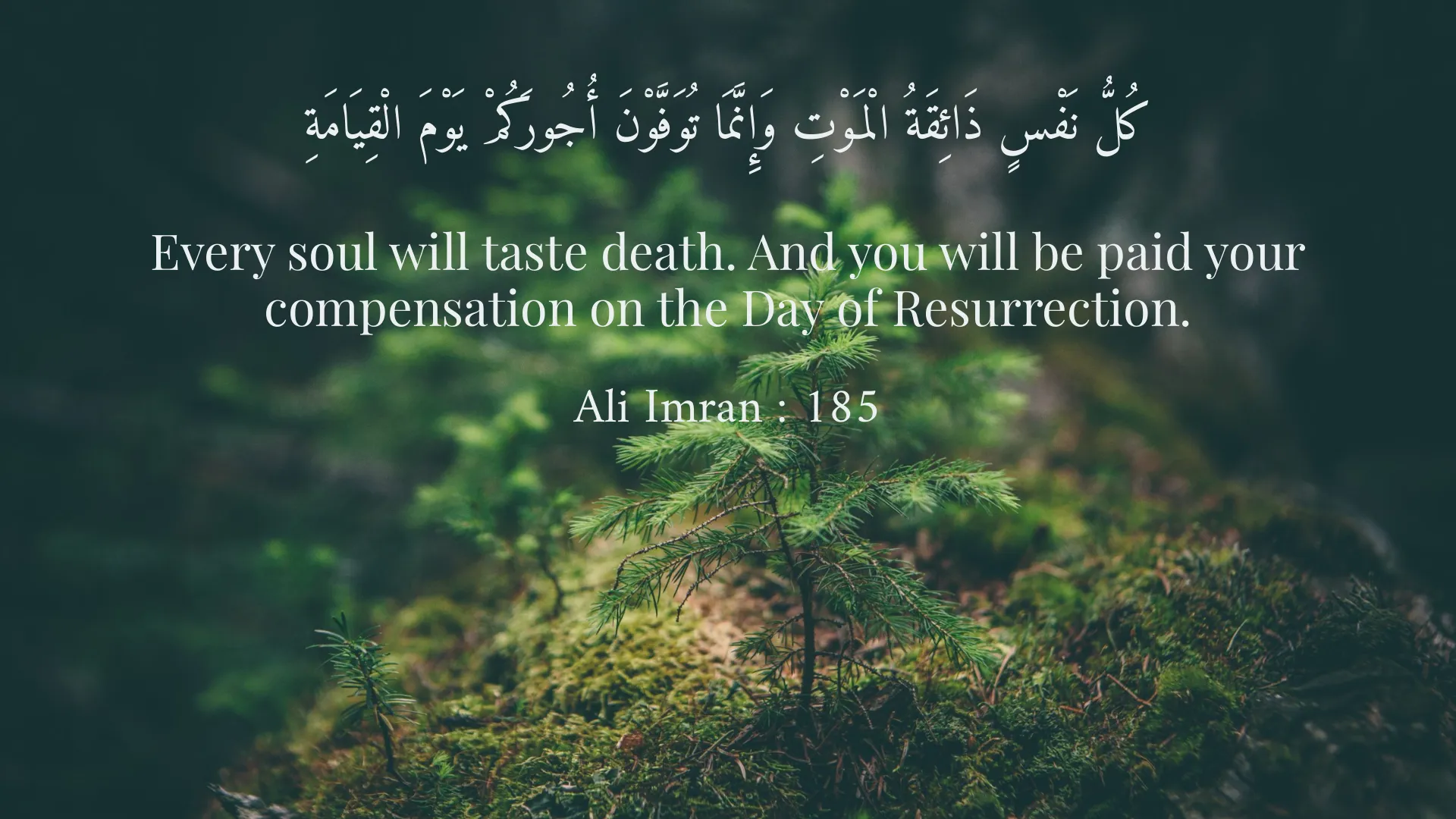
كُلُّ نَفْسٍ ذَائِقَةُ الْمَوْتِ وَإِنَّمَا تُوَفَّوْنَ أُجُورَكُمْ يَوْمَ الْقِيَامَةِ
Every soul will taste death. And you will be paid your compensation on the Day of Resurrection.
Ali Imran : 185
بَلَىٰ مَن كَسَبَ سَيِّئَةً وَأَحَاطَتْ بِهِ خَطِيئَتُهُ فَأُولَـٰئِكَ أَصْحَابُ النَّارِ هُمْ فِيهَا خَالِدُونَ
Yes. Whoever earns an evil deed and his sin has encompassed him, they are the companions of the Fire; they will abide therein eternally.
Al-Baqarah : 81
Short Story
One day, a young man named Hossein gathered with his friends and they talked about life. In the midst of the conversations, Hossein recalled the small and big sins he might commit in his daily life, and this deeply worried him. He decided to stay away from sins and realized that as a result, his life would be filled with peace and prosperity. After some time, he noticed fewer sins in his life and wanted to teach others how to avoid their own mistakes.