Quranic Answer
The issue of worship and ethics is clearly articulated in many verses of the Holy Quran. Worship, as understood within the Islamic faith, transcends mere rituals and forms; it embodies a comprehensive framework for life that integrates both spiritual devotion and ethical behavior. As believers, Muslims are expected not only to perform acts of worship such as prayers and fasting but also to engage in virtuous conduct that fosters personal and communal harmony. This duality of worship and ethics is pivotal in shaping the character of a Muslim and is acknowledged profoundly in the teachings of the Holy Quran. ### Understanding Worship In Islam, worship (Ibadah) occupies a central role and encapsulates every act that is done with the intention to please Allah. Ritualistic forms of worship such as Salah (prayer), Sawm (fasting), Zakat (almsgiving), and Hajj (pilgrimage) are fundamental to a Muslim's faith. Yet, these acts are not ends in themselves; they serve as means to cultivate a deeper consciousness of Allah and to refine the believer's moral character. Worship is seen as a manifestation of submission to the Creator, and the rituals help develop a sense of discipline, community belonging, and spiritual awareness. ### Ethical Conduct in Worship However, the essence of worship is inherently linked with ethics. In Surah Al-Baqarah, verse 177, Allah articulates a profound definition of righteousness. He states, 'It is not righteousness that you turn your faces toward the east or the west, but righteousness is in one who believes in Allah, the Last Day, the Angels, the Book, and the Prophets, and gives his wealth—in spite of love for it—to relatives, orphans, the needy, the traveler, those who ask [for help], and for freeing slaves.' This verse emphasizes that genuine worship is characterized by a believer's moral obligations. The act of worship must inspire believers to contribute positively to their communities, to exercise compassion, and to uphold justice in all interactions. ### The Integration of Worship and Ethics The Quran recognizes that true faith is manifested through both the invocations of worship and the pursuit of ethical behavior. Surah Al-Mu'minun, verses 1-2, reinforce this link, stating, 'Certainly will the believers have succeeded; They who are during their prayer humbly submissive and they who turn away from ill speech.' Here, we see the acknowledgment that the qualities of humility in prayer and the avoidance of harmful speech are essential attributes of a believer's character. It is not enough to merely perform the acts of worship; believers are called upon to uphold moral integrity in their conduct with others. ### The Role of Ethical Behavior in Faith In light of these teachings, it becomes clear that worship devoid of ethical grounding poses a significant challenge to the authenticity of one's faith. In Islam, presenting oneself as a devout worshipper while neglecting moral obligations undermines the very purpose of worship. It highlights a superficial understanding of faith where outer appearances may indicate piety, yet ethical behavior does not reflect the internalized values derived from genuine worship. The importance of ethics in worship is further emphasized in various Hadiths of Prophet Muhammad (peace be upon him), where he elaborated on the significance of good character. He stated, 'The most beloved of people to Allah are those who are best in conduct' (Sunan Ibn Majah). This Hadith clearly illustrates that ethical behavior, kindness, honesty, and respect for others are not simply encouraged but are vital components of a believer's life. ### Worship as a Catalyst for Ethical Living Moreover, when worship is practiced mindfully, it serves as a catalyst for ethical living. The discipline of performing prayers five times a day instills a sense of accountability and awareness, reminding the believer of their responsibilities toward others and their relationship with Allah. The act of giving Zakat encourages generosity and compassion, as it seeks to bridge the socio-economic divide and provides assistance to those in need. The practice of Sawm, especially during the holy month of Ramadan, goes beyond abstaining from food and drink; it encourages self-restraint, empathy for the less fortunate, and an increased sense of social responsibility. In essence, true worship facilitates a transformative journey that fosters moral and ethical development, compelling individuals to embody the core values of Islam in their daily lives. ### Conclusion In conclusion, the intricate relationship between worship and ethics is poignantly outlined in the Quran. True faith is not merely a collection of rituals performed, but rather a holistic way of life that integrates acts of devotion with a commitment to ethical conduct. Worship without moral grounding holds no value and challenges the true essence of faith, creating a discord that can distance believers from their ultimate purpose. As such, Muslims are encouraged to reflect continually on their practices of worship in conjunction with their behaviors and attitudes towards others. This synthesis of worship and ethical behavior is the pathway to achieving true righteousness, fulfilling the spiritual and moral objectives set forth by Allah in the Holy Quran.
Related Verses
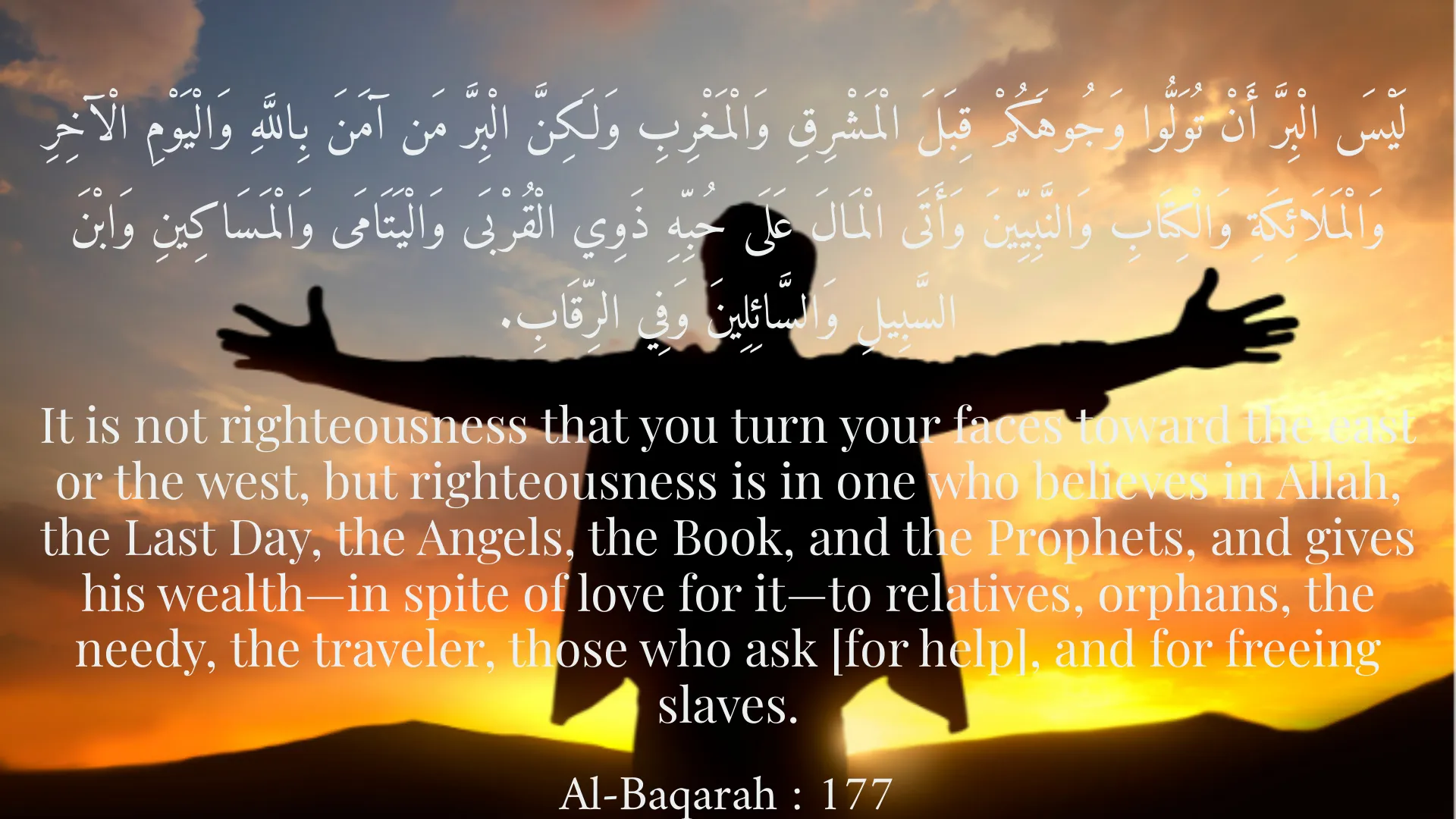
لَيْسَ الْبِرَّ أَنْ تُوَلُّوا وَجُوهَكُمْ قِبَلَ الْمَشْرِقِ وَالْمَغْرِبِ وَلَكِنَّ الْبِرَّ مَن آمَنَ بِاللَّهِ وَالْيَوْمِ الْآخِرِ وَالْمَلَائِكَةِ وَالْكِتَابِ وَالنَّبِيِّينَ وَأَتَى الْمَالَ عَلَى حُبِّهِ ذَوِي الْقُرْبَى وَالْيَتَامَى وَالْمَسَاكِينِ وَابْنَ السَّبِيلِ وَالسَّائِلِينَ وَفِي الرِّقَابِ.
It is not righteousness that you turn your faces toward the east or the west, but righteousness is in one who believes in Allah, the Last Day, the Angels, the Book, and the Prophets, and gives his wealth—in spite of love for it—to relatives, orphans, the needy, the traveler, those who ask [for help], and for freeing slaves.
Al-Baqarah : 177
قَدْ أَفْلَحَ الْمُؤْمِنُونَ. الَّذِينَ هُمْ فِي صَلَاتِهِمْ خَاشِعُونَ.
Certainly will the believers have succeeded; They who are during their prayer humbly submissive.
Al-Mu’minun : 1-2
Short Story
One day, Adel was sitting in a corner, pondering over his acts of worship. Suddenly, he realized that acts of worship without ethics are not only futile but also void of the light of faith. From that day on, he tried to always accompany his worship with ethical behavior and help the needy. He felt that his worship became deeper and more genuine than ever before.