Quranic Answer
The Holy Quran invites individuals to engage in deep reflection about the creation around them and the signs of Allah. This divine invitation is not merely a call to observe but an essential part of spiritual growth, guiding us to a more profound understanding of our existence, the universe, and our Creator. The act of reflection, as emphasized in many verses of the Quran, becomes a bridge between our worldly lives and the spiritual realm, urging us to seek a connection with the divine. In Surah Al-Imran, verse 190, Allah states, 'Indeed, in the creation of the heavens and the earth and the alternation of night and day are signs for those of understanding.' This verse encapsulates a fundamental principle in Islam—that the universe itself is imbued with signs that point towards Allah's greatness and creativity. By reflecting on these signs, we not only recognize the wonders of creation but also reinforce our faith in Allah's power. The cosmos, with its intricate design, is a manifestation of Allah's attributes, enabling us to appreciate the order and balance that governs our existence. The invitation to reflect is not only a method of understanding the divine; it also acts as a catalyst for personal growth. When individuals reflect upon their lives and the world around them, they can steer their actions and decisions based on a deeper insight. Spiritual reflection encourages individuals to transcend a superficial existence, prompting them to live with purpose and intention. For instance, in moments of crisis, individuals who engage in thoughtful contemplation guided by Quranic wisdom can discover solutions that may not be immediately apparent. Surah Al-Mu’minun, verse 14, reinforces this notion by urging, 'Do they not reflect upon themselves and the creation of the heavens and the earth? Do they not consider the truth?' This challenge to humanity underscores the significance of reflection as a means to attain enlightenment. The act of reflection becomes a practical tool in our daily lives. When we face challenges or dilemmas, our ability to reflect on Quranic principles can provide clarity and direction. For example, if an individual is struggling with a decision, taking the time to contemplate the Quranic verses related to fairness, justice, or patience may help them to choose a solution that aligns with their values and faith. This not only leads to better decision-making but also fosters a sense of peace and tranquility in one's heart. The act of balancing reflection with action encourages individuals to approach life not just reactively, but with a mindset of mindfulness and responsibility. Moreover, reflection nurtures our relationship with Allah by enabling us to understand and appreciate His creations. As we ponder over the mysteries of life, we develop a sense of gratitude and reverence towards our Creator. This can also serve as a reminder of our place and purpose within this vast universe. By contemplating our existence in relation to the divine, we come to terms with our responsibilities as stewards of the earth, encouraging us to act justly and compassionately toward all living beings. In addition to personal growth, reflection, as highlighted in the Quran, serves a communal purpose as well. When individuals within a community engage in collective reflection on Quranic teachings, they foster a shared understanding of morality and ethics, leading to a more cohesive and spiritually aligned society. The Quran emphasizes the importance of community, urging believers to support one another in their spiritual journeys. This communal reflection can foster an environment where individuals feel encouraged to grow together, share insights and wisdom, and uplift one another in faith and practice. The Quran’s call for reflection also addresses the modern challenges faced by humanity. In an age where distractions abound and superficiality can dominate our lives, engaging in meaningful contemplation becomes increasingly vital. The overwhelming information overload can leave individuals feeling disconnected from their true selves and from Allah. Thus, the Quran serves as a timeless guide, encouraging us to slow down, disconnect from the chaos of daily life, and reconnect with our purpose. Reflecting on the teachings of the Quran amidst the noise can furnish us with the clarity needed to navigate life's complexities with integrity and wisdom. To embody this reflective approach, one may consider establishing a routine. This could involve setting aside time for quiet contemplation, prayer, or reading specific Quranic verses followed by thoughtful meditation on their meanings. Journaling can also be a powerful tool in this practice, allowing individuals to articulate their thoughts, feelings, and insights that arise during their reflection. Over time, these practices can lead to enhanced self-awareness, emotional balance, and a more profound connection to Allah. Ultimately, the Quran serves as a profound source of guidance, urging us to engage in reflection not only for our benefit but as a means to foster greater understanding and compassion within our communities. As we delve into the depths of the text and ponder the signs around us, we unlock the potential for spiritual and moral growth, leading to a life that is rich with purpose and connection to the divine. In conclusion, the invitation to reflect is an essential pillar of Islamic teachings, urging us to look beyond the surface and ponder the intricacies of our existence. Through reflection, we can strengthen our faith, navigate the complexities of life effectively, and ultimately fulfill our roles as mindful stewards of Allah’s creation. By heeding the Quran's call, we embrace a path toward enlightenment and a deeper understanding of our place within both the cosmos and the divine plan.
Related Verses
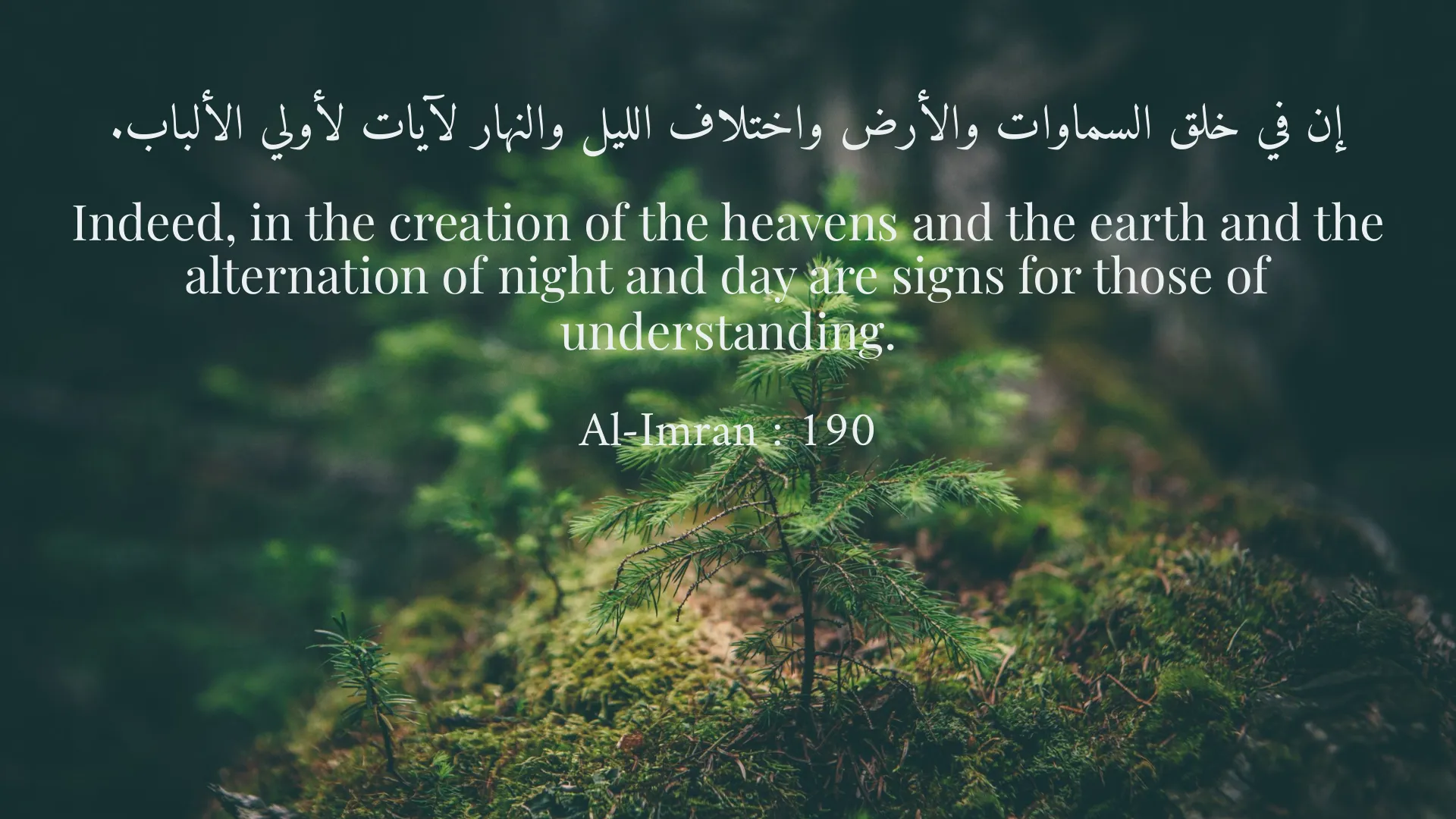
إن في خلق السماوات والأرض واختلاف الليل والنهار لآيات لأولي الألباب.
Indeed, in the creation of the heavens and the earth and the alternation of night and day are signs for those of understanding.
Al-Imran : 190
أفلا يتفكرون في أنفسهم وفي خلق السماوات والأرض، ما خلق الله ذلك إلا بالحق.
Do they not reflect upon themselves and the creation of the heavens and the earth? Allah has not created this except in truth.
Al-Mu'minun : 14
Short Story
Once upon a time, there was a thoughtful man named Sohrab who sat by the sea, gazing at the waves. He said to himself, 'Why has Allah created so much wonder?' He decided to explore the divine signs in the world and reflect on them. Through this journey, he realized the beauty of nature and the depth of his own existence. Sohrab felt that by reflecting on the creations of Allah, he could attain the light of truth and enrich his life.