Quranic Answer
Charity holds a significant place in many cultures and religions around the world, but it is particularly emphasized in Islam through the teachings found in the Holy Quran. In Islam, charity, known as "Zakat" and "Sadaqah," is not merely a recommended act of kindness but is mandated as an obligatory duty for Muslims. This concept of charity in Islam goes beyond mere financial assistance and extends to various forms of giving, including time, effort, and love towards others. The Quran intricately highlights the importance and rewards of giving in the way of Allah, asserting that the act of charity is a profound virtue that reflects one's commitment to faith and moral integrity. One of the most profound verses that speaks to the essence of charity in Islam is found in Surah Al-Baqarah (2:261): "The example of those who spend their wealth in the way of Allah is like a seed of grain that sprouts into seven ears, with each ear having a hundred grains." This powerful metaphor illustrates the exponential impact that charitable giving can yield. In essence, Allah equates the act of charity to sowing seeds, emphasizing that the beneficial consequences that arise from such acts can multiply significantly. By giving, one not only aids those in need but actively participates in the cultivation of a more compassionate and supportive community. The implications of charity extend far beyond the immediate assistance it provides. Charitable acts contribute to the overall well-being of society, fostering a sense of community and solidarity among individuals. When people give to help others, they promote social cohesion and reduce divisions caused by poverty and hardship. A society that encourages charity is likely to be more resilient, nurturing an environment where members care for one another, ensuring that those in need receive support. This communal spirit is one of the many aspects that makes charity a vital practice in Islam, as it aligns with the core Islamic principles of compassion, justice, and social responsibility. Furthermore, the spiritual benefits of giving in the way of Allah are profound. Engaging in charitable acts purifies one’s soul, instilling a sense of gratitude and humility. It serves as a reminder of how fortunate one is and ignites a compassionate response towards those who are less fortunate. The Quran consistently reminds believers of this crucial relationship between charity and spiritual growth. The act of giving is seen as a way to cleanse one's wealth, ensuring that no part of one's income comes from surplus at the expense of others' suffering. Charity thus becomes a vehicle through which individuals can attain closeness to Allah, who promises that those who give will be rewarded manifold. In addition to the spiritual and societal implications, charity also has practical benefits. The notion that giving leads to increased sustenance and blessings in life is a recurring theme in Islamic teachings. The Quran reassures believers that their contributions in the form of charity will not deplete their wealth but will, in fact, attract more blessings and provision. This principle is bolstered by Hadith, where the Holy Prophet Muhammad (peace be upon him) states: "Charity averts calamity." The interpretation of this statement suggests that engaging in charitable acts provides a shield against the tribulations that life may present, serving as a protective barrier against misfortunes. This idea is particularly poignant in a world that often feels chaotic and overwhelming, giving individuals a sense of peace and security through charitable deeds. Engaging in acts of charity also encourages moral and ethical development. When individuals actively seek to alleviate the suffering of others, they cultivate qualities such as empathy, kindness, and generosity. These traits are invaluable in shaping a more ethical society where the welfare of all members is prioritized. By practicing charity, individuals learn the importance of putting others before themselves, fostering a generous spirit that can transform not only individuals but entire communities. The impact of charitable giving is not only restricted to direct monetary aid but also encompasses various forms of support, including providing one's time, knowledge, and expertise. Many Islamic organizations actively engage in community service, education, and health initiatives that serve to uplift the marginalized. By volunteering and participating in charitable programs, individuals can harness their skills and resources to make a more significant impact in their communities. Moreover, the call to charity in Islam is not limited to giving within one's own community but extends globally. The Quran encourages believers to look beyond their immediate circles and assist those suffering from poverty, conflict, and disasters worldwide. This perspective fosters a global solidarity that transcends geographical, cultural, and social barriers, reminding Muslims of their shared humanity and collective responsibility. In conclusion, charity in Islam is an integral practice that interweaves with the very fabric of moral and ethical living. By adhering to the Quran's teachings on giving, believers can contribute not only to alleviating suffering in the world but also to enhancing their spiritual selves and fostering a compassionate and cohesive society. The profound and multifaceted benefits of charity clarify its essential role in Islamic teachings—charity is not merely an act of kindness; it is a vital principle that enriches both the giver and the receiver, reinforcing the values of compassion, gratitude, and community. Therefore, embracing charity as a divine commandment can lead to individual fulfillment, societal change, and the safeguarding of one’s soul from misfortunes—a truly rewarding practice that all should strive to incorporate within their lives.
Related Verses
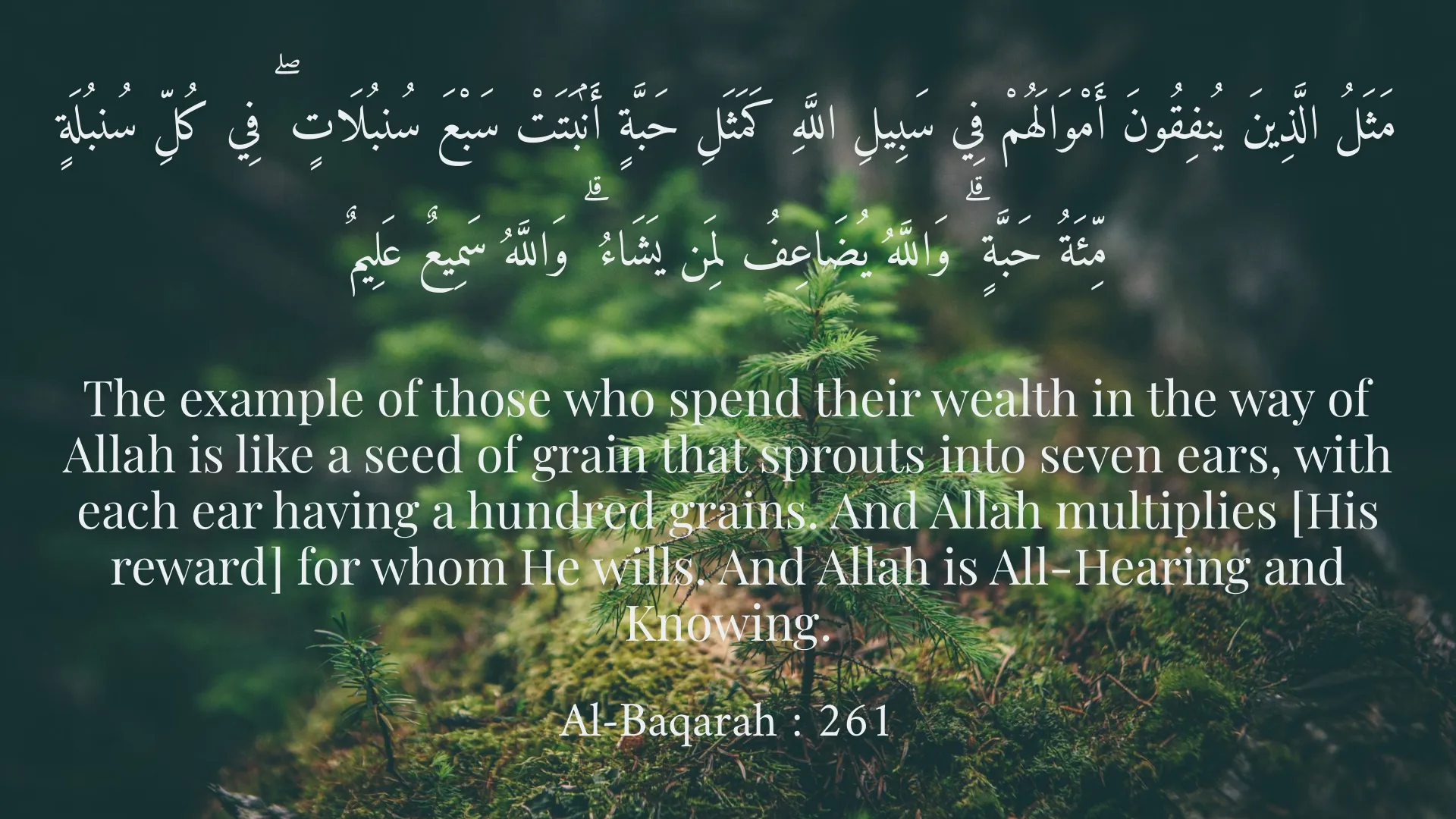
مَثَلُ الَّذِينَ يُنفِقُونَ أَمْوَالَهُمْ فِي سَبِيلِ اللَّهِ كَمَثَلِ حَبَّةٍ أَنۢبَتَتْ سَبْعَ سُنبُلَاتٍ ۖ فِي كُلِّ سُنبُلَةٍ مِّئَةُ حَبَّةٍ ۗ وَاللَّهُ يُضَاعِفُ لِمَن يَشَاءُ ۗ وَاللَّهُ سَمِيعٌ عَلِيمٌ
The example of those who spend their wealth in the way of Allah is like a seed of grain that sprouts into seven ears, with each ear having a hundred grains. And Allah multiplies [His reward] for whom He wills. And Allah is All-Hearing and Knowing.
Al-Baqarah : 261
خُذْ مِنْ أَمْوَالِهِمْ صَدَقَةً تُطَهِّرُهُمْ وَتُزَكِّيهِمْ بِهَا ۖ وَصَلِّ عَلَيْهِمْ ۚ إِنَّ صَلَاتَكَ سَكَنٌ لَّهُمْ ۖ وَاللَّهُ سَمِيعٌ عَلِيمٌ
Take, [O Muhammad], from their wealth a charity by which you purify them and cause them to increase; and invoke [Allah's blessings] upon them. Indeed, your invocations are reassurance for them. And Allah is Hearing and Knowing.
At-Tawbah : 103
وَأَنِ اشْكُرُوا لِي وَلِوَالِدَيْكُمْ ۖ إِلَيَّ الْمَصِيرُ
And be grateful to Me and to your parents; to Me is the [final] destination.
Hud : 52
Short Story
Many years ago, there was a man named Sohrab who was a hardworking carpenter. One day, he heard that one of his poor neighbors desperately needed help. Sohrab decided to give him charity. The beauty of this act for Sohrab was not only in helping the needy, but it also brought him a deep sense of satisfaction and peace. After some days, Sohrab faced unexpected turmoil in his life, but he was amazed to find that despite the challenges, he was able to continue with greater calmness and confidence. He became convinced that his charity had helped keep calamities at bay and increased blessings in his life.