Quranic Answer
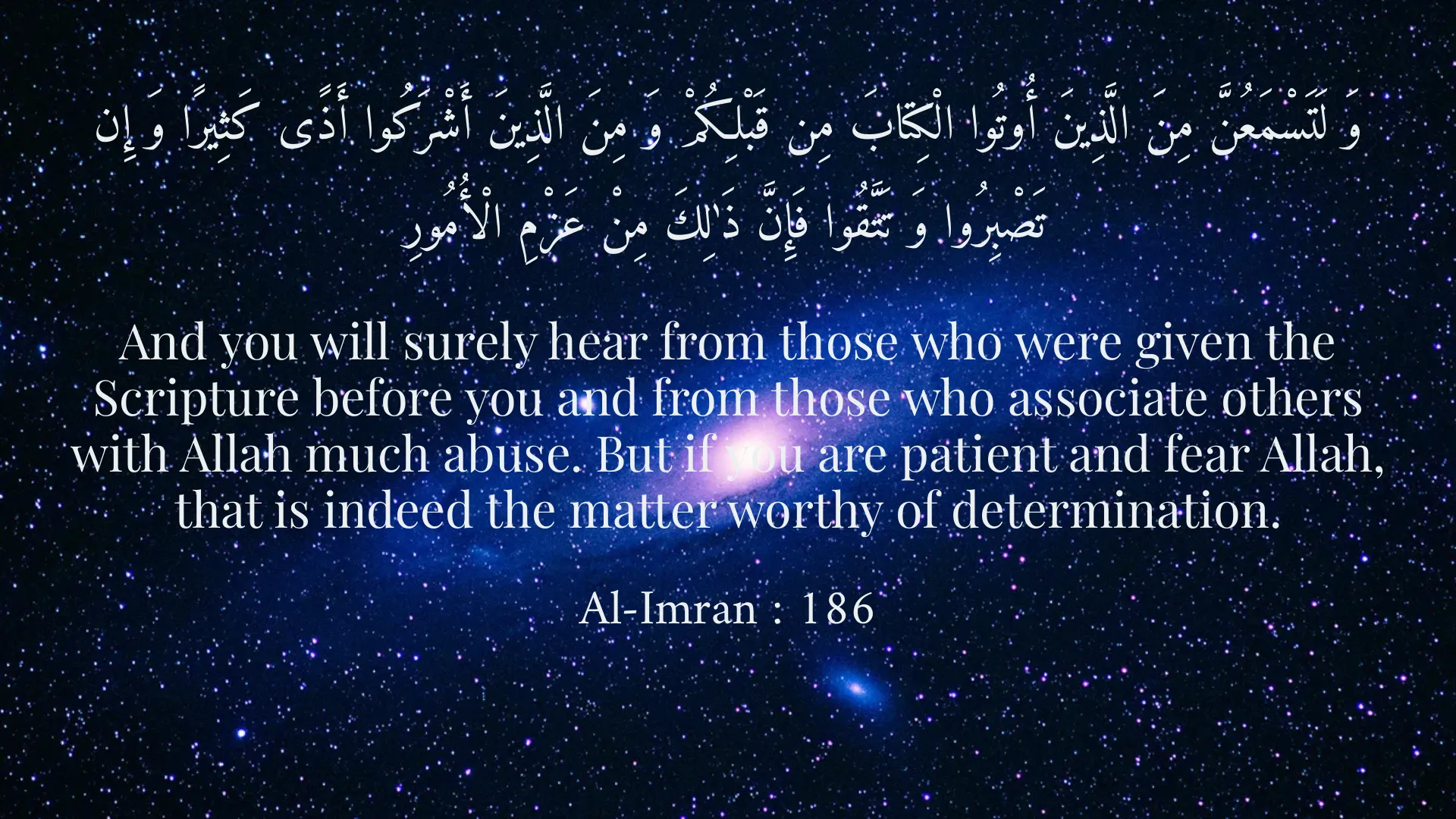
The concept of divine wisdom and the concealment of certain truths in the Holy Quran serves as a foundation for understanding the nature of faith, resilience, and the human experience. As believers navigate through life’s challenges, they must confront the realities of their faith and the trials that come with it. The Quran offers guidance on these matters, urging individuals to remain steadfast and patient in the face of adversity. In Surah Al-Imran, verse 186, it is stated: "You will surely hear from those who were given the Scripture before you and from those who associate others with Allah much abuse. But if you are patient and fear Allah, that is indeed the matter worthy of determination." This verse emphasizes the importance of patience and piety when faced with adversity. The mention of those who may abuse or criticize is particularly relevant in a world where differing beliefs can lead to conflict and misunderstanding. The call to patience is a reminder that faith requires resilience, and that maintaining one's belief in the face of adversity is what defines a true believer. The Quran acknowledges that humanity will encounter trials and opposition, yet it encourages a response grounded in faith and awareness of God’s greater plan. Patience is not merely about enduring hardships; it is an active choice to remain committed to one's faith despite the challenges. This idea establishes a framework within which believers can learn and grow, understanding that trials can be a source of strength and character development. In Surah Al-An'am, verse 67, Allah states: "And He it is who has preferred many of His creatures with preference." This verse introduces another layer of understanding regarding divine wisdom. It suggests that God, in His infinite knowledge, grants understanding and awareness selectively, based on the unique needs of each individual. This selective granting of knowledge serves a dual purpose: it tests the faith of individuals while also ensuring that they receive what they need to grow spiritually. The process of learning and understanding is inherently personal; each individual's journey is unique. The Quran teaches that while some may be given insights and understanding into certain truths, others may not be privy to the same truths. This distinction is not a reflection of a person's worth or potential but rather a part of God's divine plan. It invites believers to approach their own spiritual development with humility and gratitude, acknowledging that everyone is at a different stage in their relationship with God. Furthermore, in Surah Yunus, verse 19, the Quran reveals: "And mankind was not but one nation, then they differed." This verse highlights the fundamental unity of humanity, while simultaneously recognizing that differences in opinions and beliefs are an inherent aspect of being human. The existence of diverse viewpoints is part of God’s design, a test of how humanity relates to one another amidst such differences. The division among people can often lead to conflict, misunderstandings, and intolerance. However, the Islamic perspective encourages individuals to reflect on these differences as an opportunity for growth and deeper understanding. Recognizing that disagreement does not necessarily stem from malice, but from differing perspectives, can foster compassion and patience in discussions about faith and belief. In light of these teachings, God’s concealment of certain truths can be seen as a means to promote choice and personal growth. It creates a landscape where individuals are challenged to seek knowledge, understand their faith, and make decisions that align with their beliefs. The journey toward understanding can be seen not only as a means to an end but as an integral component of spiritual development. This concept of divine wisdom is punctuated by the distinct understanding that God is fully aware of all things. His knowledge surrounds humanity's choices, beliefs, and struggles. Unlike human understanding, which is limited and often influenced by emotions and surroundings, God's wisdom encompasses all aspects of existence. This understanding leads to a profound sense of trust and faith in God’s ultimate plan for humanity. In conclusion, the Holy Quran offers comprehensive insights into the nature of truth, knowledge, and human existence. It emphasizes that concealment of certain truths serves a divine purpose, creating a setting for testing one's faith and resilience. Through patience and fear of Allah, individuals are called to embrace trials as opportunities for growth. The differences among people are not a hindrance but rather an essential part of the divine plan, reflecting God's wisdom and knowledge. Overall, the Quran provides a guide for believers on how to navigate the complexities of faith, encouraging a deeper relationship with God and a greater understanding of the world around them. It reminds us that while we may not always have access to certain truths, trusting in God's plan can give us the strength and patience needed to face life's challenges.
Related Verses
وَ لَتَسْمَعُنَّ مِنَ الَّذِينَ أُوتُوا الْكِتابَ مِن قَبْلِكُمْ وَ مِنَ الَّذِينَ أَشْرَكُوا أَذًى كَثِيرًا وَ إِن تَصْبِرُوا وَ تَتَّقُوا فَإِنَّ ذَٰلِكَ مِنْ عَزْمِ الْأُمُورِ
And you will surely hear from those who were given the Scripture before you and from those who associate others with Allah much abuse. But if you are patient and fear Allah, that is indeed the matter worthy of determination.
Al-Imran : 186
وَ هُوَ الَّذِي أَفَضَّلَ عَليٰ كَثِيرٍ مِّمَّنْ خَلَقَ تَفْضِیلًا
And He it is who has preferred many of His creatures with preference.
Al-An'am : 67
وَ ما كَانَ النَّاسُ إِلَّا أُمَّةً وَاحِدَةً فَاخْتَلَفُوا
And mankind was not but one nation, then they differed.
Yunus : 19
Short Story
Once upon a time, there was a man who pondered the complexities of life. He constantly asked God to reveal the answers to his questions. One night in a dream, he saw a figure saying to him, 'Many answers lie hidden within difficulties.' He woke up and realized that every problem presents an opportunity to learn and grow. From that day forward, instead of seeking hidden answers, he sought lessons from the everyday challenges he faced.