Quranic Answer
The Holy Quran, as the divine word, delves into the essence of existence and human nature with profound wisdom and insight. One of the groups that the Quran describes with meticulous detail is the hypocrites (Munafiqun). A hypocrite is someone who outwardly presents themselves as a Muslim and a believer, but inwardly holds no true faith in the principles of religion, and sometimes even harbors enmity. By enumerating the specific moral characteristics of hypocrites, the Quran pursues important goals and messages that are vital for every believer to comprehend. These descriptions are not only applicable for identifying hypocrites in any era, but also serve as a guide for self-purification and preventing oneself from falling prey to this spiritual ailment. 1. Exposure of True Nature and Internal Threat: The Quran elaborately introduces hypocrites due to the hidden danger they pose to the believing community. An overt enemy is known, and one can take a stance against them, but a hypocrite is someone who strikes from within the ranks of believers, undermining the foundations of the community. This exposure serves as a divine safeguard for the preservation of the Islamic society. By unveiling the intentions and inner attributes of hypocrites, Allah warns believers not to be deceived by their outward appearance and to beware of their conspiracies. This is a significant warning that believers must always be vigilant and not judge individuals solely based on their verbal claims; rather, they should scrutinize their true actions and intentions. This was particularly crucial during the early Islamic era, when the Muslim community desperately needed cohesion and unity. 2. Weakness of Faith and Inner Doubt: One of the primary characteristics of hypocrites is their doubt and instability in faith. They do not have a heart firm in belief in Allah and His divine promises, and this inner weakness makes them constantly seek personal and superficial gain. The Quran repeatedly points out that hypocrites waver between faith and disbelief and cannot make a firm decision (Surah An-Nisa, verse 143). This vacillation causes them to abandon the side of truth and incline towards falsehood during times of hardship and trial. This characteristic teaches believers that true faith is faith in Allah in all states and conditions, not a faith that exists only in times of ease and benefit. 3. Ostentation and Show-Off (Riya): Hypocrites are highly prone to ostentation and showing off. They perform good deeds, but not for Allah, rather to be seen by people and gain social standing. This is one of their most prominent moral traits. The Holy Quran, in several verses (e.g., Surah An-Nisa, verse 142), mentions that hypocrites stand for prayer lazily and unwillingly, and their only goal is to deceive people. This trait is the opposite of sincerity (Ikhlas), which is a pillar of true faith. The Quran's purpose in stating this characteristic is to teach sincerity and to avoid any form of showing off in worship and deeds. Believers, by observing this trait in hypocrites, better understand the importance of pure intention and avoiding subtle polytheism (Riya). 4. Lying and Breaking Promises: Another prominent characteristic of hypocrites is lying and breaking promises. They easily lie and renege on their pledges. The Holy Quran in Surah At-Tawbah (verses 75-77) clearly states how hypocrites make covenants with Allah and then break them after achieving their objectives. This characteristic indicates a lack of honesty and trustworthiness within them. By mentioning these traits, Allah warns believers to be cautious in their interactions with such individuals and to avoid them. This is an important lesson that honesty and adherence to promises are signs of a true believer. 5. Mockery and Derision: Hypocrites often mock and ridicule believers and religious values. In their privacy, they scoff at religion and religious people, and sometimes even speak to believers with sarcasm and scorn in public gatherings. The Holy Quran (Al-Baqarah, verse 14) refers to this behavior of hypocrites and states that Allah also mocks them. This characteristic indicates their disrespect, malice, and hidden animosity towards religion. The purpose of mentioning this trait is to show the reprehensibility of this act and to encourage believers to be respectful and serious in religious matters. 6. Causing Sedition and Division: Hypocrites are constantly seeking to create sedition and division within the Islamic community. They try to weaken the unity and cohesion of believers by spreading rumors, fabricating lies, and creating mistrust. Islamic history bears witness to the conspiracies of hypocrites in various battles and events. The Holy Quran repeatedly refers to their behavior and calls upon believers to be vigilant against their plots. This characteristic teaches believers that unity is a fundamental principle of the believing community, and any division or hypocrisy stems from internal spiritual diseases. 7. Fear and Cowardice: Another characteristic of hypocrites is their fear and cowardice. They lack courage and bravery in the face of external enemies and even fear their own shadows. This fear stems from a lack of reliance on Allah and dependence on material powers. While true believers rely on Allah and fear no power but Him, hypocrites constantly seek to preserve their lives and wealth and are unwilling to sacrifice in the way of Allah. The Holy Quran (e.g., Surah Al-Hashr, verse 12) refers to their fear and cowardice. Stating this characteristic encourages believers to be courageous and reliant on Allah, and shows them that fear of other than Allah is a sign of weak faith. In conclusion, the Holy Quran, by precisely and comprehensively detailing the moral characteristics of hypocrites, pursues a grand and multifaceted goal. These descriptions help believers, firstly, to recognize the hidden nature of hypocrites and to be safe from the harm of their conspiracies. Secondly, these verses serve as a mirror for self-knowledge and self-purification; by comparing themselves with these traits, believers can prevent hypocrisy from infiltrating their hearts and always walk on the path of sincerity, devotion, and true faith. Thirdly, these descriptions clarify the worldly and otherworldly consequences of hypocrisy and warn hypocrites about the ultimate outcome of their actions. All this is a lesson for a deeper understanding of true faith and avoiding anything that leads to heart diseases.
Related Verses
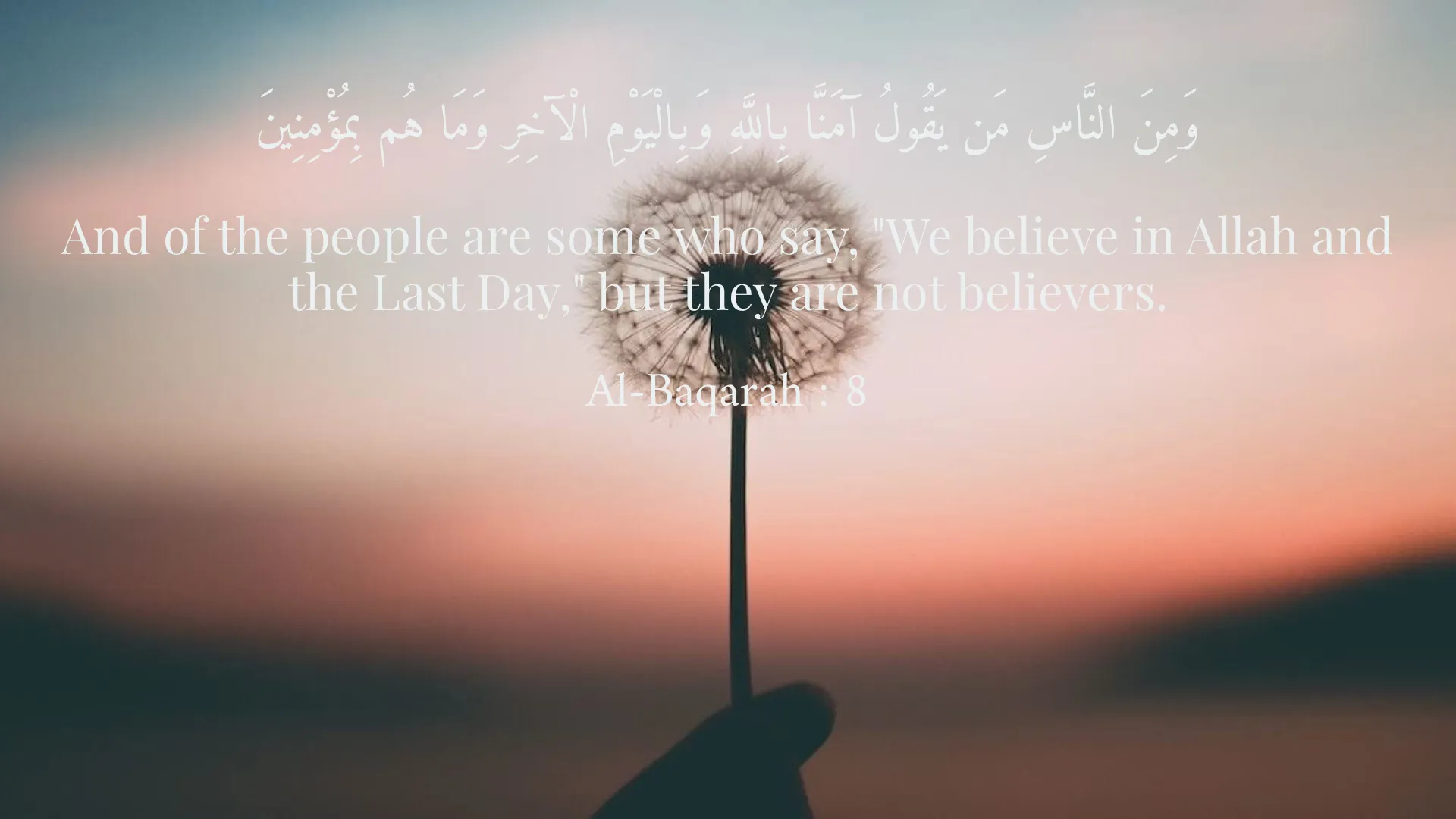
وَمِنَ النَّاسِ مَن يَقُولُ آمَنَّا بِاللَّهِ وَبِالْيَوْمِ الْآخِرِ وَمَا هُم بِمُؤْمِنِينَ
And of the people are some who say, "We believe in Allah and the Last Day," but they are not believers.
Al-Baqarah : 8
إِنَّ الْمُنَافِقِينَ يُخَادِعُونَ اللَّهَ وَهُوَ خَادِعُهُمْ وَإِذَا قَامُوا إِلَى الصَّلَاةِ قَامُوا كُسَالَىٰ يُرَاءُونَ النَّاسَ وَلَا يَذْكُرُونَ اللَّهَ إِلَّا قَلِيلًا
Indeed, the hypocrites [think to] deceive Allah, but He is deceiving them. And when they stand for prayer, they stand lazily, showing [themselves to] the people and not remembering Allah except a little.
An-Nisa : 142
فَأَعْقَبَهُمْ نِفَاقًا فِي قُلُوبِهِمْ إِلَىٰ يَوْمِ يَلْقَوْنَهُ بِمَا أَخْلَفُوا اللَّهَ مَا وَعَدُوهُ وَبِمَا كَانُوا يَكْذِبُونَ
So He penalized them with hypocrisy in their hearts until the Day they will meet Him - because they broke what they promised Allah and because they used to lie.
At-Tawbah : 77
Short Story
It is narrated that a man, dressed in woolen garments and with a tearful face, sat before the judge, presenting himself as a devout and pious individual. Whenever he spoke, he trembled with the fear of God, and outwardly he appeared so ascetic that every beholder would assume him to be a true mystic. Yet, secretly, he was engaged in theft and deceiving people. One astute person, aware of his true nature, said to the judge: 'O Judge, do not look at this man's outward appearance, for he trembles and weeps. He is like a hunter who scatters seeds and hides to catch the bird. Many such individuals have donned the cloak of religion to gain worldly possessions, outwardly appearing righteous and pious, but in private, they tread a crooked path. Always look at the action, not the outward hypocrisy.' The judge became aware after this remark and scrutinized the man's affairs. Eventually, the veil of his hypocrisy was lifted, and people were safe from his malice. This story teaches us that outward deception and hypocrisy lead to nothing but disgrace and harm.