Quranic Answer
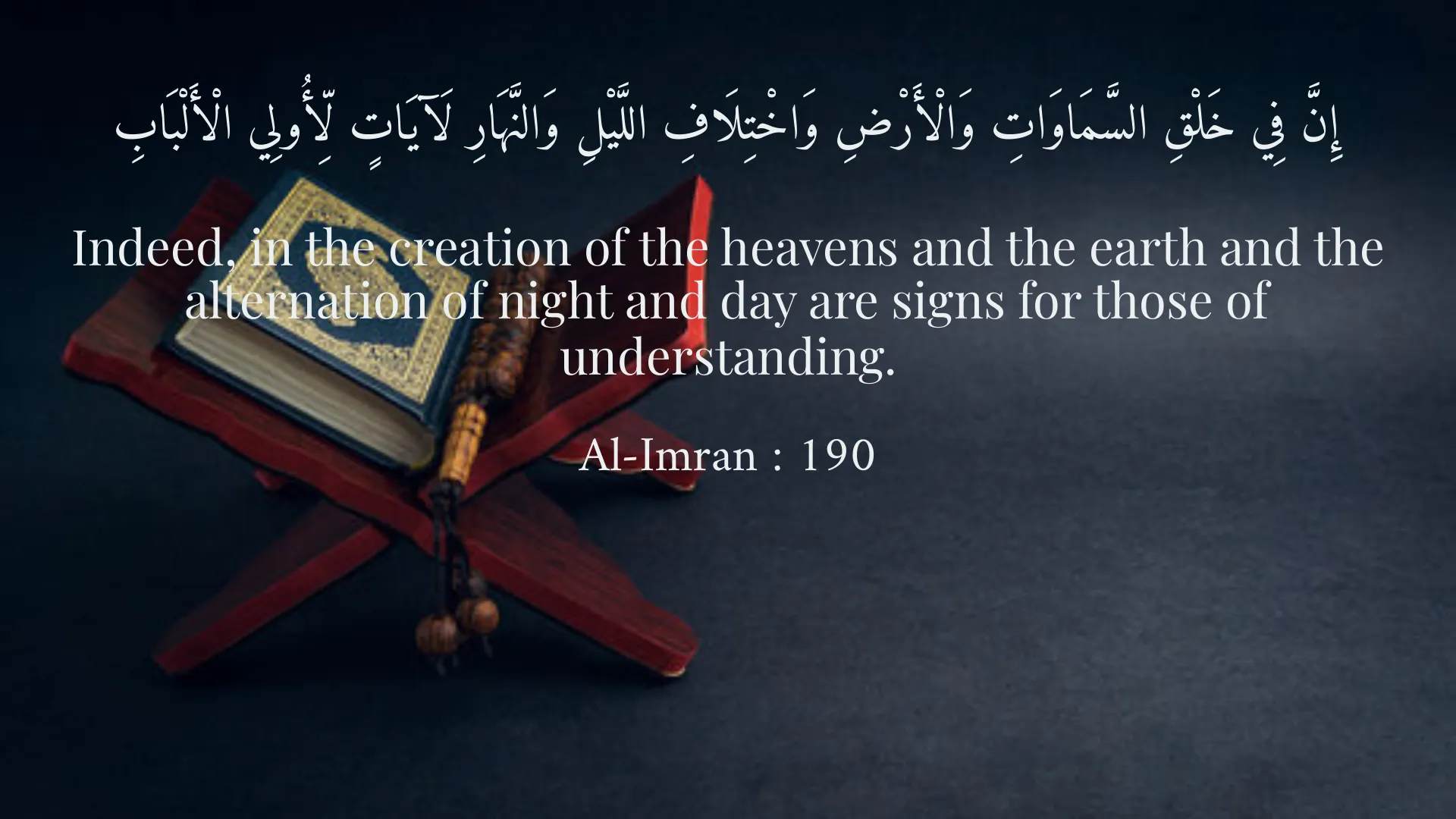
The Holy Quran is not merely a religious text; it serves as a profound guide for humanity, urging individuals to engage in reflection and contemplation of its verses. This emphasis on the goodness and necessity of contemplation is a central theme throughout the Quran and is particularly evident in Surah Al-Imran, verses 190 and 191. In these verses, Allah illuminates the importance of recognizing signs in the universe, stating: 'Indeed, in the creation of the heavens and the earth and the alternation of night and day are signs for those of understanding.' This powerful call invites individuals to ponder the complexities of existence and the divine wisdom underlying creation. Contemplating the wonders of the universe allows individuals to discover new grounds of knowledge and understanding, providing insights into the depth and intricacies of creation. The intricate balance of the cosmos, the endearing changes from night to day, and the remarkable phenomena of nature serve as reminders of a higher power at work. When one engages in such reflection, they are not only expanding their intellectual horizons but also nurturing their spiritual connection with the Creator. Furthermore, Surah Muhammad, verse 24 poses a profound question that resonates with the hearts of those seeking spiritual awareness: 'Do they not reflect upon the Quran, or are there locks upon their hearts?' This verse acts as a gentle reminder that attentiveness to the Quran and its meanings is essential for gaining a deeper understanding of divine laws and their manifestations in our lives. The challenge presented in this verse urges individuals to unlock the gates of their hearts and minds to receive the wisdom contained within the Quran, fostering a spiritual awakening that can lead to personal growth. The act of reflecting on the Quran is not a mere intellectual pursuit; it is a dynamic process that invites individuals to engage in a journey of intellectual and spiritual growth. When individuals immerse themselves in the study of the Quran, they embark on a path that shapes their character and instills values such as compassion, justice, humility, and gratitude. In times of confusion, uncertainty, or moral dilemmas, those who engage in contemplation of the Quran often find guidance and clarity in its verses, enhancing their ability to navigate life's challenges with a sound mind and a tranquil heart. In Surah Al-Muzzammil, Allah underscores the importance of reflection during the long nights, a time when individuals are encouraged to connect with their Creator. The darkness of the night becomes an opportunity for introspection and spiritual contemplation, allowing for a deeper connection with Allah. The quietude of the night serves as a backdrop for personal reflection, prayer, and seeking guidance. This practice of nightly contemplation highlights the value of solitude and the intimate relationship between a believer and their Lord. In addition to the Quran itself, numerous narrations from the Prophet Muhammad (PBUH) and the Infallible Imams reaffirm the significance of reflection and contemplation as a pathway to truth and spiritual growth. These narrations emphasize that reflection is not only an intellectual exercise but also a means to deepen one’s faith and understanding of the divine message. For example, the Prophet Muhammad (PBUH) is reported to have said, 'The wisest of people is the one who reflects the most.' Such statements underline that intellectual rigor and spiritual awareness are not just complementary but indeed integral to the practice of faith in Islam. The Quran's emphasis on contemplation and reflection is thus not only a spiritual guideline but also underscores the high value placed on intellect and reasoning within Islam. It encourages individuals to utilize their minds and engage in critical thinking, promoting a culture of inquiry and understanding. This commitment to reasoned reflection ultimately enables believers to embrace their faith more fully and lead lives that are rich in meaning and purpose. Moreover, in a world filled with distractions and superficial engagements, the Quran calls individuals to slow down and reflect on the principles that guide their lives. It compels them to examine the intentions behind their actions and the impact they have on themselves and those around them. This process of self-examination cultivates a sense of responsibility and social awareness, urging individuals to act in accordance with the values espoused in the Quran. In conclusion, the act of reflection upon the Holy Quran stands as a cornerstone of Muslim belief and practice, enriching the lives of those who engage earnestly with its teachings. The Quran’s exhortation to contemplate the signs of creation, recognize the divine wisdom within its verses, and foster a personal connection with the Creator highlights the transformative power of reflection. As believers embrace the Quran's teachings and embark on a journey of contemplation, they are not only enhancing their intellect and spirituality but also contributing to the betterment of themselves and society at large. Ultimately, the Quran serves as a timeless guide, illuminating the path toward a more meaningful and fruitful life for all who heed its call.
Related Verses
إِنَّ فِي خَلْقِ السَّمَاوَاتِ وَالْأَرْضِ وَاخْتِلَافِ اللَّيْلِ وَالنَّهَارِ لَآيَاتٍ لِّأُولِي الْأَلْبَابِ
Indeed, in the creation of the heavens and the earth and the alternation of night and day are signs for those of understanding.
Al-Imran : 190
أَفَلَا يَتَدَبَّرُونَ الْقُرْآنَ أَمْ عَلَى قُلُوبٍ أَقْفَالُهَا
Do they not reflect upon the Quran, or are there locks upon their hearts?
Muhammad : 24
إِنَّ رَبَّكَ يَعْلَمُ أَنَّكَ تَقُومُ أَقلَّ مِن ثُلُثَيِ اللَّيْلِ وَنِصْفَهُ وَثُلُثَهُ وَأَهْلُكُمْ قَدْ أَحَصَىٰ وَغَيْرَكُمْ.
Indeed, your Lord knows that you stand [in prayer] for less than two-thirds of the night and half of it and a third of it.
Al-Muzzammil : 20
Short Story
One day, Mohammad found himself in the biggest challenge of his life. He was spending all day and night in trial and error and couldn't find a solution. On a rainy night, he remembered the verses of the Quran and began to reflect on them. He was profoundly moved by how Allah desires His servants to think and move from their inner world to the outer world. Through contemplation of the Quranic verses, he found a light of hope in his heart, and from that moment on, he tried to pay more attention to the Quran and its meanings in his life.