Quranic Answer
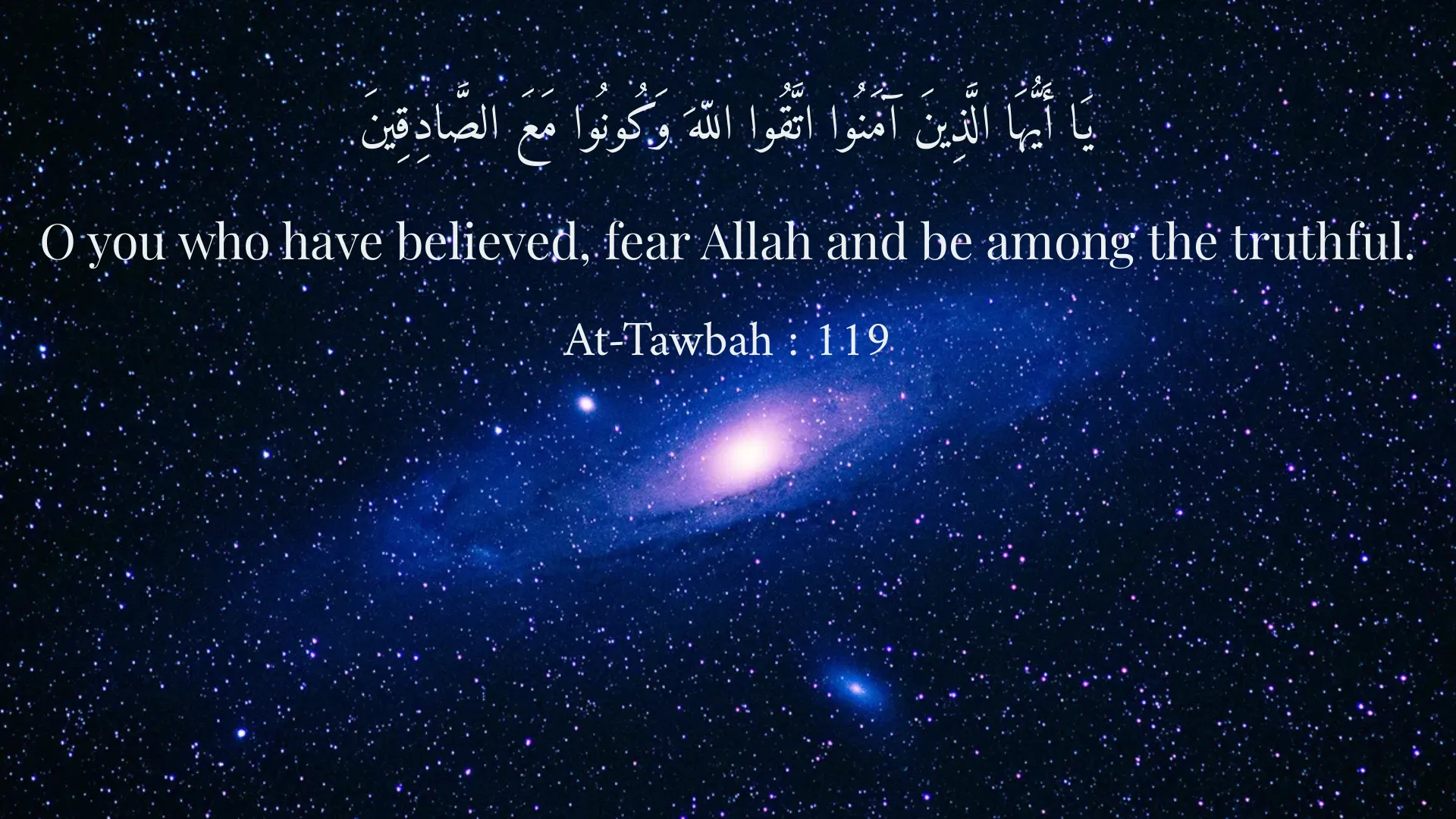
The Holy Quran places great importance on honesty and truthfulness, which are not just moral virtues but are seen as foundational principles of a faithful life in Islamic teachings. In Islamic culture, honesty is recognized as one of the fundamental characteristics that define a true believer. This emphasis on truthfulness can be traced back to various verses in the Quran that articulate the significance of being honest not only in speech but in actions as well. Honesty serves as a cornerstone for personal development, social interactions, and the overall health of a community, making it a pivotal element of Islamic ethics. One of the most illustrative verses can be found in Surah At-Tawbah, verse 119, where Allah instructs the believers: "O you who have believed, fear Allah and be among the truthful." This verse establishes a direct link between the concept of faith and the quality of truthfulness. It suggests that to truly fear Allah, one must actively practice honesty in every aspect of their lives. This verse indicates that truthfulness is not merely encouraged but is, in fact, a prerequisite for being considered a true believer. The Quran does not limit honesty to verbal declarations; it extends to intentions, actions, and interactions with others. A person's integrity is a reflection of their inner piety and relationship with Allah. Furthermore, the Quran addresses the potential harms of dishonesty. In Surah Al-Baqarah, verse 42, Allah advises people against mixing truth with falsehood and concealing the truth. The instruction underscores that lying and hiding the truth can lead to detrimental consequences for both individuals and society at large. Deceit can erode trust, foster conflicts, and create divisions among people. This verse serves as a cautionary reminder that, in order to maintain the social fabric of a community, honesty must be upheld. The act of lying, even in trivial circumstances, can snowball into situations that corrupt relationships and dismantle social coherence. Within the parameters of Muslim ethics, honesty is more than a mere trait; it is viewed as a covenant with Allah and society. In Islamic teachings, the promise to be truthful is understood as a sacred duty that extends beyond personal interests. Maintaining honesty can be challenging, especially in contexts where dishonesty may appear to yield immediate benefits. However, the Quran encourages believers to rise above such temptations and embrace truth as a guiding principle in their lives. As challenges arise, the faithful are reminded that the trust and respect gained through honesty far outweigh any short-term gains from dishonest behavior. Moreover, the role of honesty becomes especially pronounced in social interactions among people. Honest communication lays the groundwork for trust, facilitating constructive dialogues and healthy relationships. Whether in personal relationships, families, or business dealings, the credibility of individuals is strengthened when honesty is prioritized. When honesty is practiced collectively, it fosters a sense of accountability and responsibility within the community, encouraging members to not only trust one another but also support and uplift each other in times of challenge. The importance of honesty extends even to the Prophet Muhammad (peace be upon him), who led by example in exemplifying truthfulness. The Quran emphasizes that even the Prophet should engage in prayer and supplication to Allah with sincerity and truthfulness. This serves as a resounding reminder that the acceptance of prayers and requests is contingent upon one's faithfulness to the principles of honesty. Therefore, Muslims are urged to not only seek Allah with authenticity but also to embody that same sincerity in their dealings with others. In addition, the Quran illustrates the vital role that honesty plays in justice and governance. Leaders, judges, and those in positions of authority are called upon to administer justice with truthfulness. In Surah An-Nisa, verse 135, Allah commands, "O you who have believed, be persistently standing firm in justice, witnesses in justice, even if it be against yourselves or parents and relatives." This verse emphasizes that the pursuit of truth must transcend personal biases or affiliations, reinforcing the idea that justice is rooted firmly in honesty. Ensuring that honesty prevails in judicial matters fosters a fair society and diminishes the potential for exploitation and corruption. The implications of honesty span beyond immediate relationships; they have lasting effects on the development and sustainability of society as a whole. Communities founded on trust and transparency create environments that encourage collaboration, innovation, and respect. In contrast, societies riddled with deceit experience instability, disharmony, and a deterioration of moral values. Islam, through its teachings on honesty, seeks to cultivate a society where individuals prioritize ethical conduct and responsible behavior leading to collective prosperity. In conclusion, the Holy Quran's emphasis on honesty and truthfulness serves as a guiding principle for Muslims in their daily lives. It encourages believers to embody truth in every action and interaction, which not only strengthens individual faith but also fortifies communal bonds. By recognizing honesty as an indispensable value, the Quran prompts individuals to navigate life's complexities with integrity and sincerity. This dedication to truthfulness ultimately enriches the moral and ethical landscape of society, fostering an environment where trust and cooperation can flourish. As such, honesty is not merely an ethical ideal, but an essential element that underpins the social order and well-being of the community.
Related Verses
يَا أَيُّهَا الَّذِينَ آمَنُوا اتَّقُوا اللّهَ وَكُونُوا مَعَ الصَّادِقِينَ
O you who have believed, fear Allah and be among the truthful.
At-Tawbah : 119
وَلَا تَلبِسُوا الحَقَّ بِالْبَاطِلِ وَلَا تَكتمُوا الحَقَّ وَأَنتُمْ تَعْلَمُونَ
And do not mix the truth with falsehood or conceal the truth while you know [it].
Al-Baqarah : 42
Short Story
Once upon a time, a man named Hasan was going to the market. On the way, he encountered a friend who invited him to deceive another. Hasan thought for a moment and said, 'Being honest is simple and makes everything easier.' From that day on, he always valued honesty and taught it to others.