Quranic Answer
The concept of forgiveness holds a pivotal place in the teachings of the Holy Quran, reverberating throughout its verses as a key principle that fosters harmony and understanding among individuals. In a world that often emphasizes retribution and justice, the Quran invites believers to embrace the virtues of forgiveness and empathy, thereby promoting a culture of compassion and brotherhood within the community. This essay will explore the significance of forgiveness in the Holy Quran, its implications for interpersonal relationships, and how it can serve as a foundation for a cohesive society. At the outset, the Quran stresses the importance of overlooking the mistakes of others, a theme that can be vividly seen in Surah An-Nur, verse 22. Allah commands the believers to forgive and to overlook the misdeeds of their companions and to help each other in times of need. "Let not those among you who are blessed with grace and resources swear to the exclusion of their poorer brethren, but let them pardon and overlook." This verse not only underscores the necessity for forgiveness but also calls for an empathetic approach that encourages individuals to see beyond the faults of others. This serves as a reminder that everyone is prone to errors and that a supportive community should strive to cultivate an environment where forgiveness and understanding thrive. The act of forgiving is impelled by the understanding that no one is infallible. This inherent human tendency towards imperfection reinforces the Quranic message that forgiveness is an essential trait for believers. Furthermore, the act of forgiveness should not merely be a superficial gesture but must be imbued with genuine compassion and empathy. This is critical in fostering unity and solidarity within society, as it creates an atmosphere of acceptance and support. When individuals actively practice forgiveness, they create healthier relationships, filled with mutual respect and understanding, allowing love and friendship to flourish. Moreover, Allah elaborates on the virtues of forgiveness and compassion in Surah Al-Imran, verse 134, where He instructs believers to embody these qualities in their daily lives. "And be patient in tribulation and forgiving in the face of wrongdoing." Such teachings encourage individuals to emulate the attributes of Allah, thus drawing them closer to His mercy. Cultivating forgiveness is not only an individual endeavor; it contributes to the moral fabric of the entire community. When members of a society exhibit patience and are slow to anger, they foster an ethos of kindness, which can greatly enhance both humanity and Islamic character. Hence, embodying these virtues positively reflects on the communal spirit, reinforcing interpersonal bonds among Muslims. The Quran further emphasizes the necessity of seeking forgiveness and repentance, a principle that highlights the dynamic nature of human relations. In Surah Al-Mu'minun, verse 96, it is stated: "And repel evil with that which is best. We are well acquainted with the things they say." This verse encapsulates the wisdom of responding to harm or injustice with kindness and forgiveness. It encourages believers to rise above negativity and rejects a tit-for-tat mentality, nurturing an atmosphere where peace prevails over discord. Understanding the importance of forgiveness also brings to light the efficacy of such practices in personal development. When individuals engage in acts of kindness and forgiveness, they not only experience personal peace but also strengthen their relationships with others. This ultimately reinforces the bonds of brotherhood that lie at the heart of Islamic teachings. By fostering forgiveness, individuals contribute to the creation of a society that values harmony over conflict and compassion over bitterness. It cultivates an environment where individuals can thrive emotionally, socially, and spiritually, thus enhancing the quality of life for all. The therapeutic nature of forgiveness cannot be understated either. Holding onto grudges and resentment can lead to a plethora of psychological issues, including anxiety, depression, and stress. By practicing forgiveness, one can liberate oneself from the shackles of past grievances, leading to emotional well-being and mental clarity. Allah reminds us of the beauty of forgiveness, indicating that it reflects strength and resilience, qualities essential for those seeking a profound relationship with the divine. Furthermore, the collective practice of forgiveness in a community engenders an aura of peaceful coexistence. It helps build bridges among diverse groups, fostering interfaith dialogue and cooperation. In a world rife with division, the Islamic principle of forgiveness stands as a testament to the potential for unity in diversity. By promoting understanding, tolerance, and empathy, believers can pave the way for a more harmonious global society. In conclusion, the Holy Quran’s emphasis on forgiveness serves as a vital guide for individuals and communities alike. It provides a moral compass that encourages believers to look beyond personal grievances and to cultivate relationships grounded in love, compassion, and understanding. By practicing forgiveness, individuals not only enhance their character but also contribute to a society that cherishes mutual respect and unity. Ultimately, embracing the principles of forgiveness can lead to personal growth, enriched relationships, and a stronger Islamic community, paving the way for a more peaceful and cohesive world.
Related Verses
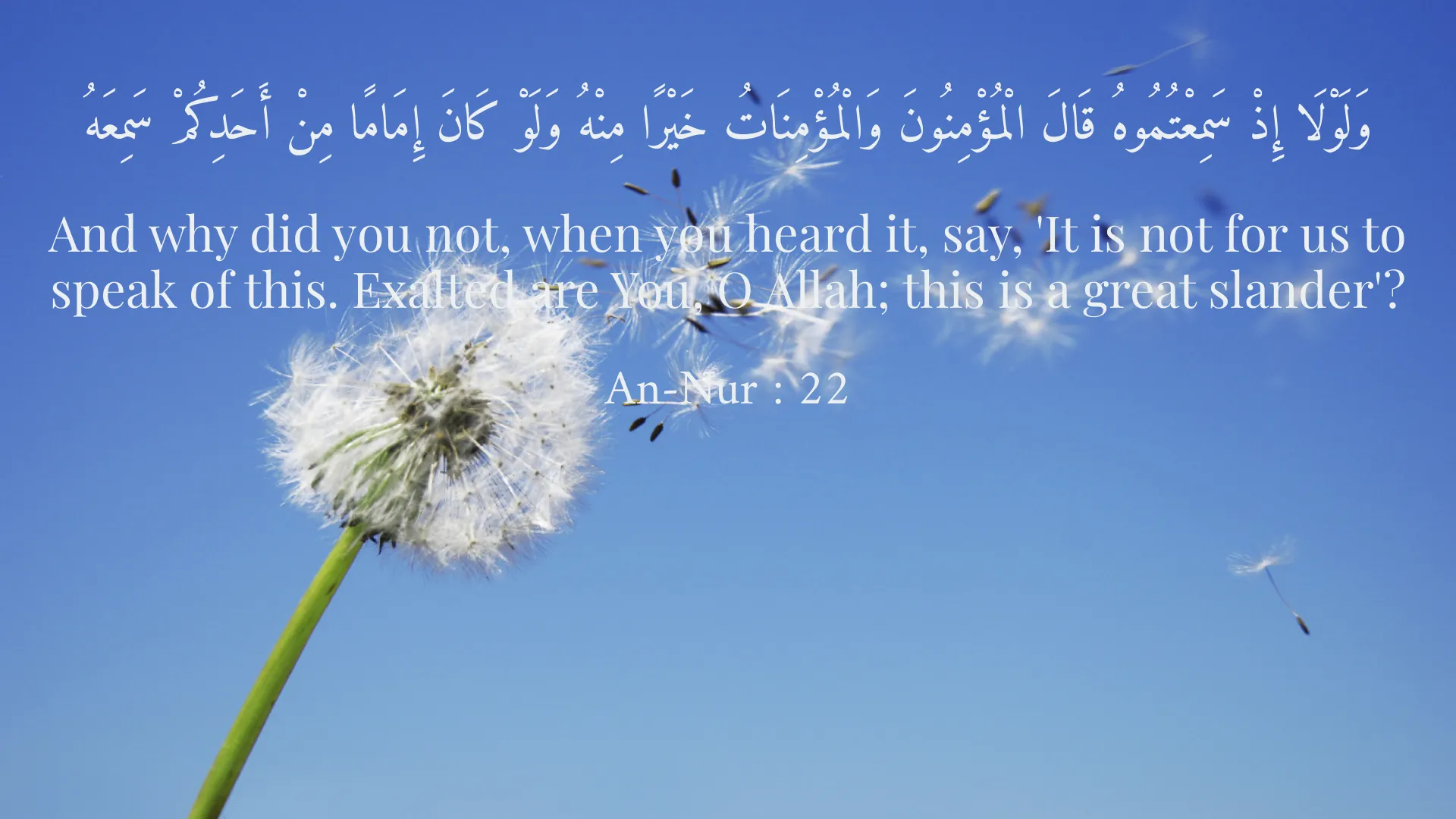
وَلَوْلَا إِذْ سَمِعْتُمُوهُ قَالَ الْمُؤْمِنُونَ وَالْمُؤْمِنَاتُ خَيْرًا مِنْهُ وَلَوْ كَانَ إِمَامًا مِنْ أَحَدِكُمْ سَمِعَهُ
And why did you not, when you heard it, say, 'It is not for us to speak of this. Exalted are You, O Allah; this is a great slander'?
An-Nur : 22
وَالَّذِينَ يُنفِقُونَ فِي السَّرَّاء وَالْضَّرَّاء وَالْكَاظِمِينَ الْغَيْظَ وَالَّذِينَ يَعْفُونَ عَنِ النَّاسِ ۗ وَاللَّهُ يُحِبُّ الْمُحْسِنِينَ
And those who spend during ease and hardship and who restrain anger and who pardon the people - and Allah loves the doers of good.
Al-Imran : 134
فَادْفَعْ بِالَّتِي هِيَ أَحْسَنُ السَّيِّئَةَ ۖ نَحْنُ أَعْلَمُ بِمَا يَصِفُونَ
But repel [evil] by that [good] which is best. We are most knowing of what they describe.
Al-Mu'minun : 96
Short Story
One day, Ahmad witnessed an argument between two friends who were upset with each other over a small mistake. He remembered the verses of the Quran and decided to reconcile between them. He said to his friends, 'Why distance yourselves over a minor mistake? The Quran states that we should forgive each other's mistakes and help one another.' Ahmad's words resonated with his friends, making them realize how essential forgiveness and mercy are in friendships.