Quranic Answer
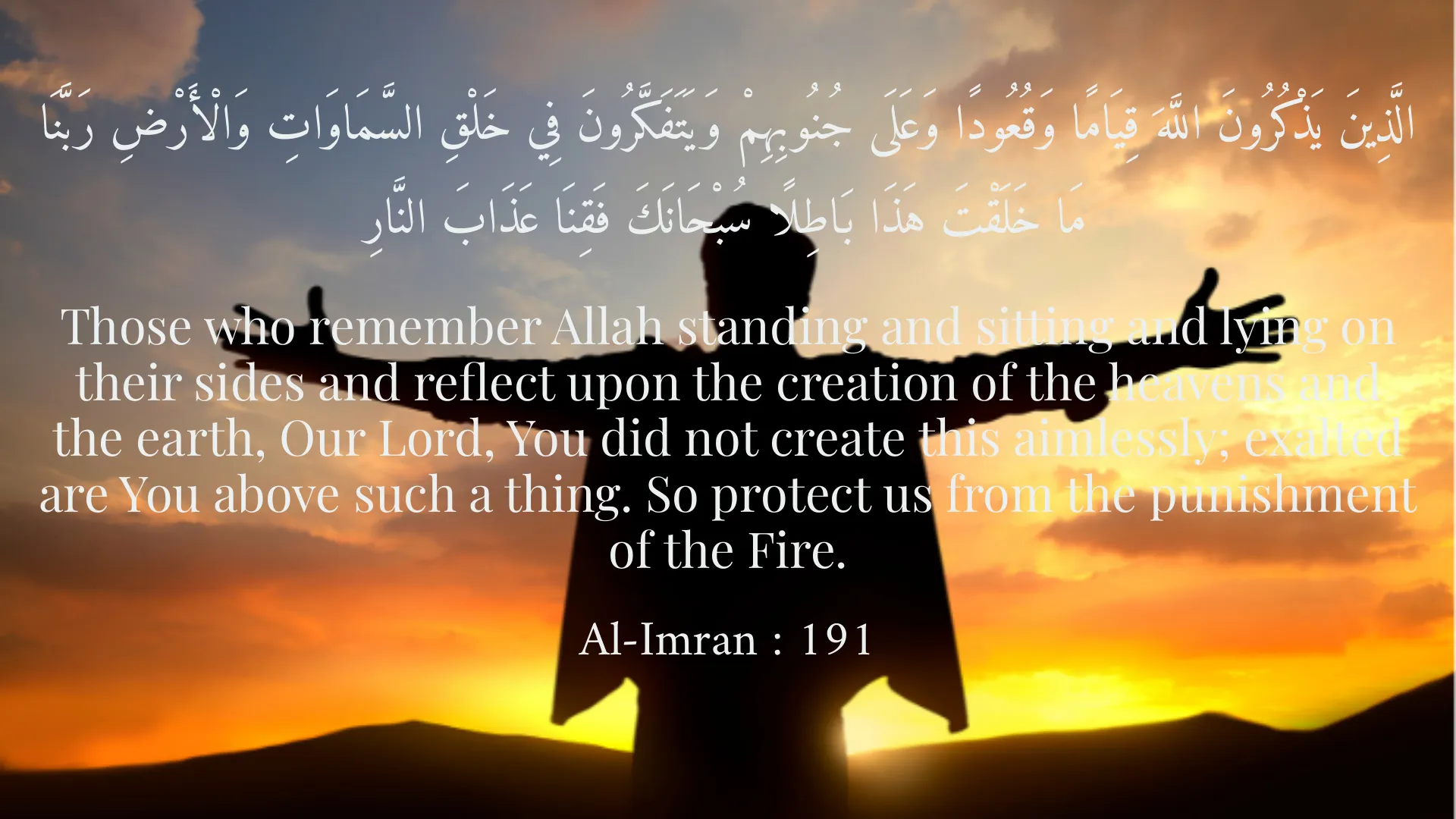
The Holy Quran, considered the final revelation in Islam, invites its followers and humanity at large to engage in deep reflection on the creations of the universe. This emphasis on contemplation can be found throughout various verses in the Quran, highlighting the importance of not only recognizing the power and greatness of God but also understanding humanity's unique position in the grand framework of existence. The Quran serves as a guide that encourages individuals to engage in meditation, fostering a relationship with the Creator that is cultivated through reflection and gratitude. One of the primary passages that illuminates this theme is found in Surah Al-Imran, verse 191. In this verse, Allah conveys, 'Those who remember Allah standing and sitting and lying on their sides and reflect upon the creation of the heavens and the earth, Our Lord, You did not create this aimlessly; exalted are You above such a thing. So protect us from the punishment of the Fire.' This verse alone encapsulates several critical elements: the multifaceted nature of remembrance, the act of reflection, and the acknowledgment of divine wisdom and purpose behind creation. The phrase 'those who remember Allah' indicates the importance of constant awareness of God. It suggests a lifestyle where prayer and remembrance of the Creator are not restricted to specific times or postures but are integral to every aspect of a believer's life. By invoking God's presence in various circumstances—be it standing, sitting, or lying down—individuals develop a profound mindfulness that permeates their actions and thoughts. Moreover, the call to 'reflect upon the creation of the heavens and the earth' underscores the Quran's encouragement for intellectual engagement with the natural world. Reflection here is not merely a passive act but an active pursuit of understanding the signs of God within His creations. Each element of the universe—from the vastness of the cosmos to the intricate details of an atom—bears witness to the creativity, majesty, and omnipotence of the Creator. Recognizing that 'You did not create this aimlessly' compels humanity to seek purpose and meaning in their existence. This contemplation serves to strengthen faith; an individual who reflects on the wonders of creation finds a renewed sense of gratitude towards the Creator. Such an approach enhances knowledge and contributes to spiritual growth, enabling worshippers to grasp the depth of their existence. Pondering the simplicity of a flower or the complexity of a galaxy allows individuals to perceive the interconnectivity of life and the divine design governing it. As the verse continues, 'exalted are You above such a thing,' it emphasizes the transcendence of God above any misconceptions of randomness or chaos in creation. This acknowledgment fosters humility, as believers understand their position in relation to the Creator. It invites them to recognize their dependence on God and fosters a deep awareness of His attributes—wisdom, mercy, and power. By urging believers to explore their relationship with the universe, the Quran initiates a journey of deeper awareness, ultimately leading to a life of meaningful reflection and purposeful living. The act of contemplation is transformative; it helps individuals confront and make sense of their place within the cosmos. They come to realize not only the boundless magnificence of creation but also their own role within it. Moreover, the habit of reflection shapes one's earthly and eternal lives. Muslims believe that life has a purpose, and each created thing is a sign pointing towards the divine. Thus, engaging in contemplation encourages individuals to assess their lives, the choices they make, and their connection with God. The Quran's premise is clear: a life lived without reflection is a life devoid of awareness, insight, and ultimately, fulfillment. In a practical sense, the Quran's encouragement of reflection can lead to a holistic lifestyle approach—one that strives for balance and harmony with the world. When believers become attuned to the signs of God in creation, they are reminded of the importance of stewardship over the earth, compassion towards all living beings, and the necessity of pursuing knowledge and understanding. In light of these reflections, the Quran's invitation to contemplate creation fosters a transformational awakening in human beings. It leads to a life characterized not only by worship but by a quest for knowledge, wisdom, and understanding. This comprehensive approach to faith encourages individuals to seek modern truths in ancient texts, linking spirituality with intellectual pursuits. In conclusion, the emphasis on reflection within the Quran serves as a profound reminder for humanity to engage with the world around them thoughtfully and meaningfully. Through verses like that in Surah Al-Imran, believers are guided to internalize their relationship with God and creation. By reflecting on the wonders of the universe, they deepen their faith, nurture their intellect, and cultivate their spirituality, ultimately resulting in a richer, more aware existence. Therefore, the act of contemplation as stipulated in the Quran is not merely an exercise in intellectualism—it's a pathway to discovering divine signs within nature and creation that shape a life filled with intention and purpose.
Related Verses
الَّذِينَ يَذْكُرُونَ اللَّهَ قِيَامًا وَقُعُودًا وَعَلَى جُنُوبِهِمْ وَيَتَفَكَّرُونَ فِي خَلْقِ السَّمَاوَاتِ وَالْأَرْضِ رَبَّنَا مَا خَلَقْتَ هَذَا بَاطِلًا سُبْحَانَكَ فَقِنَا عَذَابَ النَّارِ
Those who remember Allah standing and sitting and lying on their sides and reflect upon the creation of the heavens and the earth, Our Lord, You did not create this aimlessly; exalted are You above such a thing. So protect us from the punishment of the Fire.
Al-Imran : 191
وَالْخَيْلَ وَالْبِغَالَ وَالْحَمِيرَ لِتَرْكَبُوهَا وَزِينَةً ۖ وَيَخْلُقُ مَا لَا تَعْلَمُونَ
And [He created] horses, mules, and donkeys for you to ride and [as] adornment. And He creates what you do not know.
An-Nahl : 8
فِى آيَةٍ وَاحِدَةٍ
Indeed, in the creation of the heavens and the earth are signs for those of understanding.
Adh-Dhariyat : 20
Short Story
One day, a young man named Yusuf contemplated the profound secrets of creation and the power of God. He wished to see God in everything. One day he went to the mountains, and while admiring the beauty of nature, he realized that every stone and tree was a sign of God's infinite power. This reflection stirred a passion within him to worship and give thanks, illuminating his life with the guidance of the Quran.