Quranic Answer
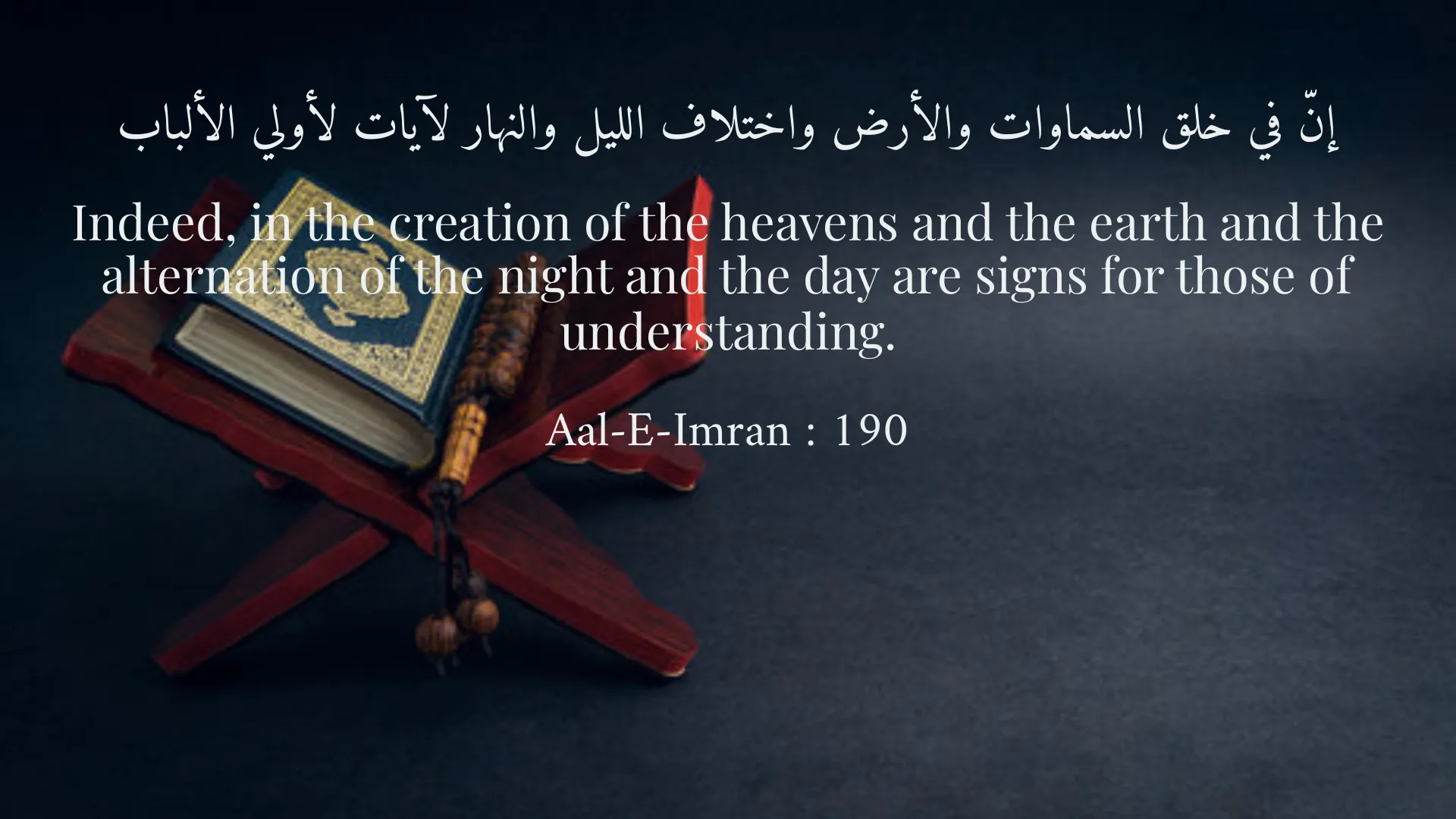
The Holy Quran is often regarded not only as a religious text but also as a profound guide for intellectual engagement and reflection. Throughout its verses, it emphasizes the importance of reflection on creation, encouraging believers to delve deep into the wonders of the universe, nature, and the phenomena that surround them. This theme serves a crucial role in understanding the divine, instilling faith, and promoting a sense of gratitude and worship in one’s life. One of the clear instances of this exhortation can be found in Surah Aal-E-Imran, verse 190, where Allah states, 'Indeed, in the creation of the heavens and the earth and the alternation of the night and the day are signs for those of understanding.' This verse stands as a powerful reminder that the act of contemplating the natural world around us is an essential path to recognizing the signs of Allah's presence and greatness. The interpretation of this verse reveals that the creation of the heavens and the earth bears intricate signs that lead the faithful towards deeper reflection and understanding. The alternation of day and night, a simple yet profound reality of life, symbolizes a far greater spiritual truth—that life is governed by divine wisdom. The cyclical nature of time is indicative of a greater plan, and it is when individuals take the time to think critically about these natural phenomena that they can begin to grasp the magnitude of Allah’s power. Engaging with these signs ultimately shapes one’s understanding of life and existence, directing mankind towards a deeper appreciation for the Creator. In addition to the cosmic observations, contemplating life, the ecosystem, and the diversity of living beings is pivotal for humans to unlock insights about divine laws and instructions. In Surah Adh-Dhariyat, verse 56, Allah states, 'And I did not create the jinn and mankind except to worship Me.' This profound declaration reinforces the concept that the ultimate purpose of human existence is to worship Allah. However, it also suggests that one cannot reach a state of devout worship without first engaging in reflection and understanding. By pondering the intricacies of the universe—from the smallest atom to the vast expanses of space—individuals can cultivate a sense of gratitude and reverence for the Creator, thus deepening their spiritual connection. Reflecting on creation empowers believers to build a more profound bond with Allah. Each element of nature serves as a manifestation of divine creativity. For example, the delicate balance of ecosystems, the complexities of biological systems, and the stunning intricacies found in the animal kingdom—all of these facets encourage admiration and respect for the Creator’s ingenuity. The Quran reiterates that to truly appreciate and fulfill the purpose of worship, one must engage intellectually and spiritually with the world around them. This is more than mere observation; it is an active engagement that encourages questions, meditation, and contemplation. Furthermore, the idea of pondering creation is not limited to the physical realm but extends to moral and spiritual dimensions—an interplay that shapes individuals as they navigate their lives. Understanding the creation prompts individuals to reflect on their own lives, values, and moral compass. It incites a desire to align one's actions with the divine laws presented within the Quran. Central to this reflection is the realization that every creature is interconnected, and with this interconnectedness comes a responsibility to uphold values of compassion, integrity, and respect for life. Believers who engage deeply with these reflections often experience a transformative journey. They begin to see the world as a manifestation of divine signs and, as a result, they develop a heightened sense of purpose and direction in their lives. This journey allows individuals to explore essential questions about existence, morality, and their role within the universe. By aligning their actions with their newfound understanding, they cultivate a lifestyle committed to righteousness, making conscious choices that are in harmony with the divine will. Practicing reflection does not only enrich individuals on a personal level but contributes to the communal aspect of faith as well. As people grow in their understanding of Allah through contemplating His creation, they are more likely to share these insights with others, fostering a community centered on faith, knowledge, and moral integrity. The conversations sparked by such reflections can lead to collective growth in understanding and practice, furthering the aim of building a spiritually connected society. To conclude, the Quran's emphasis on reflection is not a mere suggestion; it is an integral aspect of spiritual growth and understanding. It calls individuals to observe the world around them deeply and recognize it as a canvas painted by Allah’s hands, filled with signs that beckon exploration and contemplation. Through this journey of reflection, individuals can arrive at a deeper understanding of themselves, their relationship with the Creator, and the world in which they live. Ultimately, the divine invitation to reflect inspires believers to seek truth and meaning, leading them towards a life of worship, righteousness, and profound gratitude. By meditating upon the signs of creation, humanity can transform not only their personal faith but can also contribute to a broader legacy of understanding and communal upliftment.
Related Verses
إنّ في خلق السماوات والأرض واختلاف الليل والنهار لآيات لأولي الألباب
Indeed, in the creation of the heavens and the earth and the alternation of the night and the day are signs for those of understanding.
Aal-E-Imran : 190
وما خلقت الجن والإنس إلا ليعبدون
And I did not create the jinn and mankind except to worship Me.
Adh-Dhariyat : 56
ثمّ جعلناه نطفةً في قرارٍ مکینٍ
Then We made him a sperm-drop in a firm lodging.
As-Sajda : 9
Short Story
One day, a boy named Jamal asked his father, 'Dad, why do we live?' His father smiled and said, 'Life means reflecting on creation and knowing God.' Jamal decided to dedicate time each day to contemplate the creatures and the beauties of nature. Over time, he realized that reflecting on creation brought him closer to God and provided him with peace.