Quranic Answer
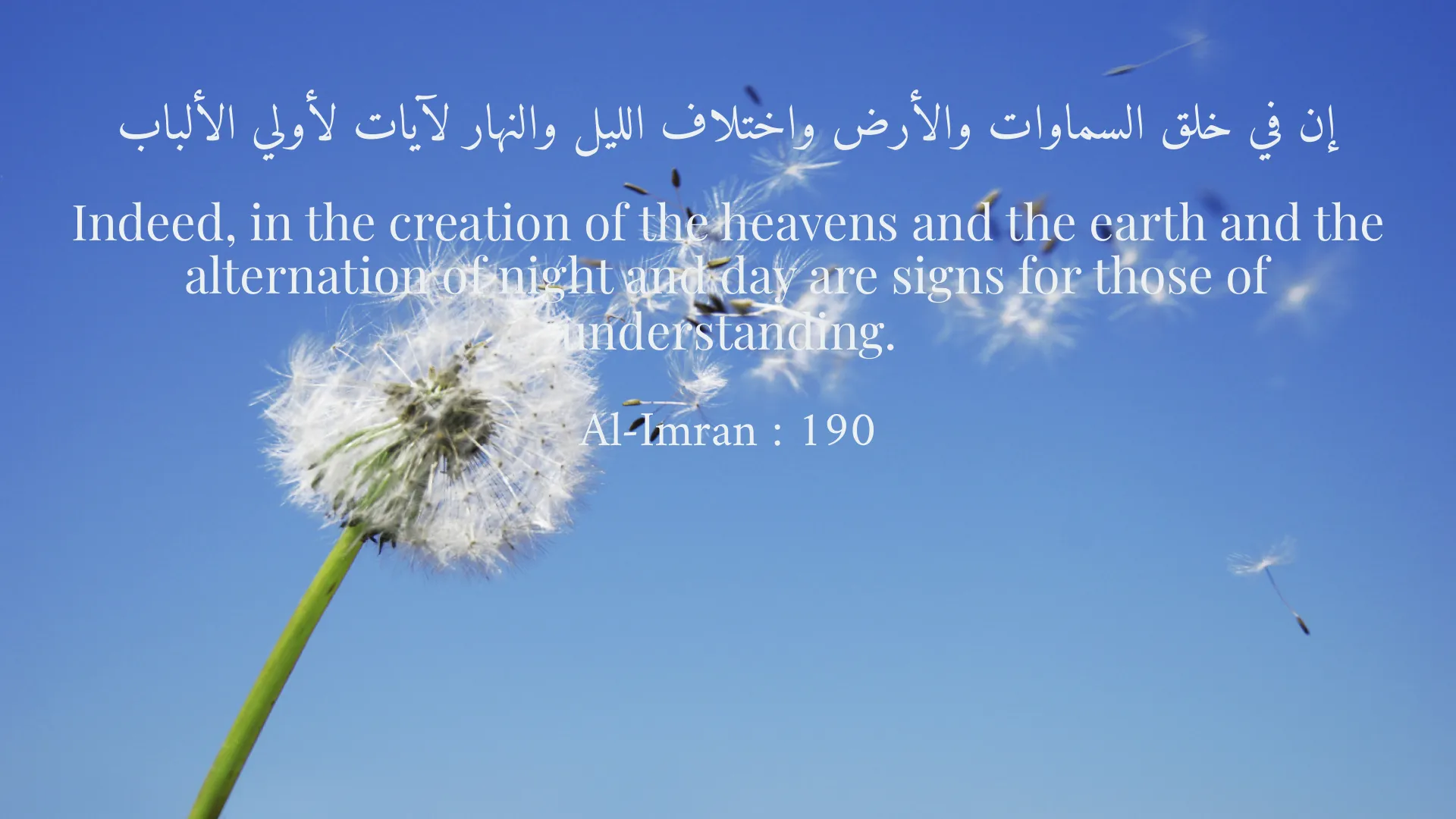
The Holy Quran, revered as the heavenly book of Muslims, stands as a perennial guide, calling upon believers to engage in reflection and contemplation. It urges them to consider not only the intricate details of the world around them but also the profound truths of existence that govern their lives. This appeal to reflection serves a dual purpose; it deepens one’s understanding of the divine and strengthens one’s faith while simultaneously functioning as a vital tool for the attainment of awareness and wisdom in day-to-day interactions. The significance of contemplation is notably captured in the verses of Surah Al-Imran (3:190-191), which state: "Indeed, in the creation of the heavens and the earth, and the alternation of night and day are signs for those of understanding." This assertion highlights that the signs inherent in creation are not mere phenomena but serve as a portal for thinkers, encouraging them to delve deeper into the mysteries of existence. The structured order of the universe, the rhythm of day and night, and the vastness of the heavens compel individuals to ponder the workings of the world and, ultimately, the Creator behind them. Such contemplation not only fosters an understanding of God’s power but also enriches the human experience. It urges individuals to acknowledge that the universe is a tapestry of divine signs, each woven with meaning and purpose. This realization propels seekers to reflect not just on the universe's physicality but also on the spiritual implications that arise from this contemplation. By contemplating the magnificence of creation, individuals can appreciate their existence within it, which can lead them to a more fulfilled and meaningful life. Furthermore, in Surah Muhammad (47:24), the Quran explicitly states: "Do they not reflect upon the Quran, or are there locks upon their hearts?" This rhetorical question underscores the necessity for humans to engage with the Quran on a deeper intellectual and emotional level. The verse serves as a reminder that genuine reflection is a key to unlocking the rich reservoir of knowledge within the Quran. It urges believers to question their understanding and to seek more profound insights, highlighting that mere recitation without contemplation could lead to stagnation in one's spiritual journey. The Quran, therefore, transcends the role of a mere religious text; it emerges as a vital cognitive guide that illuminates the path not just to an understanding of God but also to a comprehensive grasp of existence and life itself. By encouraging a deeper pondering over its verses, the Quran opens up avenues for discovering ethical and spiritual principles that can guide human behavior positively. For instance, reflecting on the stories of the Prophets, the parables presented throughout the text, and the ethical injunctions provided can significantly shape a believer's moral compass. Moreover, the inclination toward contemplation, whether pursued individually or collectively, serves as a catalyst for transformation in personal and social spheres. Individuals who engage in thoughtful reflection on the Quran are often found to cultivate more profound insights, which then ripple out to influence their interactions with others. As they align their lives according to the ethical imperatives found in the text, they contribute to the creation of a more just and harmonious society. Consequently, the Quran not only benefits the individual but also society as a whole, fostering a community that is grounded in understanding, compassion, and respect. In essence, deep contemplation of the Quranic verses is not merely an intellectual exercise but a transformative endeavor that enhances personal and spiritual development. The process of engaging with the Quran’s teachings encourages individuals to cultivate virtues such as honesty, humility, and empathy. This ethical grounding is essential not only for personal growth but also for the collective well-being of society, as individuals who embody these virtues invariably contribute to a culture of peace and understanding. The act of contemplation undertaken by believers encourages a continuous cycle of learning and growth. It drives them to question their assumptions, reassess their beliefs, and seek a deeper understanding of their purpose in life. This ongoing intellectual and spiritual engagement with the Quran solidifies the bond between the believer and the divine, helping to elevate their understanding of the complexities of life in line with divine wisdom. In conclusion, the Holy Quran stands as a profound call for reflection, encouraging believers to explore the depths of creation and consider the truths inherent in existence. The verses invite a dual approach: to understand divine power and purpose through contemplation of the natural world, and to seek ethical and spiritual guidance from the Quran itself. Embracing this invitation enables individuals to embark on a meaningful journey of reflection and transformation, leading to enriched faith, enhanced personal growth, and a more ethically-conscious society. Thus, the Quran remains not just a text to be read, but a divine guide to be contemplated, understood, and lived.
Related Verses
إن في خلق السماوات والأرض واختلاف الليل والنهار لآيات لأولي الألباب
Indeed, in the creation of the heavens and the earth and the alternation of night and day are signs for those of understanding.
Al-Imran : 190
أفلا يتدبرون القرآن أم على قلوب أقفالها
Do they not reflect upon the Quran, or are there locks upon their hearts?
Muhammad : 24
Short Story
One day, a man named Ali was sitting by the sea and reflecting on the verses of the Quran. He realized he needed to pay more attention to his thoughts and feelings in life. He began writing down beautiful points and lessons he had learned from the verses of God, deciding to dedicate more time each day to contemplating life and its meaning. Gradually, he noticed that this contemplation not only brought him peace but also helped him lead a better life.