Quranic Answer
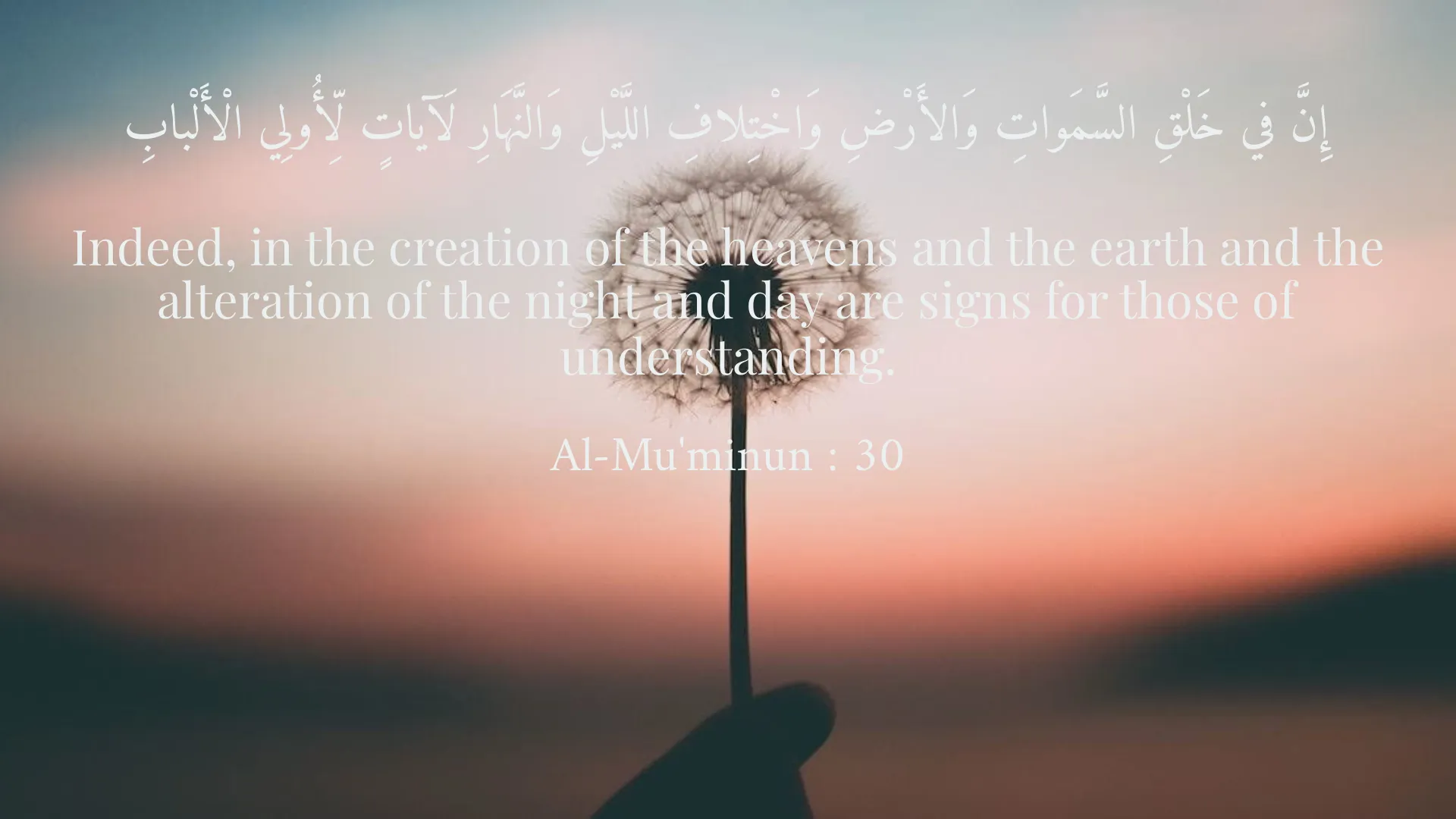
The Holy Quran, revered as the divine scripture of Islam, encompasses a wealth of knowledge, wisdom, and guidance for humanity. Among its many themes, the Quran meticulously recounts the stories and experiences of past nations across various verses. These narratives are not mere historical accounts; rather, they serve a profound purpose. The Quran serves as a timeless source of lessons and admonishments aimed not only at the audience of its time but also at successive generations, including ours today. The divine intention behind these references extends beyond simple storytelling, as they aim to encourage foresight, reflection, and the avoidance of the mistakes made by those who came before us. One of the compelling verses that underscore this theme is found in Surah Al-Mu’minun, verse 30, which states: "Indeed, in the creation of the heavens and the earth and the alteration of the night and day are signs for those of understanding." This verse eloquently emphasizes the signs embedded within the natural world and the cyclical rhythms of time. These signs serve as a source of reflection for the intelligent observer, urging humanity to delve deeper into the truths of existence. It invites believers to ponder the magnificence of creation as a means to gain insight into the Creator's wisdom and majesty. Such reflections are crucial as they can lead to a greater understanding of one’s purpose in life and a realization of the inevitable consequences of human actions. Moreover, in Surah Al-Qasas, verse 43, the Quran highlights the importance of documenting history and understanding the fate of past communities. The verse reads: "And thus do We detail the verses for a people who believe." This statement reaffirms the idea that historical narratives are crucial for the cultivation of belief. The Quran presents these revelations as a method for educating people about the past, guiding them through the triumphs and downfalls of previous generations. It suggests that by studying history, individuals can glean wisdom, steering clear of the conditions that led to the demise of those who disobeyed God. To illustrate this, the Quran mentions several nations, including the people of Noah, the ancient tribe of 'Aad, and the people of Thamud. These communities were significant in their time but ultimately faced punishment and annihilation due to their actions against divine guidance. The story of Noah, for instance, emphasizes the importance of perseverance in faith despite facing opposition. Despite his unwavering efforts to preach the message of God, he and his followers faced ridicule and rejection. Ultimately, those who did not heed his warning faced a catastrophic flood, serving as a stark reminder of the consequences of disobedience. Similarly, the people of 'Aad, known for their strength and material prosperity, turned away from the path of righteousness. The Quran describes them as formidable beings who arrogantly rejected the guidance of their prophet Hud. Their story illustrates how pride and arrogance can lead to destruction, as they were subsequently annihilated by a fierce wind that acted as divine retribution. The narratives of the people of Thamud further reinforce this message; renowned for their architectural achievements, they too met their downfall after refusing to acknowledge the signs demonstrated by their prophet Salih. These accounts serve as poignant warnings, illustrating the harsh reality that neglecting God's commandments can result in dire consequences. The Quran invites believers to reflect on these histories as cautionary tales, urging them to learn from the errors of those who came before and to strive for righteousness. The recurring theme across these narratives remains constant: the fate of each nation depends on their faith and actions. Through these verses, the Quran endeavors to establish a clear connection between belief and behavior, shedding light on how moral integrity and piety ultimately determine individual and communal destinies. In a broader context, the Quran encourages the notion that the lessons of the past should shape the future. The multifaceted approach it takes in addressing historical narratives serves not only to educate but also to instill a sense of responsibility among its readers. It emphasizes that while history is immutable, the decisions made by individuals and societies continue to hold relevance in contemporary life. In our fast-paced modern world, where distractions abound, the Quran calls for mindfulness and deliberate thought. The cyclical nature of time, as denoted in Surah Al-Mu'minun, reminds us that the actions we take today will echo into the future—a concept as critical now as it was for past civilizations. The importance of reflection on history transcends religious boundaries, resonating within the collective consciousness of humanity. As we face unprecedented challenges in our societies, be it in governance, environmental stewardship, or social justice, revisiting the lessons from the mistakes of historical nations can offer profound insights. The Quran prompts believers to be proactive rather than reactive, to learn from the lessons woven into the fabric of history rather than merely reliving them. This perspective instills a hope for progress, urging individuals to learn in humility and aim for a shared path of righteousness. In conclusion, the Holy Quran deeply intertwines spiritual teachings with historical narratives, urging readers to reflect on the experiences of past nations. Through its references to disobedience and divine retribution, it provides enduring lessons for contemporary humanity. The stories of people like Noah, 'Aad, and Thamud serve as evocative reminders of the consequences of ignoring divine guidance. As we navigate the complexities of modern life, the Quran's historical lessons become increasingly relevant, inviting us to reflect, learn, and strive to build a future rooted in faith, wisdom, and moral integrity. In essence, the Quran encourages a collective awakening, reminding us that the fate of every nation remains contingent on their actions and their submission to divine authority. As we tread forward in our lives, may we remember the lessons of the past and endeavor to create a world founded on righteousness and belief.
Related Verses
إِنَّ في خَلْقِ السَّمَواتِ وَالأَرْضِ وَاخْتِلافِ اللَّيْلِ وَالنَّهَارِ لَآياتٍ لِّأُولِي الْأَلْبابِ
Indeed, in the creation of the heavens and the earth and the alteration of the night and day are signs for those of understanding.
Al-Mu'minun : 30
وَكَذَٰلِكَ نُفَصِّلُ الْآيَاتِ لِقَوْمٍ يُؤْمِنُونَ
And thus do We detail the verses for a people who believe.
Al-Qasas : 43
أَلَمْ يَرَوْا كَمْ أَهْلَكْنَا مِن قَبْلِهِم مِّن قَرْنٍ أَهْلَكْنَاهُمْ فَأَمَّا كَانُوا لَمَّا جَاءَهُم رَسُولٌ مُّصَدِّقٌ لِّمَا مَعَهُمْ إِلَّا قَالُوا هَذَا سِحْرٌ مُّبِينٌ
Do they not see how many generations We destroyed before them? When their messenger came to them with clear signs, they said, 'This is only obvious magic.'
Al-An'am : 6
Short Story
In ancient times, a man named Zain Al-Abidin, from an old land, was always in search of truth and wisdom from the stories of past nations. He wondered why Allah had mentioned these narratives in the Quran. One day, while sitting in a valley, he recalled the story of the people of Noah and the punishment that befell them. He decided to learn from their mistakes and strive for piety and righteousness. For years, Zain Al-Abidin studied the tales of nations and taught others how to gain wisdom from history. He would always say, 'History should be the guiding light for us.'