Quranic Answer
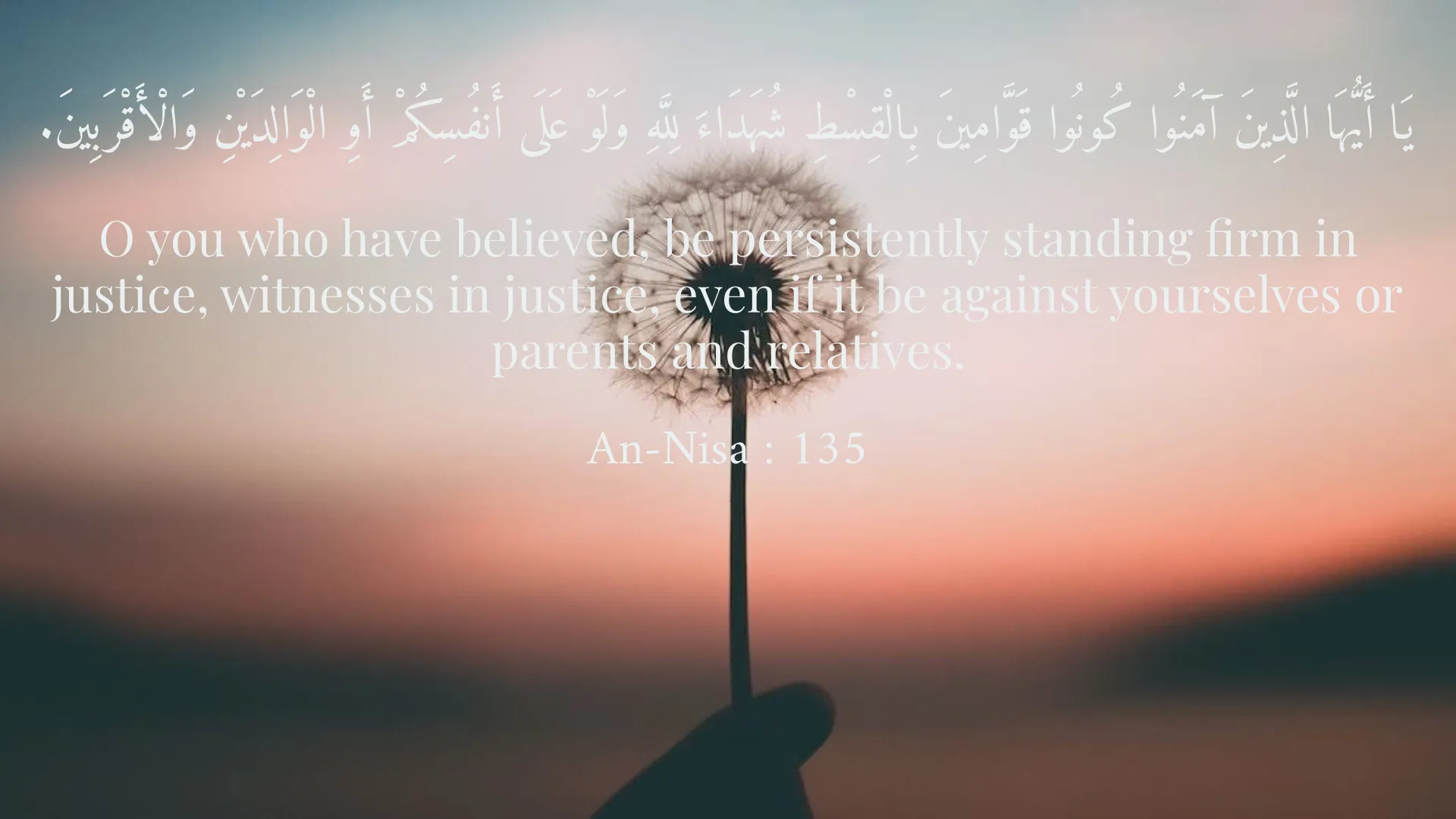
Justice holds a profound importance in Islam, as articulated in the Holy Quran. It is not merely a guideline for personal conduct but a fundamental human value that underpins the ethics and moral fabric of society. In this regard, justice transcends cultural and religious boundaries, embodying a universal principle that resonates with humanity at large. This article delves into the concept of justice as depicted in the Quran, illuminating its significance, the ethical imperatives it imposes, and the practical implications it has for society. In Surah An-Nisa, verse 135 of the Holy Quran, Allah commands believers to 'be persistently standing firm in justice, witnesses in justice, even if it be against yourselves or parents and relatives.' This powerful directive emphasizes the necessity of impartiality in justice, encouraging individuals to uphold fairness even when it contradicts their own interests or familial ties. The Quran asserts that justice is an intrinsic obligation that must be adhered to irrespective of personal relationships or societal pressures. This principle serves as a cornerstone for social cohesion, as it eliminates biases and prejudices, fostering an environment of mutual respect and understanding. Moreover, the enforcement of justice acts as a bulwark against oppression and tyranny. It is crucial to recognize how the absence of justice can lead to the marginalization and suffering of vulnerable segments of society. People who are weak or disadvantaged may face severe consequences in a landscape devoid of justice. When injustice prevails, it erodes the peace and tranquillity that are essential for a stable society. The Quran thus places a significant emphasis on protecting the rights of all individuals, with the understanding that societal harmony is predicated on the just treatment of every member. In another instructive verse, Surah Al-Ma'idah, verse 8, Allah directs believers not to discriminate while administering justice, even in circumstances where doing so might seem disadvantageous to them. The message is clear: equity should remain unwavering, serving as the basis for all actions related to justice. This teaching conveys that justice should not be swayed by personal convenience or bias. Instead, it urges individuals to rise above self-interest and remain steadfast in their commitment to fairness. The Quran's definition of justice encompasses more than just the legalistic application of laws; it calls for ethical behavior in daily interactions. The principle of justice must permeate our conduct, as it shapes attitudes and behaviors that contribute to a healthy, sustainable society. If individuals embody fairness, empathy, and integrity in their dealings, it will foster a culture where justice can thrive. This transformation requires a conscious effort to integrate the values of humility, compassion, and responsibility into our everyday lives. Additionally, the implications of practicing justice extend beyond societal harmony; they also resonate within the spiritual realm. According to Islamic belief, the pursuit of justice is not only a means to cultivate earthly peace but also a pathway to gaining Allah's love and pleasure in the afterlife. By acting righteously and holding fast to principles of fairness, believers are not only fulfilling their religious obligations but are also enhancing their spiritual connection with the Creator. The relationship between justice and societal health is unequivocal. When justice is upheld, it engenders trust among community members, strengthening the collective social fabric. Conversely, a community rife with injustice breeds cynicism, fear, and conflict. Moreover, the lack of justice can lead to systemic inequalities that disproportionately affect marginalized groups, hindering progress and development. Thus, fostering justice is not merely an ethical necessity; it is a prerequisite for the advancement of society. In contemporary times, as societies grapple with issues of inequality, racial discrimination, and systemic injustice, the Quranic teachings on justice offer vital guidance. They compel individuals and communities to confront injustices head-on and advocate for the rights of the oppressed. Through activism, policy change, and raising awareness, individuals can embody the Quranic principle of justice, which ultimately contributes to a more equitable world. Moreover, educational institutions and religious organizations play a critical role in imparting the teachings of justice as laid out in the Quran. By instilling a deep understanding of these values in future generations, we can cultivate a culture that prioritizes fairness and inclusivity. It is essential to build curricula that not only educate about the legal aspects of justice but also emphasize its moral significance. Workshops, discussions, and community programs should engage individuals in dialogues about the real-world implications of justice and inspire action. Furthermore, as technology evolves and social media becomes a powerful tool for communication and mobilization, the Quran's teachings provide a moral compass for navigating these new landscapes. The advancements in technology offer unprecedented opportunities for advocacy, allowing individuals to highlight injustices, connect with like-minded others, and effect change on a broad scale. However, this power comes with the responsibility of upholding the principles of justice, ensuring that the narratives shared are fair, accurate, and compassionate. In conclusion, the principles of justice enshrined in the Holy Quran are vital not only for individual believers but for the entirety of humanity. They compel us to act justly and fight against oppression while fostering an equitable society that values the rights of all. The call for justice is universal, urging individuals to reflect, act, and advocate for fairness in every facet of life. Such commitment will not only lead to societal improvements in the here and now but also secure a path to spiritual fulfillment and divine approval in the afterlife. It is through understanding and implementing the Quranic teachings on justice that we can aspire to build a world anchored in love, respect, and equality.
Related Verses
يَا أَيُّهَا الَّذِينَ آمَنُوا كُونُوا قَوَّامِينَ بِالْقِسْطِ شُهَدَاءَ لِلَّهِ وَلَوْ عَلَى أَنفُسِكُمْ أَوِ الْوَالِدَيْنِ وَالْأَقْرَبِينَ.
O you who have believed, be persistently standing firm in justice, witnesses in justice, even if it be against yourselves or parents and relatives.
An-Nisa : 135
يَا أَيُّهَا الَّذِينَ آمَنُوا كُونُوا قَوَّامِينَ لِلَّہِ شُهَدَاءَ بِالْقِسْطِ وَلَا يَجْرِمَنَّكُمْ شَنَآنُ قَوْمٍ أَلَّا تَعْدِلُوا.
O you who have believed, be persistently standing firm in justice, witnesses in justice, and let not the hatred of a people prevent you from being just.
Al-Ma'idah : 8
Short Story
One day, a wise man in a village wanted to hold a fair court so that a wronged individual could seek justice against an oppressor. He requested the villagers to present themselves at this court to share their stories. All the villagers, by showing up, revealed that fairness and justice held a place in their hearts. Ultimately, with a just verdict, the right of the wronged was restored and everyone was grateful for the justice of the Lord.