Quranic Answer
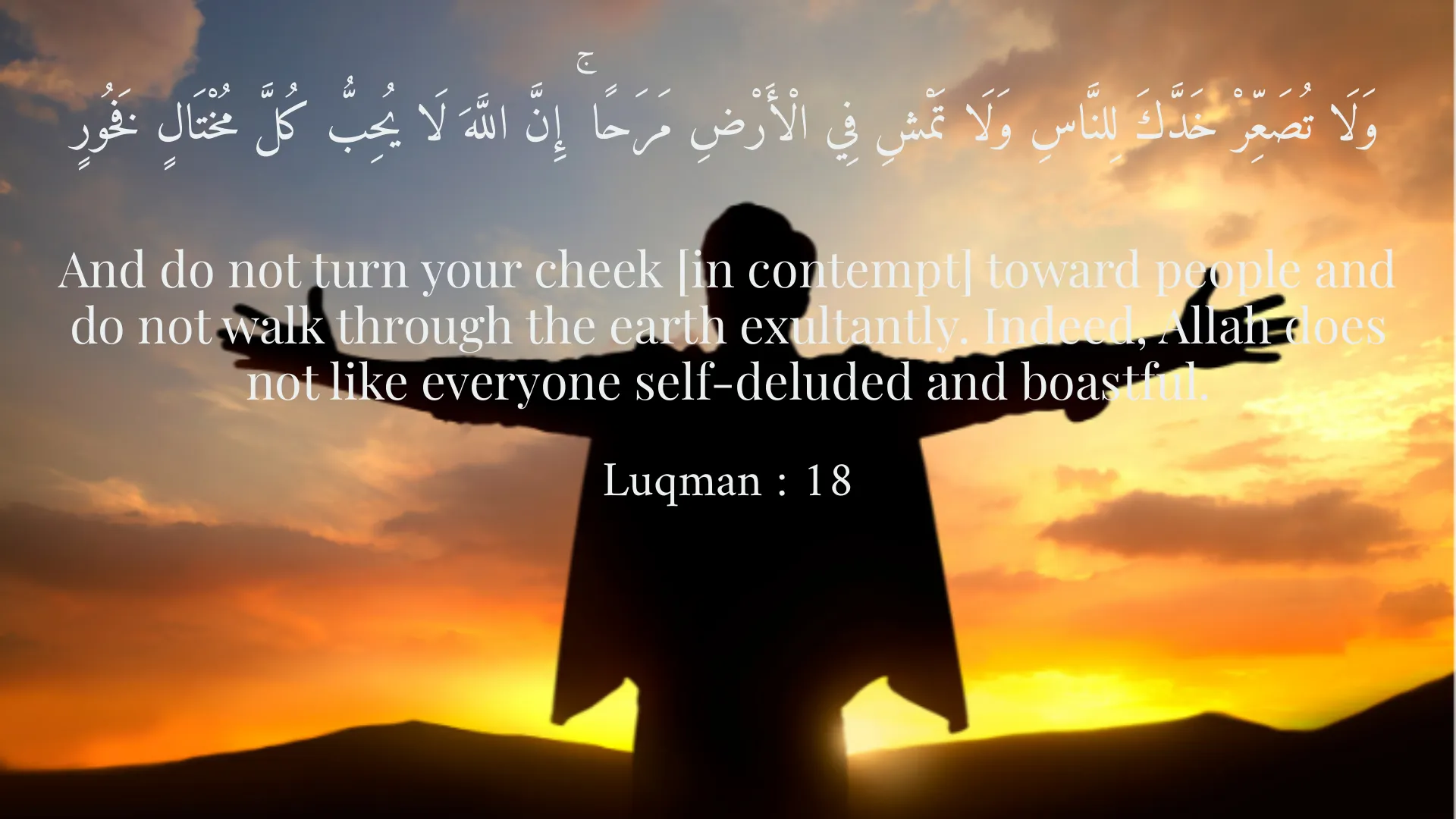
The Holy Quran, revered as the ultimate source of guidance for millions of Muslims worldwide, places a significant emphasis on humility and modesty while vehemently warning against the vices of arrogance and conceit. In a world increasingly driven by individualism and self-promotion, the timeless lessons drawn from the Quran offer invaluable insights into the fundamental values of humility and integrity that are essential for fostering healthy relationships and spiritual growth among believers. This exploration into the principle of modesty begins with Surah Luqman, verse 18, wherein Allah proclaims: "And do not turn your cheek [in contempt] toward people and do not walk through the earth exultantly. Indeed, Allah does not like everyone self-deluded and boastful." This admonition serves as a crucial reminder of the importance of treating others with respect and dignity while also emphasizing the value of self-awareness. Arrogance, which is often accompanied by a sense of superiority over others, breeds contempt and estrangement from our fellow human beings. Furthermore, the verse underscores the perilous nature of self-delusion — the belief that one is inherently better or more deserving than others. The consequences of such behavior, as highlighted in the Quran, can be detrimentally profound. When individuals allow pride and arrogance to cloud their judgment, they risk alienating themselves from not only their peers but also their faith. Hence, the Quran's teachings emphasize that genuine piety and service to others are paramount while vain self-promotion is meaningless. In Surah Al-Baqarah, verse 206, Allah expands upon the grave implications of sinning driven by arrogance. The verse states: "And when it is said to him, 'Fear Allah,' pride in sin seizes him. So sufficient for him is Hell, and wretched is the resting place." Here, the Quran articulates a dire warning; pride leads to sin, and sin leads to damnation. The admonition to fear Allah serves as a spiritual tether, drawing a believer back to the core tenets of faith and integrity. The linkage of pride with sin reveals a profound psychological truth — that arrogance can blind individuals to the consequences of their actions. When individuals become infatuated with their own achievements, they may cultivate a foul disregard for sin, viewing themselves as above reproach. This mindset not only erodes their spiritual foundation but also fosters a culture of deceit and tyranny where the vulnerable may be exploited and the will of the many silenced by the ambitions of a few. Moreover, in Surah Al-An'am, verse 23, the Quran delivers a crucial reminder of accountability, stating: "And when it is said to them, 'Where is what you used to deny?'" This verse starkly portrays the aftermath of arrogance — individuals who once reveled in their contempt for divine truths will ultimately face the harsh reality of their denial on the Day of Judgment. What may seem like an exalted position in this life may devolve into a position of utter disgrace in the life to come. The Quran thus emphasizes that nothing escapes the watchful eyes of Allah. This notion serves as a powerful impetus for believers to regularly engage in self-reflection, scrutinizing their actions, intentions, and the underlying motivations of their hearts. True humility, as prescribed in the Quran, is an active pursuit, necessitating constant vigilance against the lure of arrogance and pride. In today's fast-paced world, where social media platforms often propagate an environment ripe for boosting egos and fostering competitive comparisons among individuals, the message of the Quran is more relevant than ever. Many people feel pressured to present a picture-perfect persona, leading to feelings of isolation and inadequacy when they inevitably fall short of these unrealistic expectations. By adhering to the Quran's teachings on modesty and humility, individuals can cultivate healthy self-worth grounded in authenticity rather than delusion. Humility fosters genuine connections, enabling individuals to approach others with kindness, compassion, and an open heart. It allows believers to engage in acts of service without seeking recognition or reward, embodying the principles of charity and altruism that are central tenets in Islam. By serving others selflessly, individuals can not only enrich the lives of those around them but also solidify their own standing as humble servants of Allah. In a world rife with challenges, advocating humility can lead to a profound shift in one’s interpersonal relationships and overall mental wellbeing. The lessons found within the Quran encourage individuals to be kind in their dealings with others while promoting a sense of community and belonging. These positive qualities are essential to creating spaces where every individual feels valued and respected irrespective of their background or social status. Ultimately, the Quran serves as a guiding light for humanity, illuminating the path toward humility, kindness, and devotion. By fully embracing these teachings, believers can enrich their lives spiritually, socially, and psychologically, leading to a more harmonious existence both within themselves and in their relations with others. The essence of modesty, as emphasized in the Quran, is not merely subordinating oneself, but rather understanding one’s place in the grand narrative of creation and recognizing that true honor lies in serving others and submitting to the will of Allah. In conclusion, the call to modesty and the renunciation of pride found throughout the Quran is a profound reminder of the values that bind us as a community and as individuals. It teaches us that self-aggrandizement is hollow while humility and compassion imbue life with deeper meaning. By internalizing these messages, believers can navigate the complexities of contemporary life while remaining firmly rooted in the timeless wisdom that the Quran offers.
Related Verses
وَلَا تُصَعِّرْ خَدَّكَ لِلنَّاسِ وَلَا تَمْشِ فِي الْأَرْضِ مَرَحًا ۚ إِنَّ اللَّهَ لَا يُحِبُّ كُلَّ مُخْتَالٍ فَخُورٍ
And do not turn your cheek [in contempt] toward people and do not walk through the earth exultantly. Indeed, Allah does not like everyone self-deluded and boastful.
Luqman : 18
وَإِذَا قِيلَ لَهُ اتَّقِ اللَّهَ أَخَذَتْهُ الْعِزَّةُ بِالْإِثْمِ ۖ فَحَسْبُهُ جَهَنَّمُ وَلَبِئْسَ الْمِهَادُ
And when it is said to him, 'Fear Allah,' pride in sin seizes him. So sufficient for him is Hell, and wretched is the resting place.
Al-Baqarah : 206
وَإِذَا قِيلَ لَهُمْ أَيْنَ مَا كُنتُمْ تَكْذِبُونَ؟
And when it is said to them, 'Where is what you used to deny?'
Al-An'am : 23
Short Story
Once upon a time, there was a man named Ali who always thought he had to be the best in everything. He felt superior to others and looked down on everyone. One day, a friend of his said, "Brother, your arrogance may lead you to a bad fate." Ali ignored his friend's advice and continued with his behavior. After some time, during a gathering, he was insulted, and he realized that nobody liked him. It was at that moment that Ali introspected and decided to replace arrogance with humility in his life.