Quranic Answer
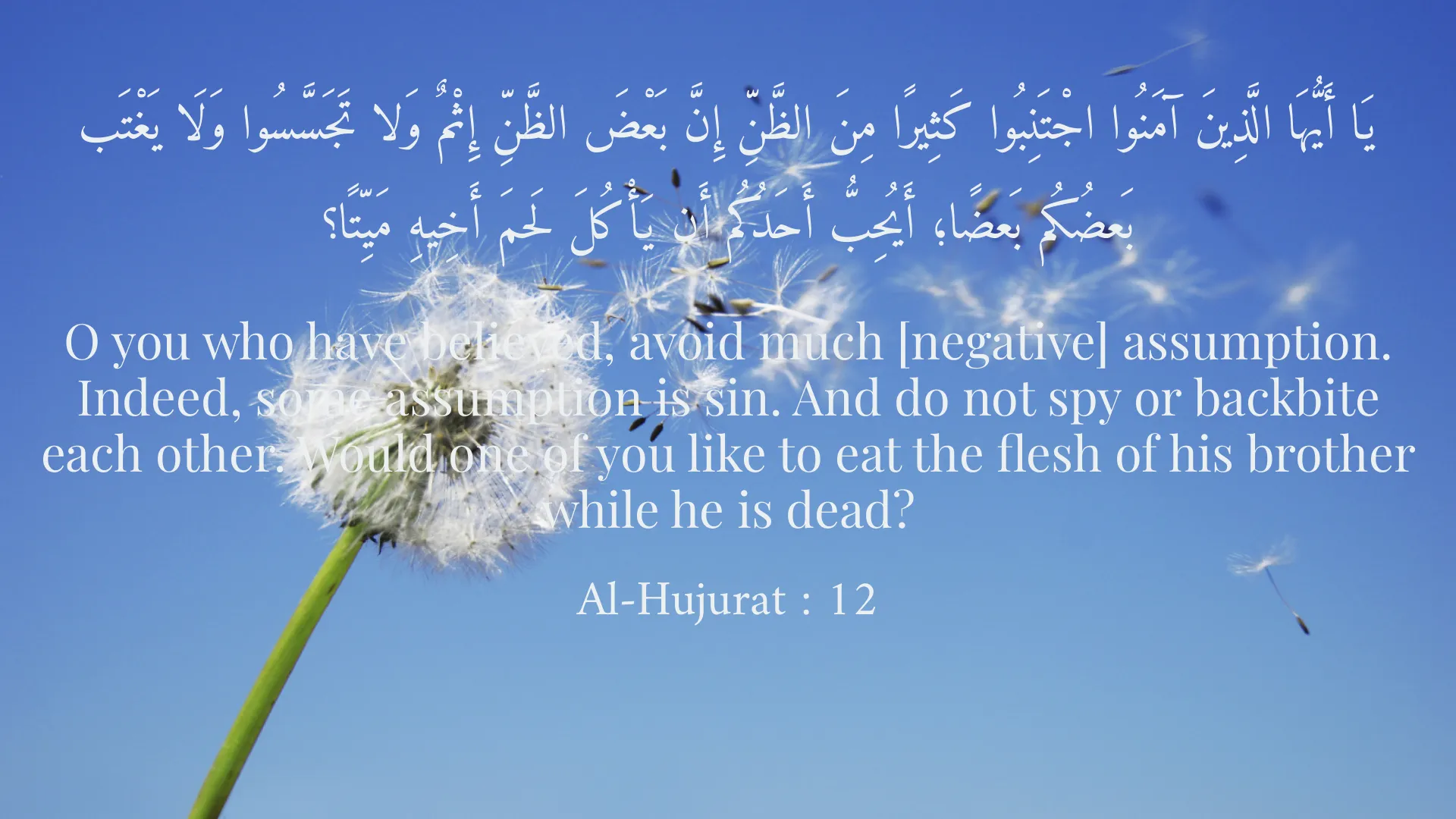
Backbiting, also known as 'ghibah' in Arabic, is an act that holds significant moral and social implications, especially within the context of Islamic teachings. It is widely regarded as one of the major sins in Islam, and its condemnation is prominently highlighted in the Holy Quran. The significance of this issue extends far beyond mere religious admonition; it unveils deep-seated aspects of human relationships, community dynamics, and personal integrity. The most poignant reference to backbiting in the Quran is found in Surah Al-Hujurat (49:12), where Allah commands believers to shun negative assumptions and gossip: 'O you who have believed, avoid much [negative] assumption. Indeed, some assumption is sin. And do not spy or backbite each other. Would one of you like to eat the flesh of his brother while he is dead?' This vivid metaphor emphasizes the abhorrence of backbiting in Islamic faith, painting it as a grotesque act akin to consuming the flesh of a deceased person. This analogy is not merely for shock value; it serves to illustrate the moral depravity associated with speaking ill of others, especially when they are not present to defend themselves. Backbiting carries with it serious repercussions not only for the individuals being discussed but also for the broader community. When one engages in this act, they contribute to a toxic environment fraught with mistrust, animosity, and fragmented communication. The essence of a community relies on mutual respect, understanding, and support among its members. When backbiting occurs, it fosters division, leading individuals to feel isolated or unwelcome in spaces that should be supportive and nurturing. The undesirable cycle of backbiting can create a detrimental atmosphere, wherein individuals become defensive and cautious, thereby undermining the very fabric of social relationships, whether they be familial, friendship-based, or communal. Moreover, the act of backbiting mirrors a profound lack of moral integrity and empathy. These qualities are quintessential in Islam, shaping the way in which a believer interacts with others. Empathy entails understanding and being attuned to the feelings of others, fostering an environment where compassion triumphs over contempt. When backbiting is permitted, it signifies a failure to uphold these moral standards, leading to a dilution of the communal spirit that Islam espouses. In essence, when individuals prioritize gossip over constructive dialogue, they bear the consequences not only in a social sense but also at a spiritual level. The implication of backbiting extends to the ramifications it can have on families and social relations in general. Families are often microcosms of society, reflecting its values, practices, and beliefs. When members of a family engage in backbiting, it sows discord, misunderstandings, and can irrevocably damage the perceptions and relationships between family members. Consequently, the nurturing environment necessary for healthy familial bonds becomes compromised due to mistrust and suspicion. In the realm of broader Muslim communities, the repercussions of backbiting are even more pronounced. Islam poses the ideal of community unity, where believers work hand-in-hand for the betterment of their collective experience. However, backbiting is fundamentally at odds with this ethos. As stated in Surah Al-Baqarah (2:191): 'You cannot have strong connections among yourselves through oppression.' Backbiting inherently entails a form of oppression—dominance over those who are maligned. Engaging in such an act thwarts genuine connections and translates into a culture of secrecy, fear, and isolation. Furthermore, the psychological implications of backbiting for the individual who participates in it cannot be ignored. Guilt often accompanies this behavior, leading to spiritual unrest and inner conflict. In Islam, the notion of accountability to God governs every action, and knowing that they have harmed another person creates a weight on the conscience. This burden can manifest into anxiety, depression, or feelings of inadequacy as one grapples with the moral implications of their actions. The spirit of Islam promotes healing and forgiveness, and thus, indulging in backbiting can force individuals into a cycle of negative self-reflection, hindering their spiritual evolution and development. Additionally, backbiting can lead to an erosion of one’s dignity and respect within the community. When an individual is known for spreading rumors or engaging in slanderous talk, their reputation invariably suffers, prompting others to view them with suspicion. This can isolate the person further and lead to a vicious cycle wherein the backbiter becomes increasingly alienated from their community, feeding their insecurities and potential for further negative behavior. In conclusion, backbiting is not just a social faux pas; it is a significant moral failing that has profound implications in both personal and communal contexts. Islam’s strict condemnation of this act serves as a reminder for believers to cultivate a culture grounded in respect, empathy, and constructive dialogue. The vivid imagery used in the Quran aims to instill an understanding of the gravity of this sin and the need for its eradication from human conduct. By working towards eliminating backbiting, individuals not only enhance their own spiritual health but also contribute to the welfare, unity, and strength of the entire community. Truly, fostering a society where positive communication reigns over harmful gossip paves the way for a more harmonious and thriving community, in accordance with Islamic principles.
Related Verses
يَا أَيُّهَا الَّذِينَ آمَنُوا اجْتَنِبُوا كَثِيرًا مِنَ الظَّنِّ إِنَّ بَعْضَ الظَّنِّ إِثْمٌ وَلا تَجَسَّسُوا وَلَا يَغْتَب بَعضُكُم بَعضًا؛ أَيُحِبُّ أَحَدُكُم أَن يَأْكُلَ لَحمَ أَخِيهِ مَيِّتًا؟
O you who have believed, avoid much [negative] assumption. Indeed, some assumption is sin. And do not spy or backbite each other. Would one of you like to eat the flesh of his brother while he is dead?
Al-Hujurat : 12
وَاقْتُلُوهُم حَيثُ ثَقِفْتُمُوهُم ۚ وَأَخْرِجُوهُمْ مِّن حَيثُ أَخْرَجُوكُم ۖ وَالْفِتْنَةُ أَشَدُّ مِنَ الْقَتْلِ ۚ وَلَا تُقَاتِلُوهُمْ عِندَ الْمَسْجِدِ الْحَرَامِ حَتَّى يُقَاتِلُوكُمْ فِيهِ ۖ فَإِن قَاتَلُوكُمْ فَاقْتُلُوهُمْ ۚ كَذَٰلِكَ جَزَاءُ الْكَافِرِينَ
And kill them wherever you overtake them and expel them from wherever they have expelled you, and fitnah is worse than killing.
Al-Baqarah : 191
Short Story
One day, a man named Ahmad was backbiting about another person to his friends. One friend told him, 'Do you know how ugly and unacceptable backbiting is?' Initially, Ahmad was indifferent, but then he remembered the verses of the Quran and realized that every person should hold love and respect for others. He thought about it and promised to leave this ugly habit behind.