Quranic Answer
In the teachings of the Holy Quran, the matters of forgiveness and revenge hold great significance, underscoring the profound ethical and moral principles that guide human behavior. In a world often overshadowed by conflict and misunderstanding, the concept of forgiveness emerges as a beacon of hope and healing. This article delves into the importance of forgiveness within the Quranic framework, the challenges surrounding it, and ultimately, the liberation it affords individuals seeking peace and fulfillment in their lives. Forgiveness is not merely an act of letting go; it is a profound manifestation of dignity, grace, and compassion. In the Quran, Allah emphasizes the noble quality of forgiving others, especially in the face of injustice and wrongdoings. For instance, in Surah Al-Imran, verse 134, Allah states, 'Those who spend in [His] cause during ease and hardship and who restrain [their] anger and who pardon the people - and Allah loves the doers of good.' This verse serves as a powerful reminder that forgiveness is an essential attribute of those considered righteous in the eyes of God. The act itself becomes a pathway to divine love and companionship, reinforcing the idea that compassion extends beyond personal grievances into the realm of spiritual fulfillment. Despite its virtues, forgiveness is often perceived as an arduous endeavor. Why might this be the case? One primary reason lies in the innate human emotions that arise in response to wrongdoing. Anger, hurt, and betrayal are natural feelings that can cloud our judgment and lead us toward the desire for revenge. When someone wrongs us, the instinctive reaction may be to seek retribution, believing that it restores balance and justice. However, the Quran teaches an alternate route—one that leads to inner peace rather than perpetual cycles of animosity. The path of forgiveness allows us to liberate ourselves from the heavy burden of negative emotions. It represents a significant transformation, where the individual reclaims their power and autonomy by choosing how to respond to pain. When we forgive, we actively decide to free ourselves from the shackles of resentment and victimhood. Instead of being defined by the wrongs inflicted upon us, we reshape our identities through compassion, understanding, and patience. Furthermore, in Surah Al-Muzzammil, Allah advises patience when faced with adversaries: 'So turn away from them and say, 'Peace.' But they are going to know.' (Surah Al-Muzzammil, verse 10) This verse highlights the essential requirement of patience in conflict situations, reminding us that maintaining peace through forgiveness often yields more fruitful and comforting outcomes than engaging in vengeance. It teaches that turning away from confrontation does not equate to weakness; rather, it honors the dignity of the self and conveys power through the act of refraining from hostility. The transformative power of forgiveness can significantly impact our emotional wellbeing. Numerous studies have indicated that harboring resentment leads to various psychological and physical health issues. The inability to forgive can contribute to chronic stress, anxiety, and even debilitating health conditions. On the contrary, empathetic understanding and forgiveness are associated with improved mental health, relational satisfaction, and physical wellness. In this light, the Quranic teachings provide not just spiritual guidance but also practical advice for living a healthy life. Understanding that forgiveness benefits our emotional wellbeing can be a significant breakthrough in our personal development. It invites introspection and encourages us to evaluate our emotional responses and patterns of behavior. While the initial act of forgiveness may be challenging, the subsequent relief and liberation from negative feelings can result in a healthier mindset and outlook on life. As we learn to forgive and cultivate an environment of understanding and compassion, we contribute to a ripple effect that can transform our communities. Moreover, forgiveness provides a critical opportunity for relational healing. When we extend forgiveness to those who have wronged us, we often find that it fosters reconciliation and connection. It encourages dialogue, understanding, and the possibility for others to evolve, rather than perpetuating the cycles of pain and reprisal. In essence, the act of forgiving not only enriches our own lives but also has the potential to enrich the lives of those around us, thereby enhancing overall social cohesion. Continuing the discussion on forgiveness, it’s essential to acknowledge its limits. Forgiveness does not signify condoning or excusing harmful behaviors. Rather, it humanizes our interactions and permits us to see the complexities of human nature, acknowledging that we are all flawed beings navigating a challenging world. Thus, forgiveness is intertwined with the principles of justice and accountability, ensuring that while we act generously, we also uphold the responsibilities that come with our actions. In conclusion, the teachings of the Holy Quran regarding forgiveness and revenge highlight a significant aspect of human existence that fosters personal and communal harmony. By cultivating a spirit of forgiveness within ourselves, we can transcend the burdens of resentment and unlock pathways to emotional freedom and peace. The Quran enlightens us about the high status of forgiveness in the sight of Allah, which is further reinforced by the myriad benefits it brings both in spiritual and emotional dimensions. Embracing forgiveness, therefore, becomes not only a moral obligation but a vital aspect of holistic living—inviting us to rise above the immediate pains of this world and foster a legacy of love, empathy, and understanding that resonates through time.
Related Verses
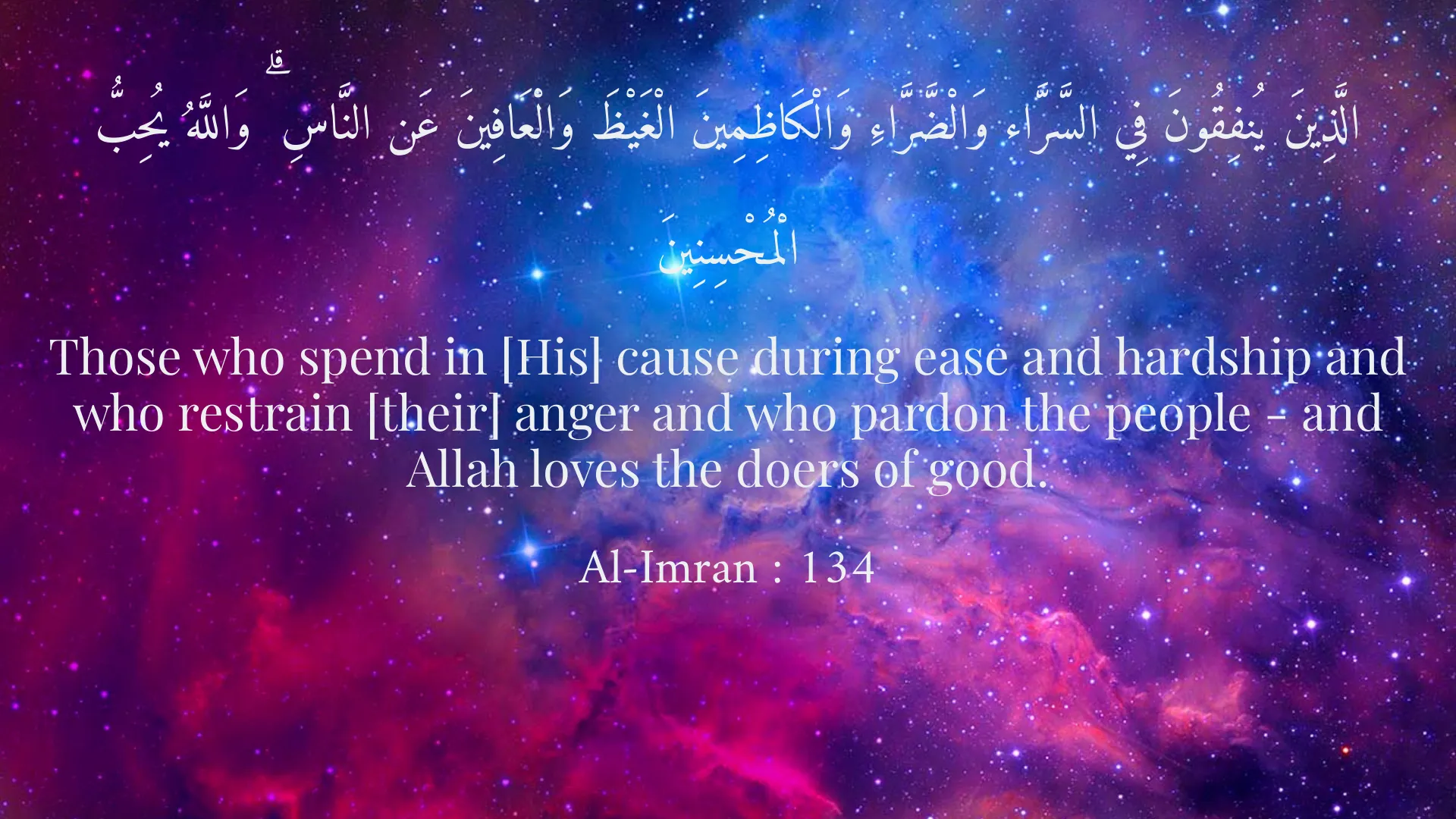
الَّذِينَ يُنفِقُونَ فِي السَّرَّاء وَالْضَّرَّاءِ وَالْكَاظِمِينَ الْغَيْظَ وَالْعَافِينَ عَن النَّاسِ ۗ وَاللَّهُ يُحِبُّ الْمُحْسِنِينَ
Those who spend in [His] cause during ease and hardship and who restrain [their] anger and who pardon the people - and Allah loves the doers of good.
Al-Imran : 134
فَاصْفَحْ عَنْهُمْ وَقُلْ سَلَامٌ فَسَوْفَ يَعْلَمُونَ
So turn away from them and say, 'Peace.' But they are going to know.
Al-Muzzammil : 10
Short Story
On a beautiful day, two friends named Amir and Saeed were sitting together and talking about life. Amir said to Saeed, 'We should forget everything and forgive each other.' Saeed replied in surprise, 'But why should we do that?' Amir explained, 'Because time moves on, and revenge only weighs us down. Let's forgive to regain our peace.' From that day on, both their hearts became lighter.