Quranic Answer
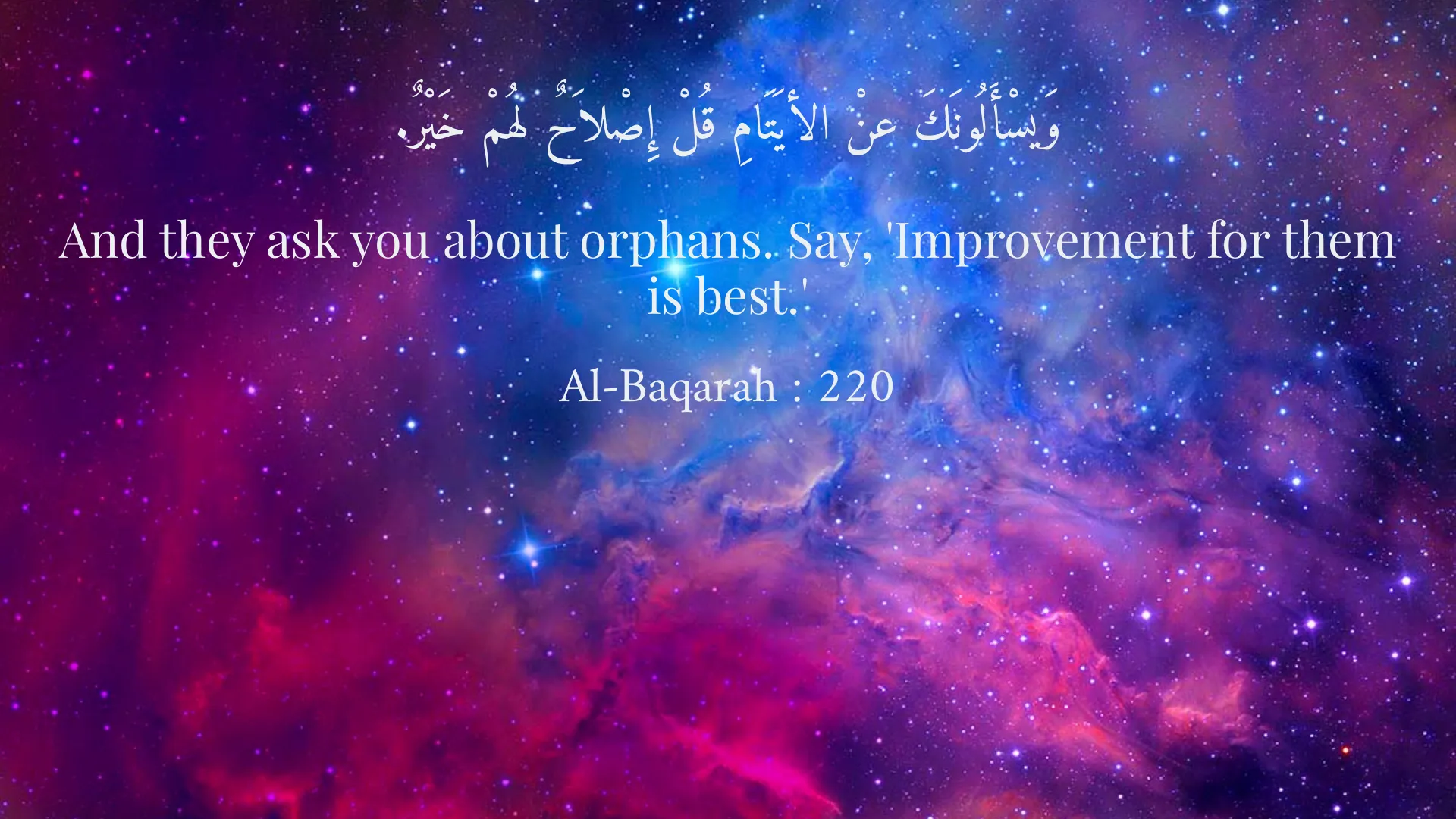
In the Holy Quran, orphans are presented as one of the most vulnerable groups in society, and significant emphasis is laid on helping them. The concept of caring for orphans transcends merely providing financial support; it comes with a broader moral and ethical responsibility towards ensuring their well-being and integration into society. Orphans, often deprived of parental support, face numerous adversities ranging from emotional distress to socio-economic challenges. This article delves deeply into the Quranic directives regarding orphans, highlighting their significance in Islam, and the social implications of caring for this vulnerable group. One of the clear messages conveyed in the Quran regarding orphans is found in Surah Al-Baqarah, verse 220, where Allah states: "And they ask you about orphans. Say, 'Improvement for them is best.'" This verse underscores the importance of facilitating the growth and development of orphans, emphasizing that improvement, in its many forms, is paramount. This implies that believers should strive to not just provide for the basic needs of orphans but to enhance their overall quality of life. Improvement suggests both physical necessities and emotional support, demonstrating how integral orphans' psychological well-being is to their development as individuals. Furthermore, Surah Al-An'am, verse 152, instructs: "And do not approach the orphan's property except in a way that is best." This verse signifies the sanctity of an orphan’s rights and possession, urging believers to treat such matters with the utmost respect and caution. Islam places a great emphasis on ethical stewardship of orphans' wealth, implying that any engagement with their property must prioritize their welfare. This fosters a culture of accountability and moral excellence, underpinned by the principle of justice that is core to Islamic teachings. The concern for orphans in Islam is not merely a religious mandate but a profound societal obligation. Supporting orphans ultimately contributes to social cohesion and development. It reflects a society's values and ethical standards, illustrating a community's investment in the welfare of its most defenseless members. When orphans receive love, care, and support, they are more likely to grow into constructive members of society, capable of contributing positively to the community as adults. Thus, caring for orphans can lead to a virtuous cycle of mutual support and social progress. Moreover, the teachings of the Prophet Muhammad (PBUH) further illuminate the importance of kindness to orphans. He proclaimed that the best of people are those who show compassion to orphans and tend to their needs. This nurturing relationship between caregivers and orphans fosters trust, love, and humanity. The Prophet's life serves as an exemplar of kindness, as he himself was an orphan, encapsulating the notion that greatness lies in empathy and compassion. Evidence of this compassion can be observed historically in Islamic societies, where orphans were often integrated into family units, cared for, and educated. This approach to orphan care reflects the broader Islamic view that each individual bears responsibility for the welfare of their fellow human beings. Each community member is encouraged to play their part, fostering a collective sense of responsibility and partnership in aiding those in need. In contemporary society, this call for caring for orphans remains relevant. With rising global issues such as poverty, war, and societal disintegration, orphans are increasingly at risk. In such settings, the faithful are reminded that their religious duty extends to taking action, whether through charitable contributions, mentorship, or guidance. Supporting orphanages, investing in educational projects, or even simply advocating for the rights of orphans can lead to transformative change in many lives. Furthermore, promoting awareness about the presence and needs of orphans can also play a significant role in addressing their plight. Educational programs and community outreach initiatives can encourage citizens to engage with local organizations, thereby creating networks of support. When communities come together to raise awareness and actively involve themselves in the lives of orphans, the impact can resonate profoundly, leading to structural changes in policies, adequate healthcare provisions, and enhanced educational resources for these children. Ultimately, we must remember that the concept of orphan care in Islam is an essential pillar of social justice and development. Helping orphans is deeply rooted in the prophetic tradition, indicating that believers should act with conscience and purpose. The ethical implications of orphan care illustrate the character of a society, implying that success is not merely measured by wealth but by the compassion and generosity exhibited towards the vulnerable. Moreover, the act of helping orphans contributes significantly to individual character development, instilling values of kindness, responsibility, and empathy. As we reflect on the Quran's verses, the duties toward orphans become clear. Alleviating their hardships involves not only direct engagement but also a continuous effort to advocate for their rights and welfare. This responsibility requires concerted efforts from all members of society, as we strive towards nurturing a world where every orphan is seen as a valued individual deserving of love and opportunity. In conclusion, the Quranic verses and the teachings of Prophet Muhammad (PBUH) illustrate the paramount importance of supporting orphans in society. Such commitments not only fulfill a religious duty but also contribute to a broader social framework that elevates humanity. It is our shared responsibility to embrace this noble act of compassion, ensuring that orphans thrive, find safety, and grow into empowered individuals. Our sincerity in helping orphans will reflect our faith and humanity, ultimately leading to a more just and compassionate society.
Related Verses
وَيسْأَلُونَكَ عنْ الأيَتَامِ قُلْ إِصْلاَحٌ لهُمْ خَيْرٌ.
And they ask you about orphans. Say, 'Improvement for them is best.'
Al-Baqarah : 220
وَلا تَقْرَبُوا مَالَ الْيَتِيمِ إِلَّا بِالَّتِي هِيَ أَحْسَنُ.
And do not approach the orphan's property except in a way that is best.
Al-An'am : 152
Short Story
One day, an orphan child lived in a village. He was always worried if someone would care for him. One day, a kind man from the village decided to help the child. He gave him books and new clothes and also spent time playing and talking with him. This small act changed the life of the orphan, and he always remembers that man as his spiritual father.