Quranic Answer
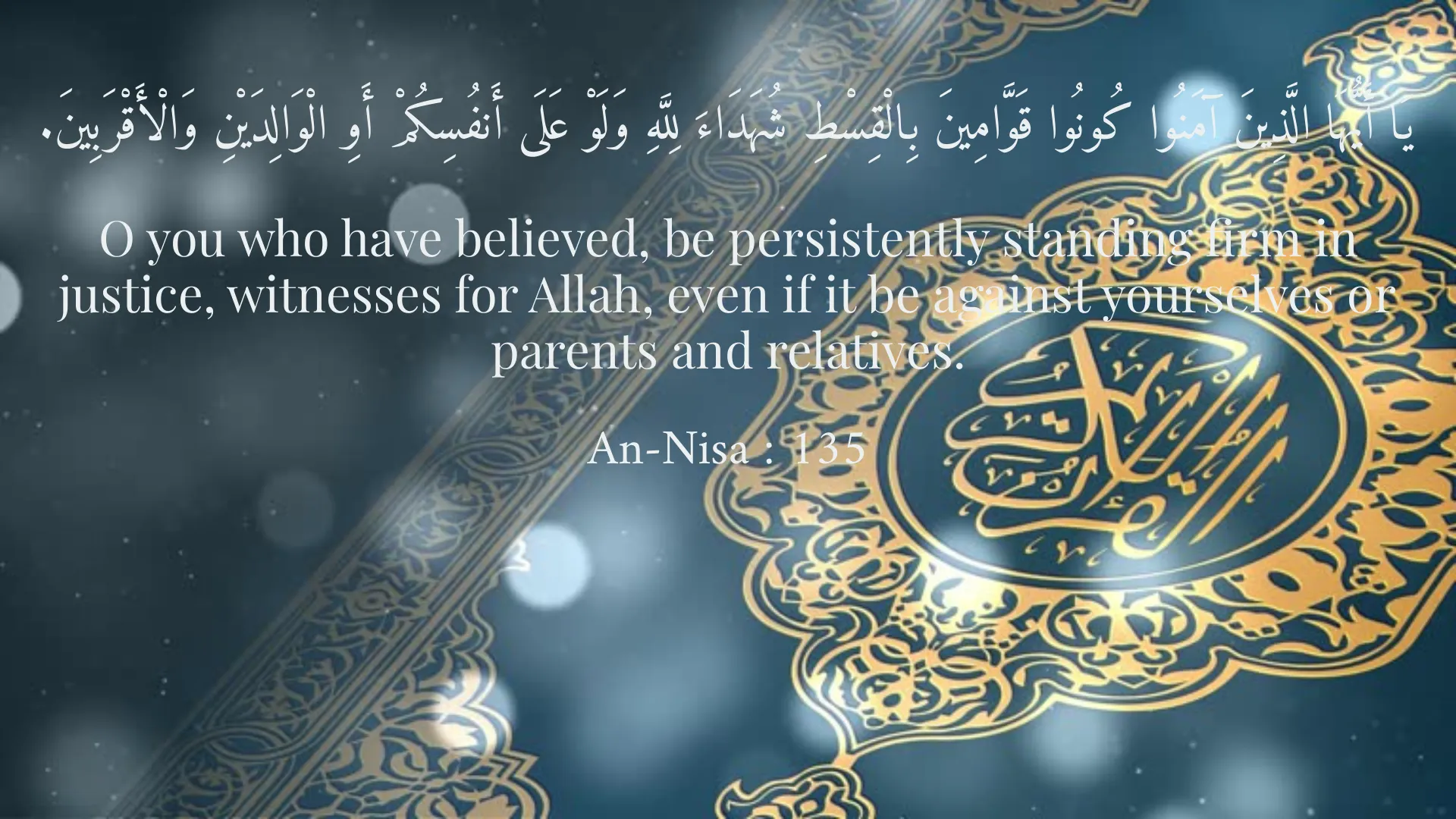
Justice is one of the fundamental principles emphasized in the Quran, a testament to its universal and timeless significance. Within its verses, the Quran transcends mere religious instruction, imparting profound lessons on morality, ethics, and social responsibility. Two specific verses highlight this essential tenet, allowing us to delve deeper into the meaning of justice in the context of Islam and its implications for personal and societal conduct. In Surah An-Nisa, verse 135, Allah commands: 'O you who have believed, be persistently standing firm in justice, witnesses for Allah, even if it be against yourselves or parents and relatives.' This verse elucidates several critical points regarding the concept of justice. First and foremost, it enjoins believers to uphold justice consistently, implying that it is not a situational virtue to be practiced selectively; rather, it is a lifelong commitment to integrity and truthfulness. The directive to be 'witnesses for Allah' further elevates the importance of justice, suggesting that it is not merely a personal obligation but a collective one toward God and one's fellow human beings. The verse emphasizes impartiality, urging individuals to remain objective and fair, even when the truth may be uncomfortable or unpopular, such as when it involves family or close relationships. This deep commitment to fairness fosters accountability and nurtures a culture where honesty prevails, thereby reinforcing the foundations of trust and respect within a community. The second verse, Surah Al-Ma'idah, verse 8, echoes this sentiment: "O you who have believed, be persistently standing firm in justice, witnesses for Allah." The reiteration of this command underscores the significance of justice in societal affairs. It conveys a call to upholding truthfulness in all dealings, be they personal or communal. This emphasis on justice compels individuals to be aware of their actions and their consequences, highlighting that righteousness must permeate all aspects of life. The Quran places extraordinary importance on justice as a precondition for a harmonious society. In nations where justice is upheld, individuals experience security, peace, and stability, all of which are essential for collective progress and prosperity. Conversely, in environments where injustice prevails, chaos and discord ensue. Thus, the establishment of justice emerges as a prerequisite for the flourishing of human relationships. Furthermore, the Quran illustrates that justice is not solely a religious obligation but is a societal necessity. A community grounded in justice fosters an atmosphere conducive to flourishing relationships, cooperation, and collaboration, paving the way for harmony and stability. From these principles, we glean that fostering justice is inherently linked to nurturing brotherhood among individuals. In a society that values and encourages justice, individuals feel a sense of belonging and trust, leading to constructive dialogues and interactions. Justice cultivates mutual respect, which is paramount in fostering understanding and camaraderie within diverse societal groups. In contexts where equitable treatment is revered, individuals are more inclined to contribute positively to society, motivated by a shared commitment to ethical values. In addition, the Quranic principles surrounding justice serve a broader purpose beyond personal conduct. They act as guiding frameworks for governance and social structures. Justice as portrayed in the Quran calls for the establishment of legal systems that embody fairness and equality. Moreover, it emphasizes the need for leaders and authority figures to embody and practice justice in their roles, as this guarantees the protection of the rights and dignity of all individuals under their purview. It is often said that a leader who governs with justice bolsters the faith of the people they serve, fostering loyalty and cooperation. The absence of justice, on the other hand, leads to disenchantment and alienation among the populace. When individuals feel that they are denied justice or that their voices are not heard, societal fragmentation occurs. The Quran warns of the dire consequences of injustice, highlighting that such behavior can lead to an erosion of trust and a decline in community life. This reinforces the Quran’s firm stance that justice cannot be understated; it is indispensable. In conclusion, the Quran’s emphasis on justice is a call to action for individuals and societies alike. It is a reminder that the establishment of justice is both a religious duty and a societal necessity. By committing to uphold justice in all facets of life, believers can contribute to a foundation that fosters healthy relationships, social equity, and community well-being. The pursuit of justice is intrinsically linked to striving for an environment where individuals can thrive, cooperate, and progress toward a shared vision of peace and prosperity. Hence, the Quran not only underscores the importance of justice in personal relationships but also frames it as vital for creating a just, equitable, and harmonious society. It invites everyone to reflect on their roles in either contributing to or undermining justice, and ultimately, it calls for the nurturing of a righteous society under the inspiring guidance of divine principles.
Related Verses
يَا أَيُّهَا الَّذِينَ آمَنُوا كُونُوا قَوَّامِينَ بِالْقِسْطِ شُهَدَاءَ لِلَّهِ وَلَوْ عَلَى أَنفُسِكُمْ أَوِ الْوَالِدَيْنِ وَالْأَقْرَبِينَ.
O you who have believed, be persistently standing firm in justice, witnesses for Allah, even if it be against yourselves or parents and relatives.
An-Nisa : 135
يَا أَيُّهَا الَّذِينَ آمَنُوا كُونُوا قَوَّامِينَ لِلَّهِ شُهَدَاءَ بِالْقِسْطِ.
O you who have believed, be persistently standing firm in justice, witnesses for Allah.
Al-Ma'idah : 8
Short Story
One day, a man named Hasan went to the market. While shopping, he noticed a seller who was cheating and selling low-quality goods at a high price. Hasan remembered the verses of the Quran that state we must act justly. He decided to advise the seller and tell him that he should give what is right to his customers. Hasan acted with honesty and fairness, and from that day on, he resolved to always uphold justice in his life.