Quranic Answer
Title: The Sin of Lying in Islam: A Comprehensive Analysis Introduction Lying is a behavior that has plagued humanity for centuries, and its implications stretch across various cultures and religions. In Islam, the act of lying is not merely regarded as a socially frowned-upon trait; it is considered a grave sin with far-reaching consequences. The Holy Quran and Islamic traditions provide robust teachings on the importance of honesty and truthfulness, emphasizing that these virtues are at the very core of a believer's character. This article will delve into the concept of lying in Islam, explore its ramifications in both personal and social contexts, and ultimately underscore the profound significance of truthfulness as taught by the Quran and the sayings of Prophet Muhammad (peace be upon him). The Significance of Honesty in Islam Islam places great emphasis on the values of honesty and integrity, principles echoed throughout the Quran. Many verses highlight the gravity of lying and the obligation of believers to uphold truthfulness in their lives. One of the pivotal verses in this regard is found in Surah At-Tawbah, verse 119, where Allah commands, "O you who have believed, fear Allah and be with those who are true." This verse positions truthfulness not only as a personal virtue but as a collective obligation for the Muslim community. In this way, honesty is woven into the fabric of Islamic social interactions, creating a foundation for a trustworthy society based on mutual respect and integrity. The Prophetic Teachings on Lying The teachings of Prophet Muhammad (peace be upon him) further amplify the Quranic injunctions against lying. The Prophet's own life serves as a model for believers, showcasing the paramount importance of truthfulness in both personal conduct and community relations. Numerous hadiths articulate the Prophet's disdain for lying. For instance, he said, "Truthfulness leads to righteousness, and righteousness leads to Paradise. A man keeps on telling the truth until he becomes a truthful person. Beware of lying, for lying leads to wickedness, and wickedness leads to Hellfire. A man keeps on telling lies until he is recorded as a liar" (Sahih Al-Bukhari). This hadith encapsulates the perilous consequences of deceit, indicating that habitual lying can lead to one's moral downfall and spiritual ruin. The Consequences of Lying in Islam Lying in Islam has severe repercussions, both in this life and the hereafter. From a social perspective, dishonesty erodes trust, which is the cornerstone of all human relationships. Families, friendships, and communities can crumble under the weight of deception. Lying often breeds conflict, resentment, and bitterness among individuals, leading to social discord and instability. In a social framework built on the tenets of honesty, lying acts as a poison that can debilitate ties that bind people together. On a personal level, the act of lying harms an individual's dignity and character. A person who lies frequently cultivates a negative self-image and lives in perpetual fear of being caught. This internal conflict can lead to anxiety, guilt, and a fractured sense of identity. Moreover, lying distances a person from the moral and ethical standards outlined in Islamic teachings, leading to a potential loss of faith and an estrangement from one’s spiritual values. Furthermore, Islam teaches that lying can have eternal consequences. As the Quran aptly describes, those who engage in dishonest conduct will ultimately face judgment on the Day of Resurrection. This idea serves as a powerful deterrent for believers, urging them to reflect deeply on their actions. The awareness that each lie can lead to dire repercussions in the afterlife creates a profound incentive for individuals to cultivate honesty as a core characteristic of their faith. Maintaining Truthfulness in Everyday Life The commitment to honesty should permeate all aspects of a Muslim’s life, from private affairs to public dealings. In a world filled with temptation and social pressure to conform, maintaining integrity can be challenging. However, Islam provides believers with practical guidelines to foster truthfulness in their daily interactions. Education plays a crucial role in promoting honesty. Parents, educators, and community leaders must actively instill the values of truthfulness in the hearts and minds of the younger generation. By modeling honest behavior and discussing the importance of integrity, they can create an environment where truthfulness flourishes. Additionally, Islamic institutions can play a pivotal role by incorporating teachings on honesty into their curriculums and community programs. Moreover, believers are encouraged to engage in self-reflection and mindfulness in their daily communications. Being aware of one’s speech and the implications of honesty can greatly reduce the temptation to lie. Through prayer and seeking divine guidance, Muslims can find strength in their resolve to uphold truthfulness even in challenging circumstances. Conclusion In summary, lying is unequivocally condemned in Islam, regarded as a major sin that threatens the very foundations of trust and integrity within society. The Quran and the teachings of Prophet Muhammad (peace be upon him) serve as guiding lights, reinforcing the necessity of honesty in both personal and social realms. The consequences of lying extend beyond mere social repercussions; they can undermine one’s character and lead to spiritual consequences in the hereafter. As such, it is imperative for Muslims to endeavor to embody truthfulness in their lives, upholding the tenets of their faith with the utmost sincerity and integrity. Through awareness, education, and community support, the Muslim community can cultivate an environment where honesty prevails, allowing for the flourishing of trust, harmony, and moral uprightness in society.
Related Verses
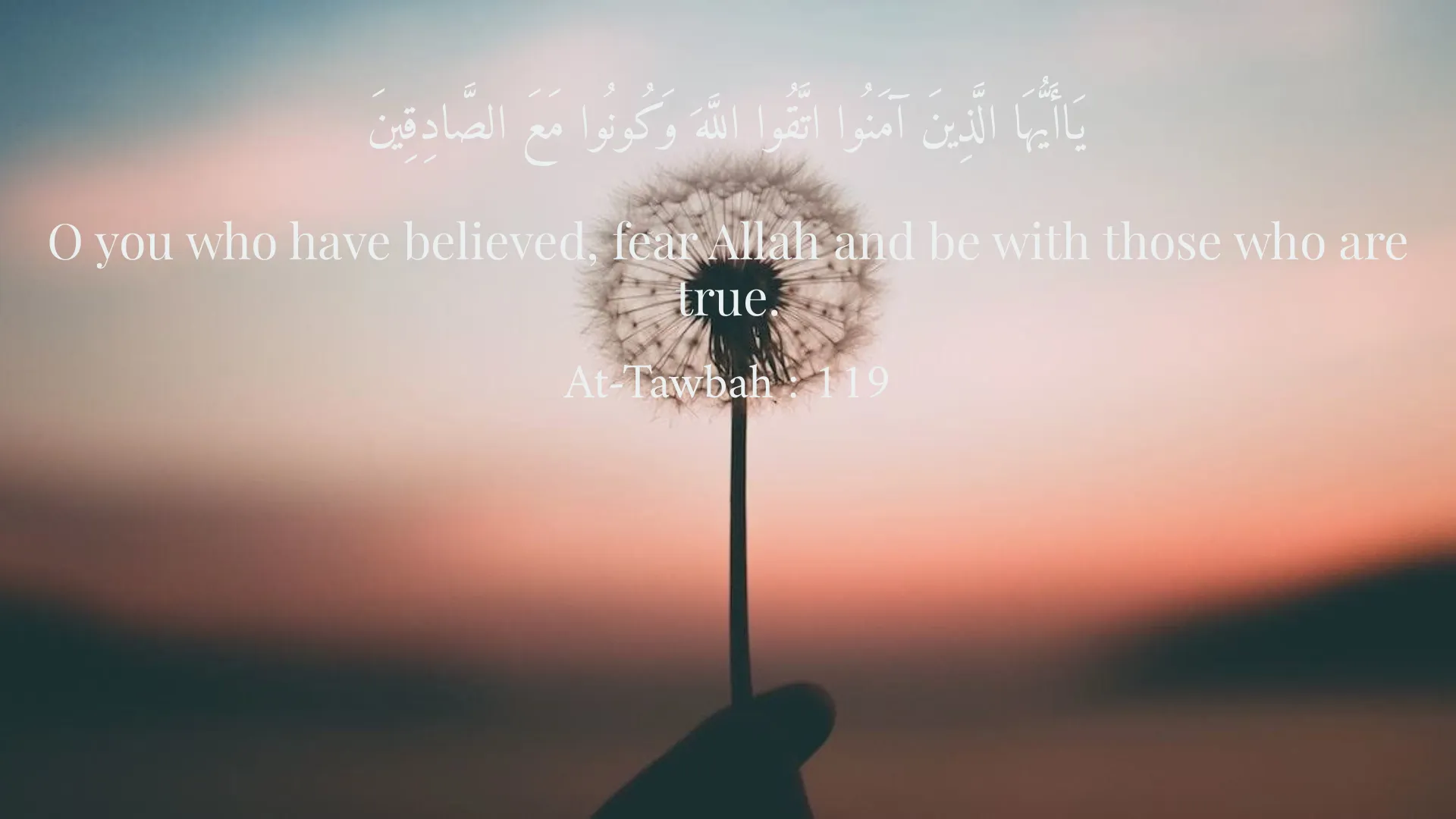
يَاأَيُّهَا الَّذِينَ آمَنُوا اتَّقُوا اللَّهَ وَكُونُوا مَعَ الصَّادِقِينَ
O you who have believed, fear Allah and be with those who are true.
At-Tawbah : 119
وَلَا تَكْتُبُوا الشَّهَادَةَ وَمَن يَكْتُبْهَا فَإِنَّهُ آثِمٌ قَلْبُهُ ۗ وَاتَّقُوا اللَّهَ
And do not conceal testimony, for whoever conceals it - his heart is indeed sinful. And fear Allah.
Al-Baqarah : 283
وَقَالَ رَجُلٌ مُؤْمِنٌ مِّن آلِ فِرْعَوْنَ يَكْتُمُ إِيمَانَهُ أَتَقْتُلُونَ رَجُلًا أَن يَقُولَ رَبِّيَ اللَّهُ
And a believing man from the family of Pharaoh, who concealed his faith, said, 'Will you kill a man because he says, 'My lord is Allah'?
Ghafir : 28
Short Story
One day, a man met a friend in the market who seemed very happy. He asked his friend, 'Why are you so happy?' His friend replied, 'Because I always speak the truth and avoid lying. Lies used to cause me anxiety, but now with my honesty, I feel at peace.' This conversation between two friends highlights the importance of truthfulness in a person's life.