Quranic Answer
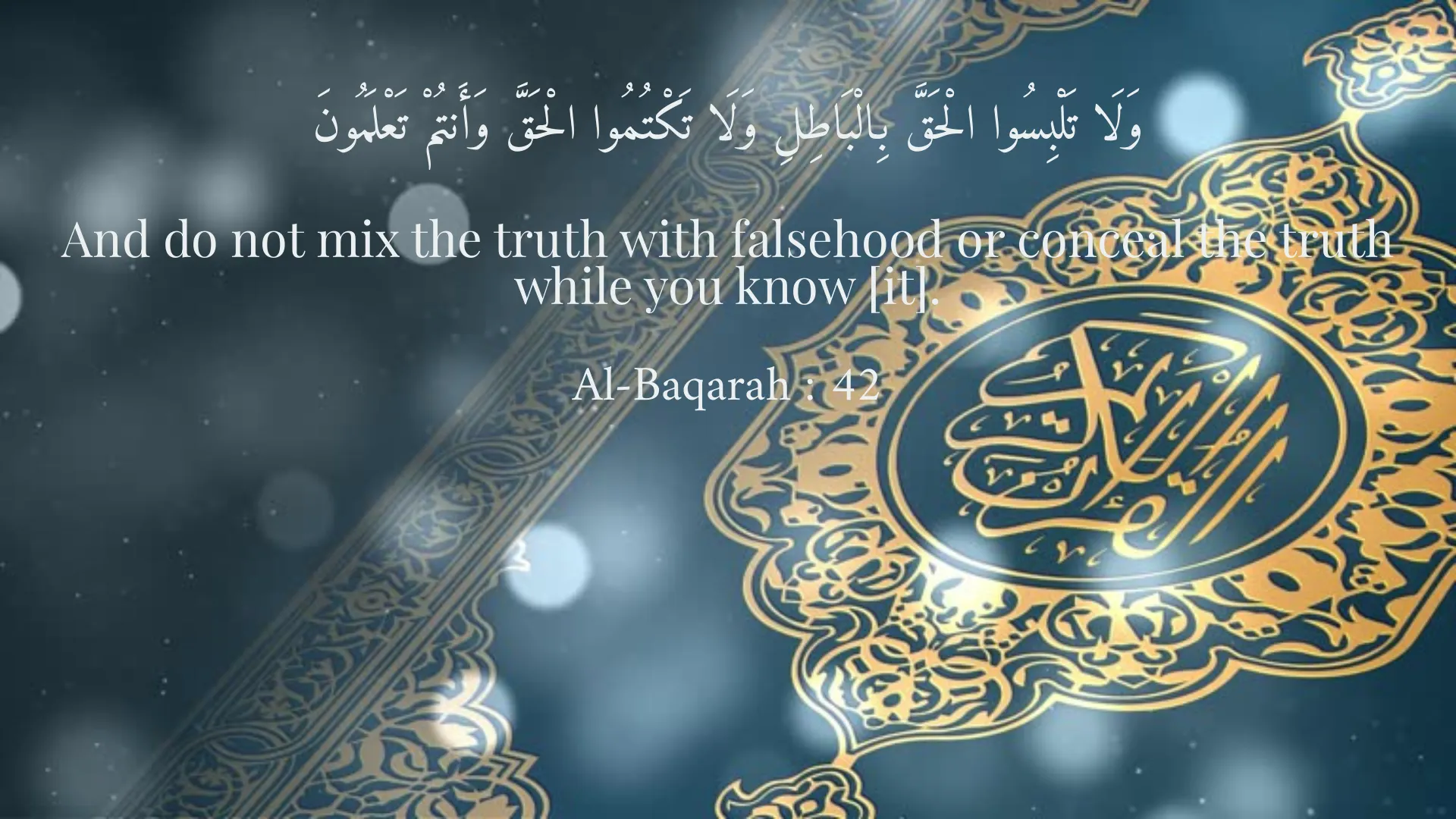
Honesty and Truthfulness in the Light of the Holy Quran The concept of honesty and truthfulness is profoundly emphasized in the Holy Quran, regarded as fundamental principles that shape the moral and ethical framework of a believer's life. The importance of these values cannot be overstated, as they are not only pivotal in personal conduct but are also essential in fostering trust and integrity within society at large. One of the Quranic verses that highlight this criticality is found in Surah Al-Baqarah, verse 42, where Allah commands: "And do not mix the truth with falsehood or conceal the truth while you know [it]." This directive serves as a divine reminder that sincerity and truthfulness are distinguishing traits of true believers. In exploring the context of lying and dishonesty, the Quran categorically categorizes lying as one of the gravest sins, with far-reaching implications for both individuals and communities. The act of lying goes beyond mere falsehood; it represents a deep-seated betrayal of trust, affecting relationships at various levels—personal, familial, and societal. An individual who resorts to dishonesty not only compromises their own integrity but also puts a strain on the communal fabric that binds individuals together, resulting in a cycle of distrust and disunity. Additionally, the significance of refraining from spreading falsehoods and doubts is underscored in Surah Aal-E-Imran, verse 61. Here, Allah instructs believers to be vigilant in their speech and to avoid disseminating information that lacks truthfulness. This command highlights the destructive potential of lying, which can stir discord and turmoil among people. When falsehoods are propagated, they lead to misunderstanding and conflict, which can disrupt social harmony and result in long-lasting grievances among individuals and communities. The repercussions of dishonesty extend into the spiritual realm as well, as Allah warns that lying distances a person from divine mercy. In Surah Al-Ahzab, verse 70, Allah proclaims: "O you who have believed, fear Allah and speak words of appropriate justice." This verse serves as a clarion call for believers to uphold truthfulness not only in their personal lives but also in their interactions with others. Speaking justly and truthfully reflects a genuine fear of Allah and a commitment to maintaining the core values that the Quran promotes. The implications of dishonesty stretch far beyond the individual. When people choose to lie, they not only harm themselves by straying from the path of righteousness but also disrupt the social relationships that are vital for interpersonal connectivity. Honesty is the cornerstone of effective communication and is essential for building and maintaining trust among peers. The absence of truthfulness can lead to misunderstandings, resentments, and even the breakdown of relationships, as individuals become wary of each other’s intentions and words. In a broader context, it can be concluded that lying is not only against Quranic teachings but it also creates numerous issues within society. Dishonesty can foster a culture of skepticism and cynicism, where individuals begin to question the motives of others. The proliferation of dishonesty generates an environment where the truth becomes obscured, and individuals become increasingly alienated from each other. This discord ultimately leads to severe consequences not only in this world but also in the Hereafter, as the Quran emphasizes accountability for one's actions and the necessity of maintaining a principled life. In addition to the personal and social consequences of lying, the Quranic perspective underscores the spiritual implications that arise from habitual dishonesty. The Quran teaches that individuals will be judged on the Day of Judgment for all their actions, including their truthfulness. It is a reminder that one's moral integrity is essential, as Allah has made a covenant with those who are truthful. Honesty, therefore, becomes a means of gaining divine favor and a pathway to spiritual fulfillment. In summary, truthfulness and honesty are not merely desirable traits but essential characteristics that define a believer’s conduct as prescribed by the Holy Quran. The emphasis placed on these values serves as a guiding framework for individuals as they navigate their interactions with others. The Quran not only denounces lying as a reprehensible act but also highlights the profound societal implications of dishonesty, calling on believers to uphold truth, justice, and integrity in every aspect of their lives. Ultimately, the teachings of the Quran entail that a commitment to honesty is paramount, guiding believers towards a path of righteousness in their mortal existence and securing their standing in the Hereafter.
Related Verses
وَلَا تَلْبِسُوا الْحَقَّ بِالْبَاطِلِ وَلَا تَكْتُمُوا الْحَقَّ وَأَنتُمْ تَعْلَمُونَ
And do not mix the truth with falsehood or conceal the truth while you know [it].
Al-Baqarah : 42
وَمَن يُحاجَّكَ فِيهِ مِن بَعْدِ مَا جَاءَكَ مِنَ الْعِلْمِ فَقُلْ تَعَالَوْا نَدْعُ أَبْنَاءَنَا وَأَبْنَاءَكُمْ وَنِسَاءَنَا وَنِسَاءَكُمْ وَأَنفُسَنَا وَأَنفُسَكُمْ ثُمَّ نَبْتَهِلْ فَنَجْعَلْ لَّعْنَةَ اللَّهِ عَلَى الْكَاذِبِينَ
And whoever argues with you about it after [there has come] to you of knowledge, say, 'Come, let us call our sons and your sons, our women and your women, and ourselves and yourselves; then supplicate earnestly together and invoke the curse of Allah upon the liars.'
Aal-E-Imran : 61
يَا أَيُّهَا الَّذِينَ آمَنُوا اتَّقُوا اللَّهَ وَقُولُوا قَوْلًا سَدِيدًا
O you who have believed, fear Allah and speak words of appropriate justice.
Al-Ahzab : 70
Short Story
One day, Adel, a beloved young man, was walking and pondering why he should always tell the truth and not lie. He remembered one of the Quranic verses that invited to honesty and truthfulness. He realized that lying was merely an escape from problems, and as a result, after some time he decided to only move forward in his life with honesty. With this decision, he found stronger friendships and gained more confidence in himself.