Quranic Answer
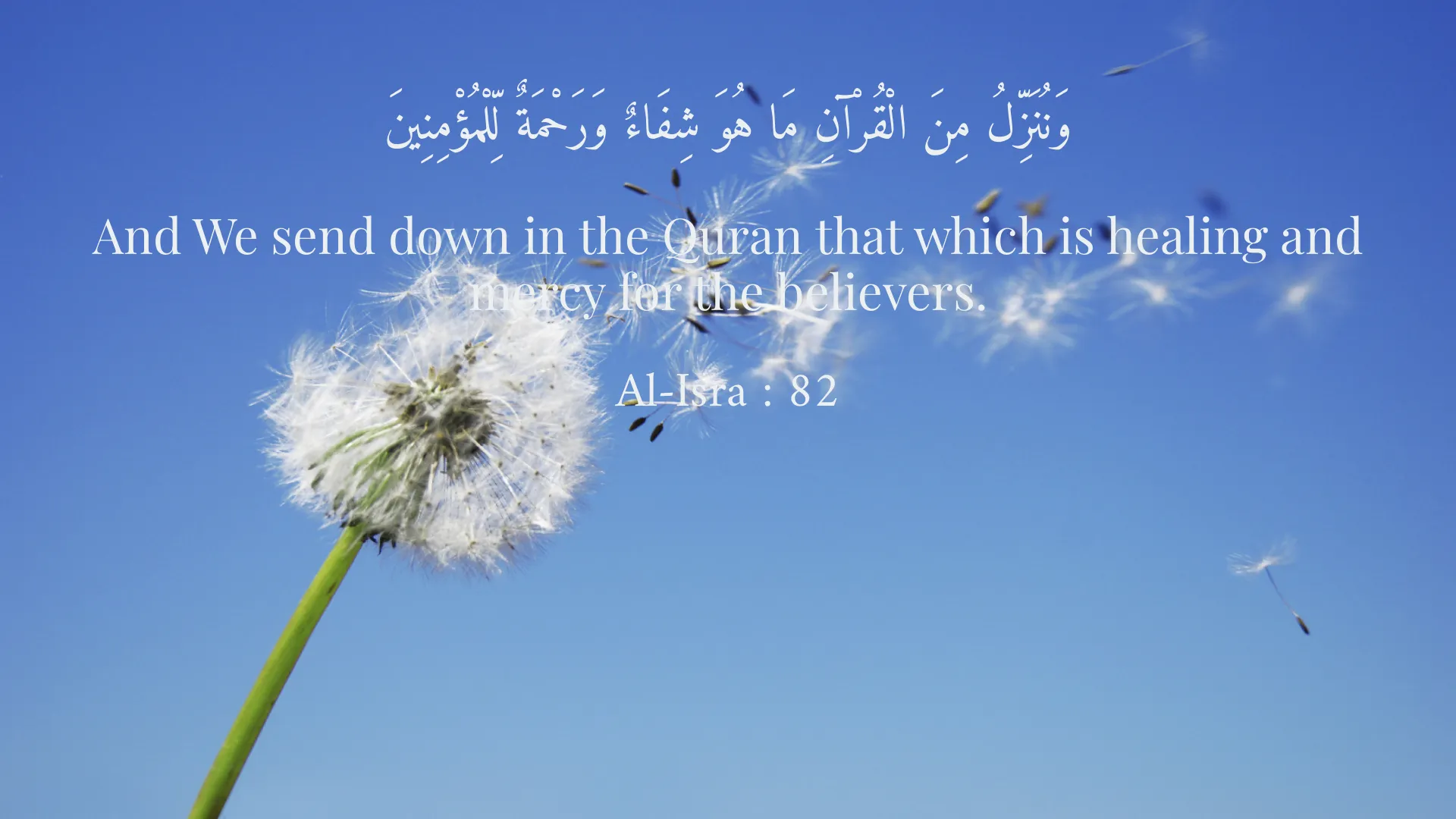
The Holy Quran is often referred to as 'a cure' due to its profound ability to address not only the spiritual needs of individuals but also their psychological and emotional well-being. Throughout its verses, the Quran emphasizes the importance of spiritual healing and the peace it brings to believers. This attribute of the Quran can be observed in numerous verses, one of the most prominent being found in Surah Al-Isra, verse 82, where Allah declares: 'And We send down in the Quran that which is healing and mercy for the believers.' This particular verse eloquently encapsulates the Quran's dual role as both a healer and a source of mercy. It is essential to understand that this healing is not confined to mere physical ailments but extends far beyond, providing a balm for emotional and spiritual distress. The Quran acts as a guiding light, offering solace and tranquility to those who embrace its teachings. The healing effect of the Quran primarily operates on two levels: emotional and spiritual. Emotions play a significant role in the belief system of an individual. When faced with the challenges and tumultuous experiences of life, many people may feel overwhelmed by anxiety, sadness, or despair. In moments of distress, turning to the Quran can offer a sense of relief. The soothing verses of the Quran provide words of encouragement that help believers reflect upon their faith and strengthen their connection to Allah. This connection is essential, as it builds a foundation of trust and reliance on Allah’s wisdom and mercy. As noted in Surah Al-Imran, verse 155, where Allah states: 'And heal the chests of a believing people,' the Quran underscores its ability to provide a form of emotional healing, particularly for those who are grappling with pain, loss, or uncertainty. In contemporary society, the impact of mental health issues is becoming increasingly prominent. Many individuals suffer from various forms of psychological distress, including depression and anxiety. The Quran's verses, filled with messages of hope, patience, and resilience, can act as a refuge during these difficult times. The practice of reciting the Quran, along with reflection on its meanings, can provide a therapeutic outlet. Engaging with the Quran can serve as a reminder to individuals of their purpose and the greater narrative of life, steering their thoughts towards positivity and fostering a hopeful mindset. In many traditions, it is often noted that those who earnestly seek solutions in the Quran tend to find a sense of relief that is unmatched by worldly pursuits. Equally important is the Quran's adherence to moral and ethical values. The teachings within its verses encourage individuals to cultivate virtues such as honesty, patience, compassion, and kindness. These qualities not only govern personal behavior but also enhance interpersonal relationships within communities. The Quran serves as a source of guidance regarding ethical dilemmas and personal challenges. Individuals who follow these principles are more likely to experience fulfillment and harmony in their lives, leading to healthier mental states. By internalizing the values espoused in the Quran, believers develop resilience against negativity, which is often triggered by the adversities of life. Moreover, the Quran promotes the significance of communal support through its teachings. Believers are advised to foster strong relationships with one another, seek help, and provide assistance to those in need. This sense of community acts as a protective buffer against life's stresses. When individuals come together to support one another, a collective healing process can occur, reinforcing the impact of Quranic teachings on emotional and spiritual well-being. The role of community cannot be overlooked, as the Quran advocates for brotherhood and unity, further validating its message of healing within a societal framework. Various studies have indicated that spiritual practices, including the recitation of the Quran, can enhance an individual's emotional well-being. The peaceful act of engaging with the Quran reduces stress and anxiety levels, allowing individuals to gain insight into their struggles. For many, the act of reading or listening to the Quran results in a calming effect that can transform their mental state. It brings about a unique sense of tranquility that helps to anchor believers amidst the storms of life. It is also worth noting that belief in the Quran's healing properties extends beyond the mere act of recitation; it involves deep contemplation and understanding of its messages. It is essential for individuals to engage with the Quran critically, reflecting on how its teachings apply to their lives. The Quran encourages active involvement, prompting believers to strive for personal growth and self-improvement. This transformational journey is rooted in the intricate relationship between faith and mental wellness. Believers who actively interpret the Quran's guidance are likely to experience greater levels of personal development, contributing to their overall happiness and life satisfaction. In conclusion, the Holy Quran is a comprehensive source of healing, providing solace and guidance for believers facing both emotional and spiritual challenges. Its therapeutic properties arise from a combination of divine wisdom, ethical teachings, and the sense of community that it fosters. As the Quran highlights the importance of seeking refuge in faith during times of adversity, it reaffirms its role as a 'cure' for the hearts and minds of individuals. Believers who turn to the Quran not only find comfort but also embrace a lifestyle founded on moral integrity and compassion, facilitating a sense of inner peace and holistic well-being. The Quran's ability to provide guidance, enhance emotional wellness, and reassure believer's minds underscores its profound importance in the lives of many, illuminating the path to a healthier and more fulfilling existence.
Related Verses
وَنُنَزِّلُ مِنَ الْقُرْآنِ مَا هُوَ شِفَاءٌ وَرَحْمَةٌ لِّلْمُؤْمِنِينَ
And We send down in the Quran that which is healing and mercy for the believers.
Al-Isra : 82
وَأَشْفِ صَدْرَ قَوْمٍ مُؤْمِنِينَ
And heal the chests of a believing people.
Al-Imran : 155
Short Story
One day, a young man named Ali was seeking peace in his life. He turned to the Quran and read its verses carefully. When he came across the verse 'And We send down in the Quran that which is healing,' he felt a sense of hope. Ali decided to start his day with reciting the Quran, seeking tranquility and healing through it. Over time, he noticed that his life became brighter and he grew more resilient against challenges.