Quranic Answer
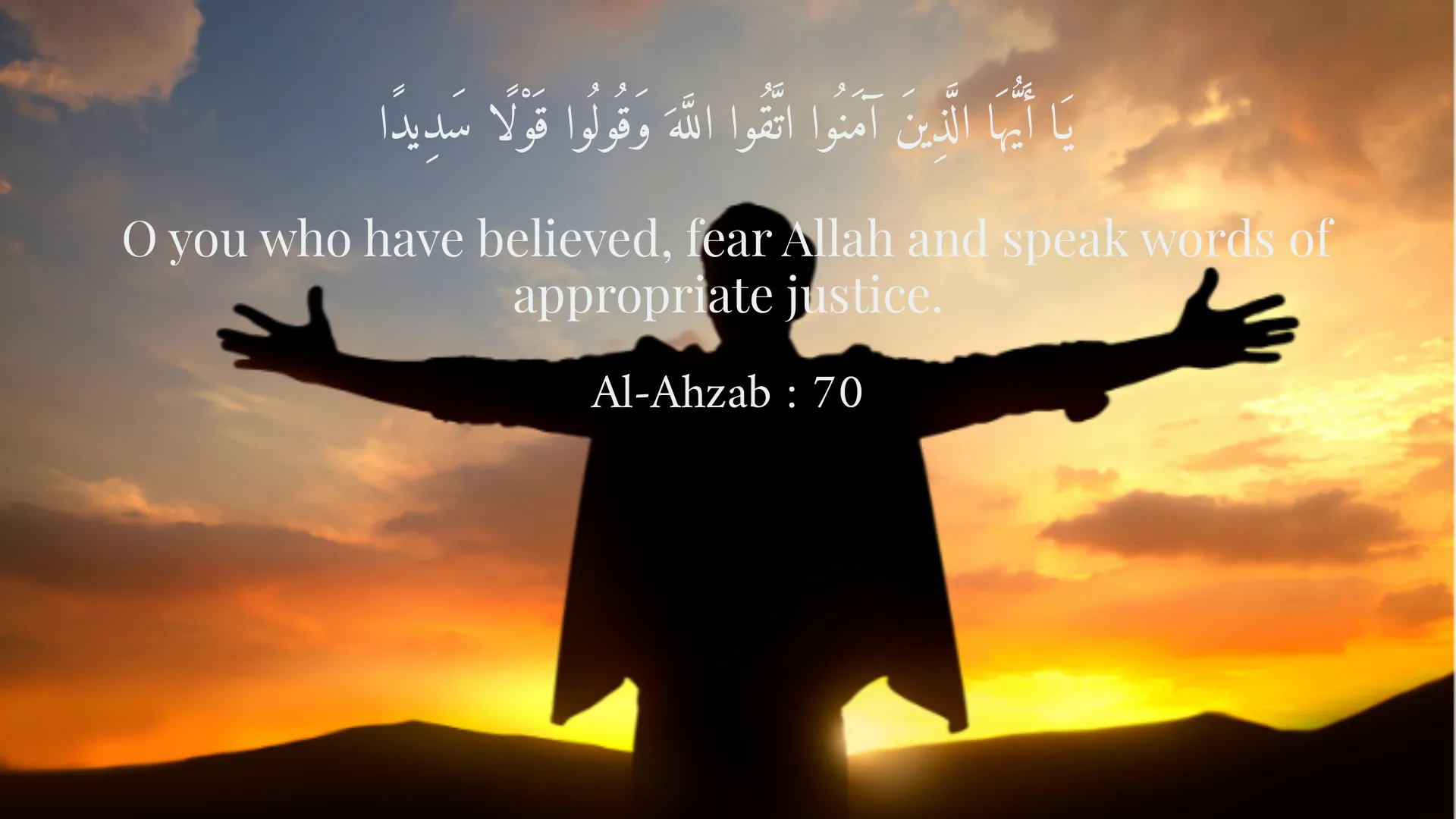
The Holy Quran emphasizes the importance of one's speech throughout its verses. The act of speaking is not merely a physical process but a profound expression of the self, reflecting a person's thoughts, intentions, and beliefs. Thus, the words spoken by an individual hold immense power and can significantly affect both their own life and the lives of those around them. The ability to articulate thoughts clearly and accurately is vital, and the Quran provides ample guidance on how to navigate the complex landscape of communication. This article will delve into the significance of careful speech as highlighted in the Quran, illustrating its impact on personal integrity, social relationships, and spiritual development. In Surah Al-Ahzab, verse 70, Allah clearly instructs the believers to exercise caution in their speech. This verse states: 'O you who have believed, fear Allah and speak words of appropriate justice.' The phrase 'fear Allah' suggests a profound awareness of one’s actions and their consequences. This awareness is crucial not only for personal accountability but also for social responsibility. By urging believers to speak justly, the Quran reinforces the idea that communication should be constructive rather than destructive. Words have the power to uplift or demean, to heal or harm, and therefore, speaking justly becomes a moral imperative for all individuals. The accompanying promise from Allah that He will amend the deeds of those who speak rightly illustrates the divine recognition of the significance of speech in shaping one’s destiny. This concept of accountability extends beyond personal interactions; it reflects the wider societal implications of speech. When individuals engage in truthful and just discourse, they contribute to a culture of honesty and respect. This can lead to stronger interpersonal relationships and a more cohesive community, where individuals feel valued and understood. Conversely, careless speech can sow discord and division, leading to misunderstandings and conflicts that can ripple through families and communities. Furthermore, Surah Luqman, verse 19, offers additional insight into the nature of speech. In this verse, Allah advises: 'And be moderate in your pace and lower your voice.' This instructs individuals to not only speak truthfully and justly but also to do so in a manner that is calm and composed. By advocating moderation, the Quran guides individuals to approach discussions with an even temperament, avoiding extremes of emotionality that can cloud judgment and lead to regrettable remarks. This moderation is especially crucial in heated discussions, where tempers can flare and words can quickly become harmful. Lowering one’s voice, as mentioned in the verse, can also symbolize humility and respect for others. It reflects an understanding that effective communication is not only about the message conveyed but also about the manner in which it is delivered. By speaking gently and steadily, individuals can foster an environment conducive to open dialogue, ensuring that all parties feel comfortable expressing their thoughts and feelings. Additionally, in Surah Al-Mu’minun, verse 3, Allah acknowledges the importance of avoiding pointless talk, promising that those believers who refrain from frivolous conversations will be among the successful. The implication here is that every word we utter should serve a purpose, whether it be to seek knowledge, convey truth, or foster understanding. The Quran calls upon believers to embrace the quality of their speech, reflecting a higher standard that discourages idle chatter and gossip. This serves as a powerful reminder of the value of meaningful discourse and presents the challenge of resisting the temptation to engage in trivial or harmful conversation. It is crucial to understand that the significance attributed to one's speech is not limited to the spoken word alone. In today's digital age, where communication often occurs through text messages, social media posts, and other forms of written communication, the principles outlined in the Quran remain highly applicable. The permanence of written words necessitates a heightened sense of responsibility when sharing thoughts in public forums. Just as we should strive to speak justly and respectfully in person, the same standards hold true for our online interactions. This highlights the continuous relevance of the Quran's teachings as they provide guidance for navigating contemporary communicative challenges. Moreover, taking care of one’s tongue is not solely about avoiding negative speech; it also involves the active pursuit of positive expression. The ability to encourage, uplift, and inspire through words is considered a gift and should be cultivated. Speaking kindly and offering genuine compliments can foster a culture of support and encouragement among individuals. In doing so, believers contribute to a spirit of positivity that resonates throughout their communities. This approach aligns with the Quranic principle that encourages constructive engagement, aiming for the betterment of society at large. In conclusion, the teachings within the Quran regarding speech underscore the profound impact of words in every aspect of life. The emphasis on careful, truthful, and respectful communication reflects a broader understanding of personal responsibility and societal harmony. As individuals navigate their roles in both personal and public spheres, the guidance of the Quran can serve as a compass, directing them toward constructive dialogue and mindful interaction. Ultimately, by recognizing the weight of their words, believers can cultivate a life marked by integrity, respect, and accountability, thereby fostering a more compassionate and just society. This holistic approach to communication not only enriches personal experiences but also contributes to the collective well-being of communities, demonstrating the timeless relevance of the Quran's teachings in the art of speech.
Related Verses
يَا أَيُّهَا الَّذِينَ آمَنُوا اتَّقُوا اللَّهَ وَقُولُوا قَوْلًا سَدِيدًا
O you who have believed, fear Allah and speak words of appropriate justice.
Al-Ahzab : 70
وَاقْصِدْ فِي مَشْيِكَ وَاغْضُضْ مِنْ صَوْتِكَ
And be moderate in your pace and lower your voice.
Luqman : 19
وَ الَّذِينَ هُمْ عَنْ اللَّغْوِ مُعْرِضُونَ
And those who turn away from ill speech.
Al-Mu’minun : 3
Short Story
One day, Adel scolded one of his friends for the words he uttered. He remembered the Quranic verses that emphasize being careful with what one says. He decided to speak more thoughtfully and to express only words that could help others and contribute positively to society. Over time, Adel noticed that those around him were also positively influenced by his kind words, creating a more uplifting atmosphere in his community.