Quranic Answer
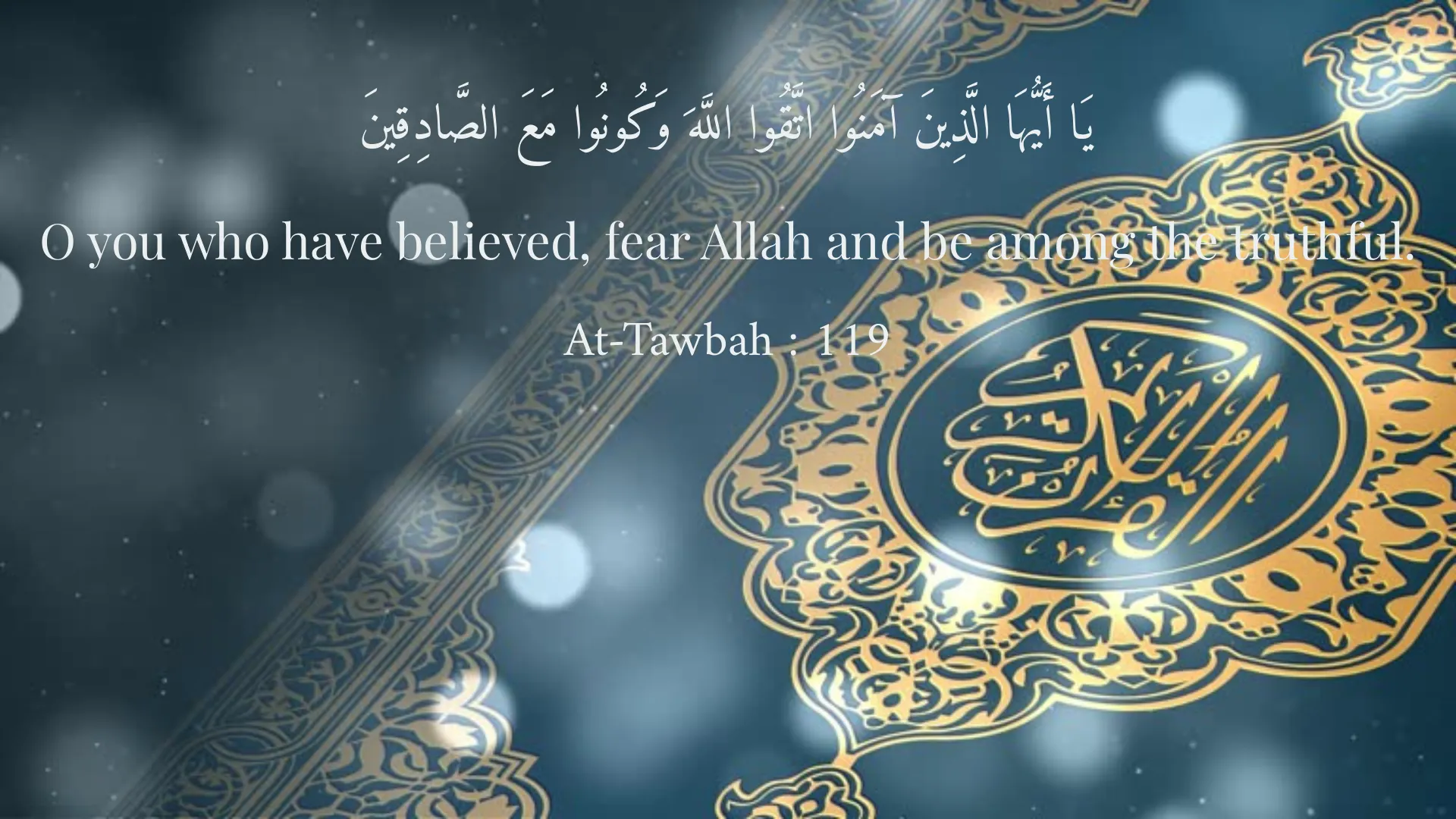
In the Holy Quran, truthfulness is emphasized as a fundamental virtue that transcends mere honesty. It is a paramount characteristic that is imbued with spiritual significance and practical implications. The call for truthfulness is not merely an arbitrary set of rules; it is a divine instruction that shapes the moral fabric of believers. In Surah At-Tawbah, verse 119, Allah states, 'O you who have believed, fear Allah and be among the truthful.' This directive emphasizes that truthfulness is not simply the absence of deceit but an active engagement in honesty and integrity. This verse establishes that truthfulness is intrinsically linked with piety and righteousness, thus serving as a beacon for those seeking to cultivate their faith. The Quran does not treat truthfulness as a standalone characteristic but as interconnected with other virtues that together form a foundation for harmonious living. To fully appreciate the importance of truthfulness, it is essential to acknowledge how it influences both personal character and community dynamics. When individuals practice truthfulness, it not only reinforces their faith but also fosters a culture of integrity and respect within the broader society. Through truthfulness, believers can navigate ethical challenges with a clear conscience, which encourages them to engage in good behaviors and promote positive interactions with others. Indeed, in the realm of social virtues, truthfulness stands as a pillar that supports a healthy, functional community. Moreover, another significant benefit of truthfulness lies in the trust it builds in human relationships. Trust is a fragile but vital element that can significantly influence the quality of interactions and relationships. When someone embraces honesty, others are more likely to trust them. This trust lays the groundwork for deeper connections, whether they be friendships, family ties, or professional relationships. It is in the spirit of trust that communities can thrive, as the bonds formed are based on mutual respect and a shared commitment to honesty. In Surah Al-Ahzab, verse 70, Allah explicitly commands, 'O you who have believed, fear Allah and speak the truth.' This direct injunction to believers underscores the significance of truthfulness as an essential principle to live by. It serves as a reminder that one's faith is, in part, reflected in their words and actions. When individuals uphold the value of truthfulness, they not only adhere to divine instructions but also cultivate a sense of responsibility towards others. This, in turn, encourages individuals to reflect on their own behaviors and strive to live truthfully. Furthermore, it is vital to recognize the societal implications when truthfulness is prioritized. In a society where honesty is valued and upheld as a shared virtue, the prevalence of deceit and fraud is significantly diminished. This creates an environment where fairness, justice, and integrity are paramount, benefiting the entire community. Members of such a society inherently develop a sense of security and belonging, as they can rely on one another to act with honesty and integrity. One might argue that there are instances where 'white lies' or deceptive practices serve to protect someone's feelings or maintain peace. However, the Quran advises caution when considering such actions. While it may be tempting to justify small untruths as harmless, the Quran urges believers to practice honesty even in challenging situations. This unwavering commitment to truthfulness is indicative of a strong moral character and a deep-seated dedication to one's faith. Moreover, the process of cultivating truthfulness can significantly enhance an individual's self-awareness and personal growth. Engaging in honest communication encourages individuals to reflect on their thoughts, motives, and behaviors. This reflective process aids in personal development and moral growth, as individuals learn to align their actions with their values. Consequently, truthfulness becomes not merely a moral issue but also a vital component of self-improvement. In nurturing truthfulness, a multi-dimensional approach can be beneficial. Encouraging truthfulness can begin in the home; parents can model honest behavior and create an open dialogue where children feel safe to express their thoughts and feelings without fear of reprimand. As children learn the value of truthfulness from a young age, they carry these lessons into adulthood, influencing their relationships and actions in society. Schools can also play a critical role in fostering a culture of honesty by integrating discussions on ethics and integrity into their curricula. By reinforcing the importance of truthfulness at various educational levels, a foundation for future generations can be established where honesty is paramount. In conclusion, truthfulness, as illuminated in the teachings of the Holy Quran, holds significant spiritual, personal, and societal value. By embracing truthfulness, individuals can enhance their faith, foster trust in relationships, and contribute positively to the community as a whole. It serves as a guiding principle that can aid in the cultivation of moral character and stronger interpersonal connections. As believers, it is essential to recognize that the commitment to truthfulness is more than a mere recommendation; it is a divine directive that nourishes both individual and societal health and growth. Emphasizing truthfulness in our lives ultimately inspires a world where honesty thrives, and deceit is diminished, paving the way for a just and righteous society.
Related Verses
يَا أَيُّهَا الَّذِينَ آمَنُوا اتَّقُوا اللَّهَ وَكُونُوا مَعَ الصَّادِقِينَ
O you who have believed, fear Allah and be among the truthful.
At-Tawbah : 119
يَا أَيُّهَا الَّذِينَ آمَنُوا اتَّقُوا اللَّهَ وَقُولُوا قَوْلًا سَدِيدًا
O you who have believed, fear Allah and speak the truth.
Al-Ahzab : 70
Short Story
Once upon a time, there was an honest man named Ahmad living in a small town. He always valued honesty and because of that, he was successful in his trade. One day he heard rumors surrounding him, and people were trying to harm him with lies. Ahmad decided to respond with his truthfulness and show everyone that he had always been honest and no one could defame him. After some time, everyone recognized his honesty and admired him as a role model in the community.