Quranic Answer
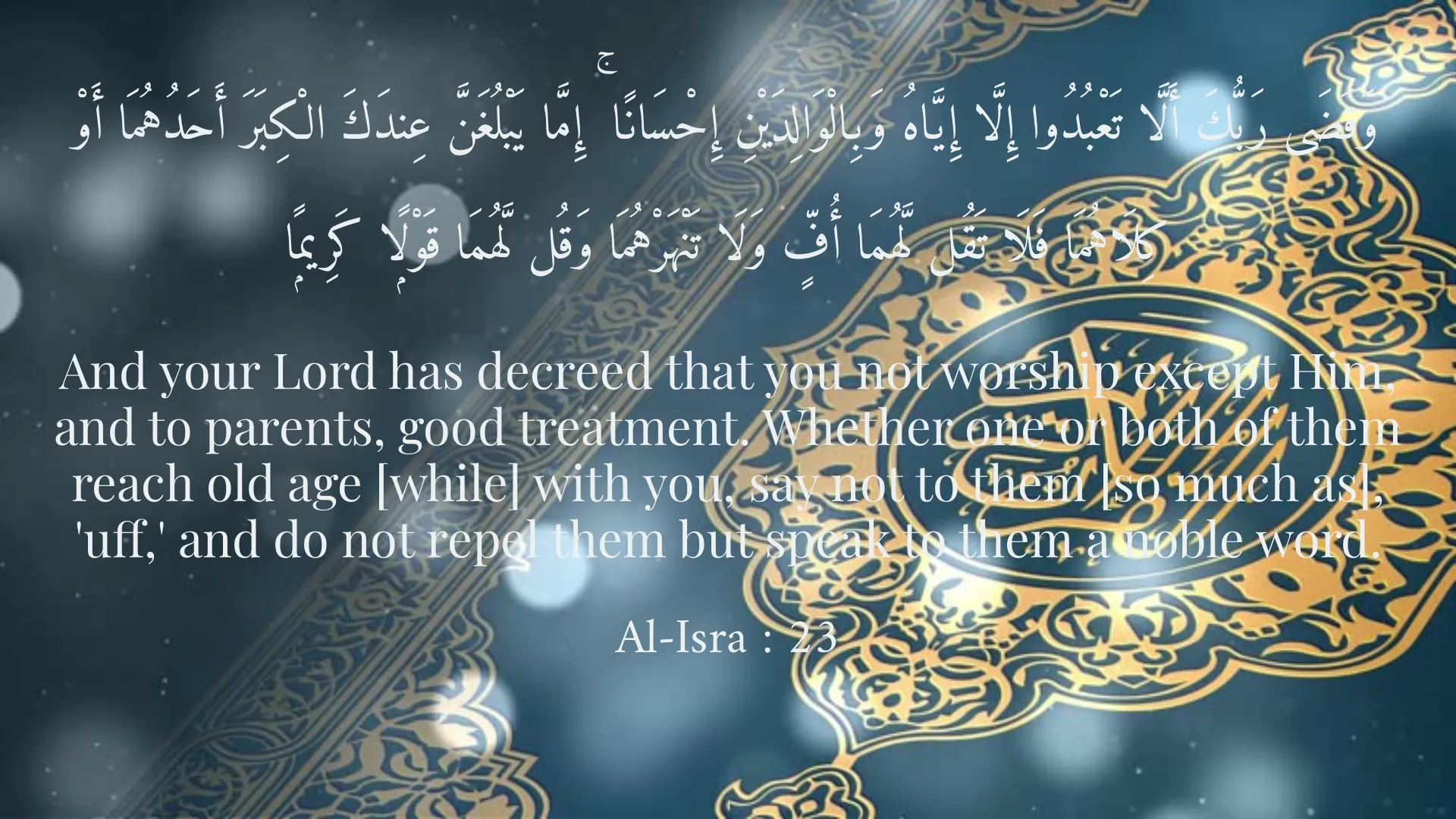
The importance of kindness and respect toward one’s parents is a recurring theme that resonates deeply in the teachings of Islam, particularly as portrayed in the Holy Quran. Within its verses, numerous injunctions articulate a profound respect for parental figures, underscoring the moral obligation children have to honor and cherish their parents. This essay aims to explore the significance of these teachings found in the Quran, the impact of parental respect on personal and societal levels, and how these principles intertwine with the broader themes of compassion, gratitude, and social cohesion. The Quran, regarded as the ultimate source of guidance in Islam, delineates a clear and emphatic message regarding the treatment of parents. In Surah Al-Isra (17:23), Allah commands believers, "And your Lord has decreed that you not worship except Him, and to parents, good treatment." Here, the emphasis on kindness towards parents is presented alongside the command of exclusive worship of God. This strategic positioning highlights not only the importance of respecting one's parents but also frames this respect within the larger context of one’s spiritual duties. The conjunction of worship and parental respect serves to reinforce the idea that honoring one’s parents is considered an act of worship in itself. This notion is further echoed in Surah Luqman (31:14), where Allah highlights the hardship that mothers endure during pregnancy and childbirth, stating, "And We have enjoined upon man [care] for his parents. But if they endeavor to make you associate with Me that of which you have no knowledge, do not obey them. To Me is your return, and I will inform you about what you used to do." This verse not only acknowledges the sacrifices made by parents but also delineates the boundaries within which respect should be accorded. Even when parents insist on actions contrary to one’s faith, the principle of respect remains paramount, allowing for a delicate balance between obedience to parents and fidelity to one’s faith. Respecting parents is more than an obligation; it symbolizes a conscious acknowledgment of their sacrifices, love, and commitment to nurturing their children. From the struggles of sleepless nights to the relentless pursuit of providing for the family, parents endure numerous trials and tribulations for their children's well-being. Acknowledging these efforts naturally cultivates gratitude, a sentiment that the Quran continually promotes. When children express thanks and respect to their parents, they foster an environment where love flourishes, enhancing overall familial relationships. The Quranic perspective on respecting parents extends beyond simple obedience. It emphasizes behavior that reflects dignity, compassion, and affection. Speaking to parents with kindness is paramount; as stated in various Hadiths (sayings of the Prophet Muhammad), the tone, choice of words, and demeanor towards parents should exude respect. The Prophet Muhammad (peace be upon him) was often recorded reminding his followers of the significance of treating parents with utmost respect, indicating that a child’s Jannah (paradise) lies under the feet of their mothers. The cultural backdrop also plays an essential role in shaping the interaction between children and their parents. In many Islamic societies, the family structure is traditionally hierarchical, and respect for elders is a deeply rooted principle. However, contemporary dynamics have introduced challenges—including generational gaps, shifts in societal norms, and individualistic tendencies—that may dilute the traditional understanding of respect. Therefore, it is imperative for individuals to find a middle ground where both the Islamic teachings on parental respect and modern realities cohesively coexist. Moreover, respecting one’s parents has far-reaching implications that extend beyond personal satisfaction. In a broader social context, reverence for parents contributes to stable and harmonious family units, reflecting on the overall health of society. When children learn to respect their parents and treat them with kindness, they embody values of compassion and empathy that are instrumental in creating a nurturing community. These values promote cooperation, understanding, and support, which are critical components of healthy societal interactions. The practice of respect toward parents is profoundly interlinked with personal happiness and fulfillment. Numerous studies in psychology suggest that individuals with strong family relationships experience higher levels of joy and lower instances of depression and anxiety. By fostering positive relationships with parents through mutual respect and affection, individuals often find a sense of belonging and security that greatly enhances their overall well-being. This reciprocal relationship allows not only for parental joy but also creates an environment where children feel loved and valued—an essential factor in nurturing their own emotional health. Respecting parents in Islam does not signify blind obedience. Instead, it is a multifaceted and dynamic relationship that encourages understanding, dialogue, and, importantly, the recognition of boundaries. Teaching children to express their thoughts and feelings respectfully enhances family discussions and acknowledges the importance of individual opinion while maintaining parental honor. Such an approach advocates for a healthy exchange that reinforces mutual respect and affection among family members. In conclusion, the importance of kindness and respect towards one’s parents is a central tenet of Islamic teachings. The Quran eloquently illustrates that honoring parents is not merely a social nicety or cultural expectation, but rather a divine directive intertwined with the essence of worship. By embodying these principles, individuals not only uphold their religious obligations, but they also propagate a culture of empathy, compassion, and coherence in their families and communities. Therefore, nurturing these values contributes to personal happiness and societal stability, bridging the gap between individual fulfillment and communal harmony.
Related Verses
وَقَضَى رَبُّكَ أَلَّا تَعْبُدُوا إِلَّا إِيَّاهُ وَبِالْوَالِدَيْنِ إِحْسَانًا ۚ إِمَّا يَبْلُغَنَّ عِندَكَ الْكِبَرَ أَحَدُهُمَا أَوْ كِلَاهُمَا فَلَا تَقُل لَّهُمَا أُفٍّ وَلَا تَنْهَرْهُمَا وَقُل لَّهُمَا قَوْلًۭا كَرِيمًۭا
And your Lord has decreed that you not worship except Him, and to parents, good treatment. Whether one or both of them reach old age [while] with you, say not to them [so much as], 'uff,' and do not repel them but speak to them a noble word.
Al-Isra : 23
وَوَصَّيْنَا الْإِنْسَانَ بِوَالِدَيْهِ ۚ إِنْ شَكَرْتَ لِي وَلِوَالِدَيْكَ فَإِنَّ لَهُ جَنَّةً غَيْرَ مَفْرُوضَةٍ
And We have enjoined upon man [care] for his parents. But if they endeavor to make you associate with Me that of which you have no knowledge, do not obey them. To Me is your return, and I will inform you about what you used to do.
Luqman : 14
Short Story
On a beautiful day, Maryam reminisced about her teenage years when she spent little time with her parents. She decided that now that she was older, she would show more respect towards them and spend more time with them. She started skipping her recreational outings and returned home to help her parents. After a while, she noticed how happy they became, and she herself felt a greater sense of peace.