Quranic Answer
### Understanding the Importance of Avoiding Bad Suspicion in the Holy Quran In the realm of spirituality and personal conduct, the Holy Quran provides profound guidance that transcends time and culture. One of the central themes that emerge from its teachings is the importance of maintaining a pure heart and mind, particularly when it comes to our perceptions of others. In today's world, where mistrust and misunderstanding can lead to social fragmentation, the Quran's emphasis on avoiding bad suspicion serves not only as spiritual wisdom but also as a practical guide for interpersonal relationships. In Surah Al-Hujurat (Chapter 49), verse 12, Allah explicitly instructs the believers: 'O you who have believed, avoid much [negative] assumption. Indeed, some assumption is sin. And do not spy or backbite each other.' This verse is a clear warning against the dangers of harboring poor judgments about others. It calls attention to the fact that our thoughts and beliefs about others can have not just moral, but tangible social consequences. The implications of this verse extend into the fabric of our everyday interactions. The deep-rooted distrust that arises from poor assumptions can lead to a breakdown in relationships, whether in families, friendships, or within the larger community. The Quran further elucidates this matter in Surah Al-Anfal (Chapter 8), verse 49, which states: 'And those who have disbelieved have a bad expectation of Allah.' This verse illustrates that harboring negative assumptions is indicative of a weak faith and a lack of trust in the divine wisdom and mercy of Allah. When individuals possess bad suspicions, they not only harm their own spiritual well-being but also cast a shadow over their community by fostering an environment of doubt and negativity. Bad assumptions can breed conflict, create divisions, and instigate a cycle of distrust, ultimately leading to the splintering of social bonds. ### The Psychological and Social Consequences of Bad Suspicion In our daily interactions, it is imperative to recognize that bad suspicions can emerge not solely from observable behaviors, but also from our internal biases and preconceived notions. Human beings are often quick to judge based on limited information or past experiences. Such snap judgments reflect more about the individual’s state of mind than the actual truth of another person's character or actions. This process is often unconscious and can lead to a myriad of psychological impacts, including anxiety, bitterness, and a profound lack of peace. Moreover, when bad suspicions are allowed to fester, they can result in destructive behaviors such as gossip and backbiting, both of which are unequivocally condemned in the Quran. Spying on others, or seeking to uncover information about them without their consent, only deepens mistrust and can lead people into a spiral of negative thinking and action. Community members may find themselves at odds, creating a toxic atmosphere that discourages open communication and connection. ### The Spiritual Dimension of Bad Suspicion Beyond the social ramifications, the act of maintaining bad suspicions can severely impact an individual's spiritual growth. In essence, the Quran teaches that our thoughts matter. The very act of doubting others, without sound basis, can create a spiritual barrier between a person and Allah. It signifies a lack of compliance with divine guidance and a failure to embody the principles of compassion, mercy, and understanding that the Quran champions. When individuals focus on the faults of others, they may become blind to their own shortcomings, losing the chance for personal reflection and spiritual betterment. Conversely, harboring good suspicions can enhance both individual and communal well-being. When individuals choose to see the good in others, help foster an environment of trust and love, it uniquely and powerfully contributes to collective harmony. Treating one another with kindness, seeking to understand rather than judge, and embodying the virtues of compassion described in the Quran cultivates a united, resilient, and supportive community. ### The Path Toward Compassionate Judgment To combat the natural tendency toward negative assumptions, it is important to cultivate a conscious and proactive approach to our judgments. This requires mindfulness — the practice of becoming more aware of our thoughts and feelings and understanding where they stem from. Engaging in self-reflection allows us to recognize when we are making unfair assumptions and helps us challenge those thoughts in light of the overarching values of justice and compassion. Furthermore, fostering empathy towards others plays a crucial role in this transformation. By putting ourselves in the shoes of others, we are encouraged to consider their circumstances and experiences. This practice not only alters our perceptions but also aligns with Quranic principles that urge believers to uphold justice and compassion irrespective of personal biases. ### Conclusion In conclusion, the Holy Quran’s wisdom regarding bad suspicion serves as a significant reminder of the potential harm stemming from negative assumptions. This vital teaching encourages us to strive for fairness, empathy, and respectful communication in our judgments about others. Embracing this guidance can lead to personal spiritual upliftment and foster unity within the community. In a world that often skews toward suspicion and negativity, the Quran calls for us to cultivate trust, understanding, and kindness in our interactions. By doing so, we not only improve our relationships but also align ourselves with the deeper ethical and spiritual teachings that provide guidance for a harmonious and fulfilling life.
Related Verses
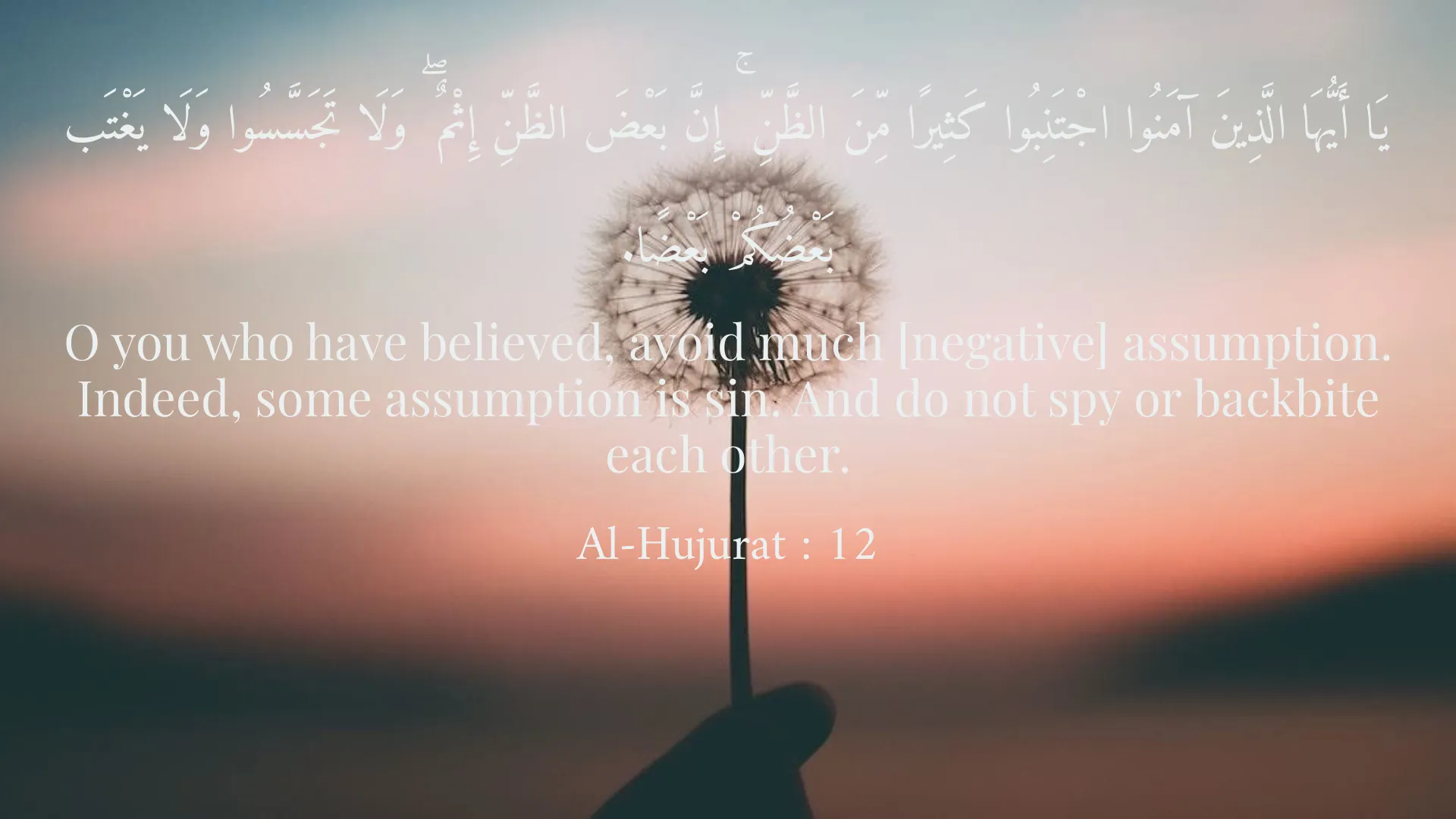
يَا أَيُّهَا الَّذِينَ آمَنُوا اجْتَنِبُوا كَثِيرًا مِّنَ الظَّنِّ ۚ إِنَّ بَعْضَ الظَّنِّ إِثْمٌ ۖ وَلَا تَجَسَّسُوا وَلَا يَغْتَب بَعْضُكُمْ بَعْضًا.
O you who have believed, avoid much [negative] assumption. Indeed, some assumption is sin. And do not spy or backbite each other.
Al-Hujurat : 12
وَإِنَّ الَّذِينَ كَفَرُوا يَظُنُّونَ بِاللَّهِ ظَنًّا سَيِّئًا.
And those who have disbelieved have a bad expectation of Allah.
Al-Anfal : 49
Short Story
Once upon a time, there was a man named Hossein who always judged others. He did not realize that these judgments were causing a rift between him and his friends. One day, he read a verse from the Quran that made him aware of the dangers of bad suspicion. From then on, Hossein tried to look at others with a positive perspective instead of judging, and this change improved his relationships with those around him.