Quranic Answer
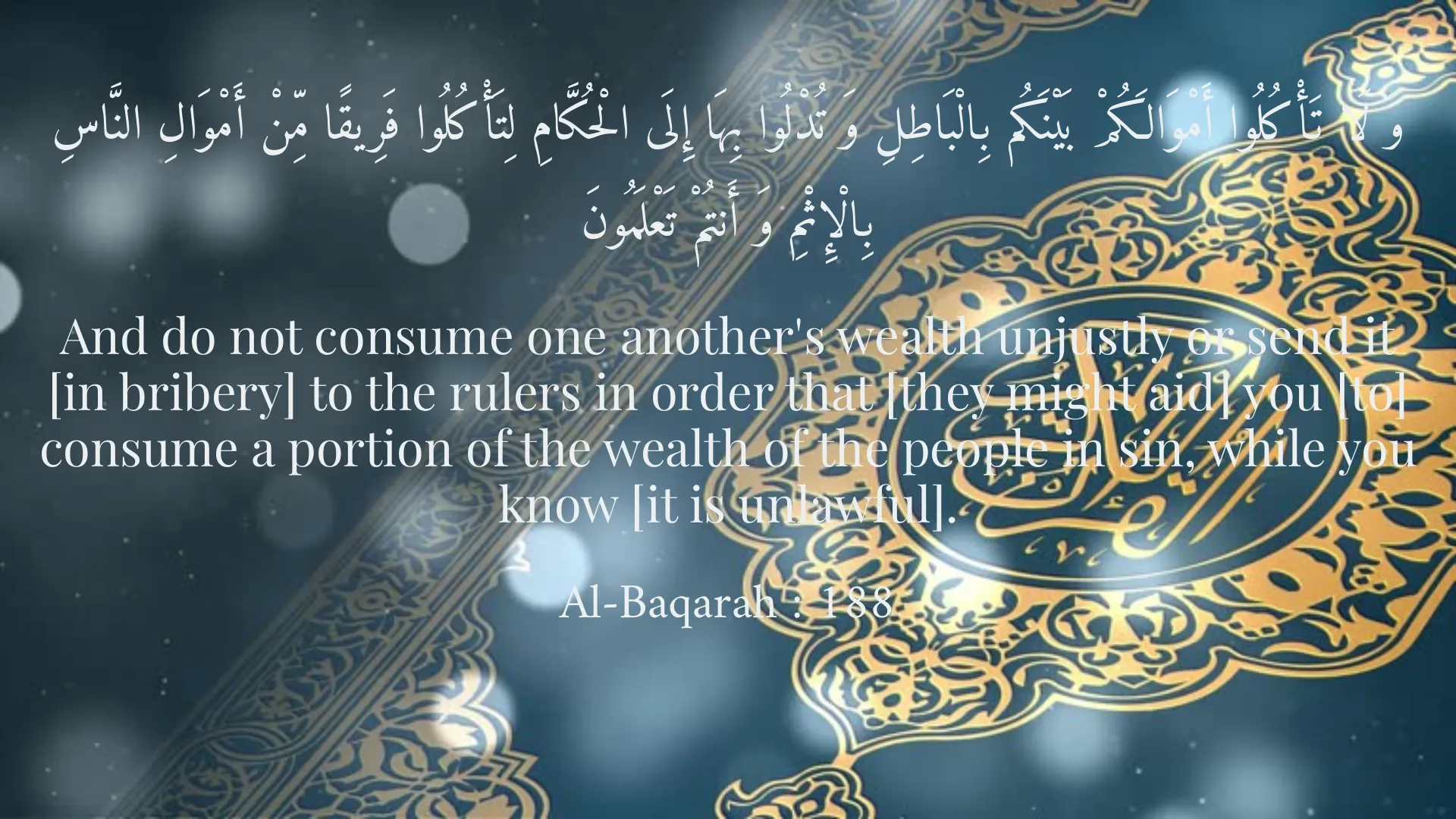
The Holy Quran, the central religious text of Islam, serves as a powerful guide to moral conduct and ethical behavior for its followers. Among the many teachings contained within its verses, the Quran emphasizes the reprehensibility of betrayal—a theme that runs deep throughout its teachings and holds profound implications for both individual and societal integrity. Betrayal, as highlighted by various verses, represents a violation of trust and ethical principles that can have dire consequences on both personal and communal levels. In Surah Al-Baqarah, verse 188, Allah specifically admonishes against unjustly consuming one another's wealth: "And do not consume one another's wealth unjustly or send it [in bribery] to the rulers in order that [they might aid] you [to] consume a portion of the wealth of the people in sin, while you know [it is unlawful]." This stern warning suggests that actions driven by deceit and dishonesty not only undermine the very fabric of personal integrity but can also lead to widespread social decay. The consumption of wealth unjustly is portrayed as a betrayal not only against the rightful owner but also against Allah's commandments. The verse illustrates that betrayal harms not only the individuals directly involved but can also catalyze a cycle of corruption that affects entire communities. Furthermore, in Surah Al-Anfal, verse 27, believers are reminded of their high moral responsibility: "O you who have believed, do not betray Allah and the Messenger or betray your trusts while you know [the consequence]." This verse encapsulates the idea that the betrayal of divine trust and the trust placed in individuals by their communities results in a severe spiritual and ethical deficit. Betraying Allah and His Messenger signifies a failure to acknowledge one's commitments and duties, which can lead to severe consequences in both this world and the hereafter. The trust that exists between an individual and their God is sacred, and violating that trust can lead to estrangement from divine grace. The repercussions of betrayal extend beyond the theological realm, as they resonate deeply within social contexts. Trust is the cornerstone of any thriving relationship—be it familial, cordial, or professional. Betrayal undermines this trust, leading to broken relationships and a breakdown of communication. When betrayal becomes commonplace within a society, it fosters an environment of suspicion and cynicism. People who betray others face social ostracism and psychological distress, often creating a vicious cycle of distrust that can permeate entire communities. In examining these challenges, it is crucial to recognize that betrayal is often rooted in self-interest and a lack of consideration for others. Individuals who engage in betrayal may act out of a desire for immediate gain, neglecting the long-term consequences of their actions. The Quran’s condemnation of betrayal serves as a reminder that ethical behavior and honesty must guide interactions with others. The authentic Islamic system emphasizes sincerity, integrity, and unity, encouraging individuals to transcend selfish motivations and cultivate a spirit of cooperation and empathy. Communities characterized by betrayal can experience stagnation, as the erosion of trust inhibits collaboration and collective growth. Societies thrive when members work together towards common goals, spurred by mutual respect and trust. Conversely, hostility bred from betrayal breeds an atmosphere of dysfunction, making it difficult for individuals to pursue shared aspirations. Hence, the lessons from the Quran highlight not only personal accountability but also collective responsibility in fostering a cohesive society. Ultimately, the Quran elucidates the essential nature of trust in Allah as a fundamental aspect of faith. A person’s relationship with the Divine is tested through their actions in this world. When individuals betray their fellow beings, they also risk tarnishing their connection with Allah. The Quran holds believers accountable for their actions, emphasizing that maintaining truthfulness and honesty is paramount in worship and interpersonal dealings alike. A person who embraces these principles not only upholds their faith but also contributes positively to the well-being of society at large. In conclusion, the Holy Quran’s teachings on betrayal underscore the grave consequences of dishonesty and the importance of maintaining trust both with Allah and within human relationships. Betrayal leads to not only personal ruin but also to social disintegration. Thus, the Quran implores believers to cultivate a culture of honesty, integrity, and communal harmony, thereby fostering a peaceful and just society. In adhering to these principles, individuals can enhance their relationships with one another and, more importantly, with their Creator. The refraining from betrayal acts as a precursor to personal growth and societal progression—a noble path that ultimately leads towards the Divine recognition and love.
Related Verses
وَ لَا تَأْكُلُوا أَمْوَالَكُمْ بَيْنَكُم بِالْبَاطِلِ وَ تُدْلُوا بِهَا إِلَى الْحُكَّامِ لِتَأْكُلُوا فَرِيقًا مِّنْ أَمْوَالِ النَّاسِ بِالْإِثْمِ وَ أَنتُمْ تَعْلَمُونَ
And do not consume one another's wealth unjustly or send it [in bribery] to the rulers in order that [they might aid] you [to] consume a portion of the wealth of the people in sin, while you know [it is unlawful].
Al-Baqarah : 188
يَا أَيُّهَا الَّذِينَ آمَنُوا لَا تَخُونُوا اللَّهَ وَالرَّسُولَ وَتَخُونُوا أَمَانَاتِكُمْ وَأَنتُمْ تَعْلَمُونَ
O you who have believed, do not betray Allah and the Messenger or betray your trusts while you know [the consequence].
Al-Anfal : 27
Short Story
One day, a young man named Nasir was chatting with one of his friends at school. His friend asked him to help him cheat on the exam, but Nasir, recalling Quranic verses and their messages, decided to remain loyal to his friend and tell him that he should make his own efforts. This choice not only left Nasir feeling good about himself, but it also strengthened the bond of friendship with his friend.