Quranic Answer
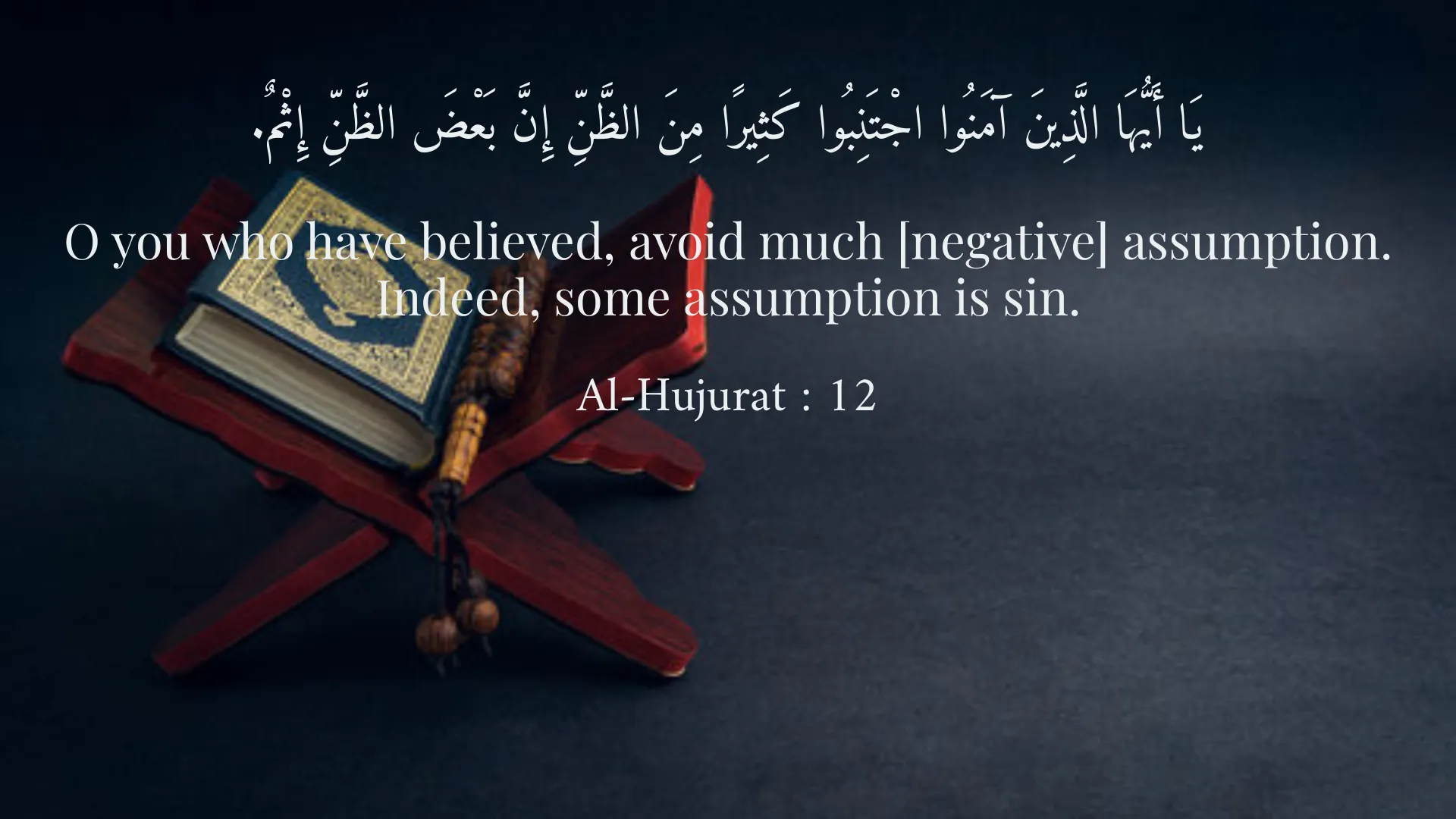
In the world today, where information is exchanged at lightning speed and public opinion can shift overnight, the call for patience and fairness in judgment is more relevant than ever. The Holy Quran, revered as the ultimate guide for Muslims, imparts timeless wisdom on how to conduct ourselves in society, particularly regarding our judgments of others. Apart from personal introspection, this guidance aims to nurture a harmonious society where compassion, understanding, and justice reign supreme. The Quran emphasizes the dangers of making hasty judgments and falling prey to prejudices, highlighting the spiritual and social repercussions of such attitudes. In Surah Al-Hujurat, ayah 12, Allah clearly states, 'O you who have believed, avoid much [negative] assumption. Indeed, some assumption is sin.' This powerful command urges believers to resist the instinct of jumping to conclusions about others based on superficial evidence or hearsay. Understanding this verse requires a deep reflection on the nature of assumptions. Many times, we form negative opinions about individuals based on limited information or biased narratives. However, such presumptions are often inaccurate and unjust, leading not only to discord but also to the erosion of trust within communities. The Quran categorically labels some assumptions as sinful, indicating that they carry moral weight and consequences. Therefore, believers are urged to approach others with a mindset of compassion rather than criticism. Furthermore, Surah An-Nahl, ayah 90, underlines the importance of justice in our dealings with others. Allah instructs, 'Indeed, Allah commands you to render trusts to whom they are due and when you judge between people to judge with justice.' This fundamental principle of fairness cannot be overstated. It challenges every individual to uphold integrity in judgment and to weigh every situation with an objective lens. In practice, this means looking beyond surface-level attributes and circumstances. Prejudices often stem from literal interpretations of a person’s actions without considering the context that led them to behave in that way. This is a critical aspect of justice, which the Quran enjoins upon its followers. When people are assessed fairly and with a deeper understanding of their struggles and aspirations, the likelihood of fostering meaningful relationships increases significantly. Moreover, hasty judgments can irreparably damage relationships. In a world where we often find ourselves in disagreements and conflicts, the propensity to jump to conclusions can swiftly create divides between individuals. The Quran, however, invites believers to consider giving each person a chance for redemption and growth. Each individual is on their own unique journey, facing challenges that may be invisible to outsiders. The opportunity to transform and learn from mistakes is a sign of mercy and, ultimately, a pathway to individual improvement. When we allow individuals the space to develop personally, society benefits as well. This interplay between personal responsibility and broader social conditions is emphasized in Islamic teachings. It is a reminder that our judgments do not exist in isolation; they reflect our values and impact the community at large. As individuals cultivate piety and self-restraint, they contribute to the overall well-being of society. Moreover, reflecting on these verses reveals that the concept of justice is not merely about fairness in judgment but extends to the commitment to uphold the dignity of every person. Every individual possesses inherent worth, deserving respect and understanding. By approaching one another with this perspective, we can foster a culture of accountability and empathy, which is vital in a time marked by division and animosity. In practicing patience and refraining from hasty judgments, believers have the potential to initiate positive changes within their communities. Acts of kindness and understanding can inspire others to rise above their challenges and contribute meaningfully to society. When people feel supported rather than judged, they are more likely to engage positively and seek redemption, thus completing a cycle of compassion and growth. Furthermore, the call for fairness encompasses the responsibility to keep our own biases in check. As we navigate various social issues, the clarity provided by the Quran serves as a cornerstone for self-assessment, urging us to consider how our perceptions might be skewed by personal prejudices or societal biases. In conclusion, the teachings of the Holy Quran remind us of the importance of patience, justice, and empathy in our daily interactions. By resisting the urge to make hasty judgments, we can build bridges rather than barriers, creating stronger, more cohesive communities. The divine guidance provided in Surah Al-Hujurat and Surah An-Nahl serves as a reminder of our higher calling—to act with kindness, fairness, and to allow others the space to grow and transform. Ultimately, this path aligns not only with individual piety but with the collective enhancement of social conditions, paving the way for a brighter future for all of humanity.
Related Verses
يَا أَيُّهَا الَّذِينَ آمَنُوا اجْتَنِبُوا كَثِيرًا مِنَ الظَّنِّ إِنَّ بَعْضَ الظَّنِّ إِثْمٌ.
O you who have believed, avoid much [negative] assumption. Indeed, some assumption is sin.
Al-Hujurat : 12
إِنَّ اللَّهَ يَأْمُرُكُمْ أَنْ تُؤَدُّوا الأَمَانَاتِ إِلَى أَهْلِهَا وَإِذَا حَكَمْتُمْ بَيْنَ النَّاسِ أَنْ تَحْكُمُوا بِالْعَدْلِ.
Indeed, Allah commands you to render trusts to whom they are due and when you judge between people to judge with justice.
An-Nahl : 90
Short Story
One day, Adel decided to get closer to spring. He reflected on his expectations and judgments and realized that premature judgments only brought unfairness. He then decided to view others with a positive lens and give everyone a chance. This change in perspective miraculously improved his relationships with friends and family, leading to greater happiness.