Quranic Answer
The Holy Quran is a revered text that provides guidance on various aspects of life for its followers. One of the critical themes that the Quran addresses is the significance of maintaining positive relationships within the community, free from suspicion and negative assumptions. This idea is particularly emphasized in Surah Al-Hujurat, verse 12, where Allah commands believers to avoid excessive speculation, indicating that some forms of speculation can lead to sinful conduct. This verse serves as a reminder that suspicion can generate incorrect judgments about others, which may lead to strained interactions and relationships in society. In constructing a harmonious community, it is essential to recognize how suspicion can wield destructive power. When individuals harbor suspicions about others, they may create an atmosphere rife with mistrust and misunderstanding. As the verse suggests, an individual’s suspicion could seed rumors that escape discernment, ultimately resulting in conflict and rupture among community members. Such dynamics can be detrimental, undermining not only personal relationships but also collective unity. The Quran further guides us in navigating the sensitive terrain of interpersonal relationships by instructing believers not to engage in backbiting or nurture feelings of jealousy. These actions only serve to create fissures within the community, weakening the bonds of love and cooperation that are fundamental to a thriving society. Backbiting, in particular, is condemned not only for its immediate impact on the individual being discussed but also for the broader implications it has on community cohesion. It illustrates how the destructive nature of suspicion can detract from communal harmony and stability. For instance, consider an individual who possesses a lingering suspicion towards a colleague, believing that this colleague is acting against their interests. This suspicion may lead the individual to withdraw from collaboration, leading to a breakdown in teamwork and shared goals. As a result, misunderstanding breeds contempt, further exacerbating the rift between individuals and groups. It can also lead to the cultivation of false narratives that distort perceptions and relationships, making even mundane interactions charged with negativity. The teachings in Surah Al-Mu’minun, verse 12, complement those found in Surah Al-Hujurat. This verse encapsulates the directive for believers to maintain positive thoughts toward one another, focusing on each other’s virtues rather than shortcomings. This perspective is essential not only for fostering positive interactions but also for nurturing a proactive approach to community engagement. When believers actively choose to think positively about one another, they foster goodwill, which is conducive to building healthy relationships grounded in mutual respect and understanding. The call to maintain positive assumptions about others aligns with the broader Islamic principles of compassion, empathy, and social responsibility. The establishment of a loving and supportive community cannot thrive in an environment where suspicion reigns supreme. Instead, cultivating goodwill and recognizing the best in others paves the way for collaboration, trust, and effective communication, creating a fertile ground for harmonious living. It is important to institutionalize these teachings within Islamic communities when strategizing ways to promote unity and understanding among their members. Community leaders and educators can play a pivotal role by encouraging open dialogues about trust and the impacts of suspicion. Programs designed to uplift virtues within the community and instill a positive perspective can significantly contribute to reducing internal conflict and mistrust. Moreover, communities can benefit from workshops and discussion groups that focus on resolving misunderstandings through dialogue and reconciliation. Encouraging individuals to express their concerns openly while providing platforms for constructive conversations can help diffuse suspicion and fortify trust among members. Building a culture of transparency and open communication invites the community to engage more intimately, fostering relationships that withstand potential conflicts. The significance of goodwill cannot be overstated. By prioritizing positive communications and connections, individuals are less likely to engage in speculation or harbor negative feelings. Goodwill operates as an antidote to suspicion by promoting an environment where love, understanding, and cooperation flourish. This is particularly vital in a world that can be fraught with challenges, where suspicion might easily take root, leading people away from the core values that strengthen community ties. Ultimately, steering clear of suspicion serves as an essential reminder for all believers. It prompts them to continually evaluate the intentions and actions of others through a lens of positivity. This practice not only aids in establishing and maintaining healthy relationships but also contributes to individual well-being. A mindset aligned with positive thinking fosters resilience, creativity, and cooperation, leading to joyous interactions that enrich community life. In conclusion, the teachings of the Holy Quran regarding suspicion and judgment are deeply relevant in today’s society. By refraining from speculation, avoiding jealousy, and engaging in positive thinking, believers can build a robust and harmonious community. It is this commitment to mutual respect and understanding, grounded in the teachings of the Quran, that will allow societies to flourish, paving the way for a more compassionate and connected world.
Related Verses
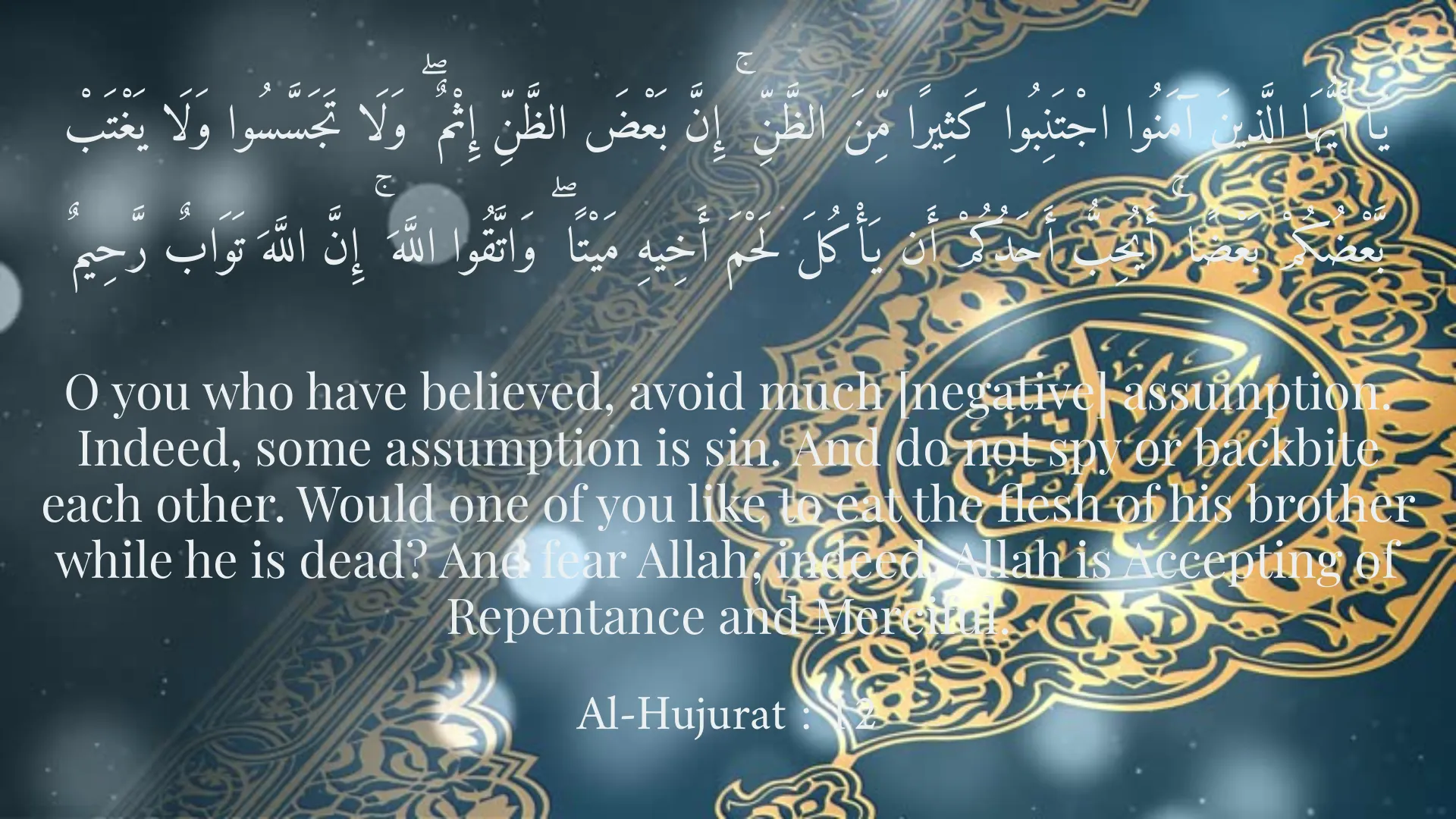
يَا أَيُّهَا الَّذِينَ آمَنُوا اجْتَنِبُوا كَثِيرًا مِّنَ الظَّنِّ ۚ إِنَّ بَعْضَ الظَّنِّ إِثْمٌ ۖ وَلَا تَجَسَّسُوا وَلَا يَغْتَبْ بَّعْضُكُمْ بَعْضًا ۚ أَيُحِبُّ أَحَدُكُمْ أَن يَأْكُلَ لَحْمَ أَخِيهِ مَيْتًا ۖ وَاتَّقُوا اللَّهَ ۚ إِنَّ اللَّهَ تَوَابٌ رَّحِيمٌ
O you who have believed, avoid much [negative] assumption. Indeed, some assumption is sin. And do not spy or backbite each other. Would one of you like to eat the flesh of his brother while he is dead? And fear Allah; indeed, Allah is Accepting of Repentance and Merciful.
Al-Hujurat : 12
إِنَّهُ كَانَ فِي أَهْلِهِ مَسْأَلَةُ ذَكَرَ وَأَثَرُهُ فِي ذَكَرِهِ وَمَا جَاءَ فِي ذَكَرِهِ مِن خَبَرٍ تَجَاوَزَ مَنْ فَّهِمَ عَاقِلٌ
This is while he was among his people, and subjects of knowledge were on his mind and what was familiar to him was in a degree of knowledge which surpassed that of the ignorant.
Al-Mu’minun : 12
Short Story
One day, Adel was sitting with his friends discussing one of their acquaintances. Some of them began to harbor suspicion over a small mistake. Adel reminded them of the Quranic verses and said, 'Let’s avoid this suspicion and maintain goodwill towards each other, as suspicion only harms our relationships.' His friends agreed with his words and decided to resolve future misunderstandings through conversation.