Quranic Answer
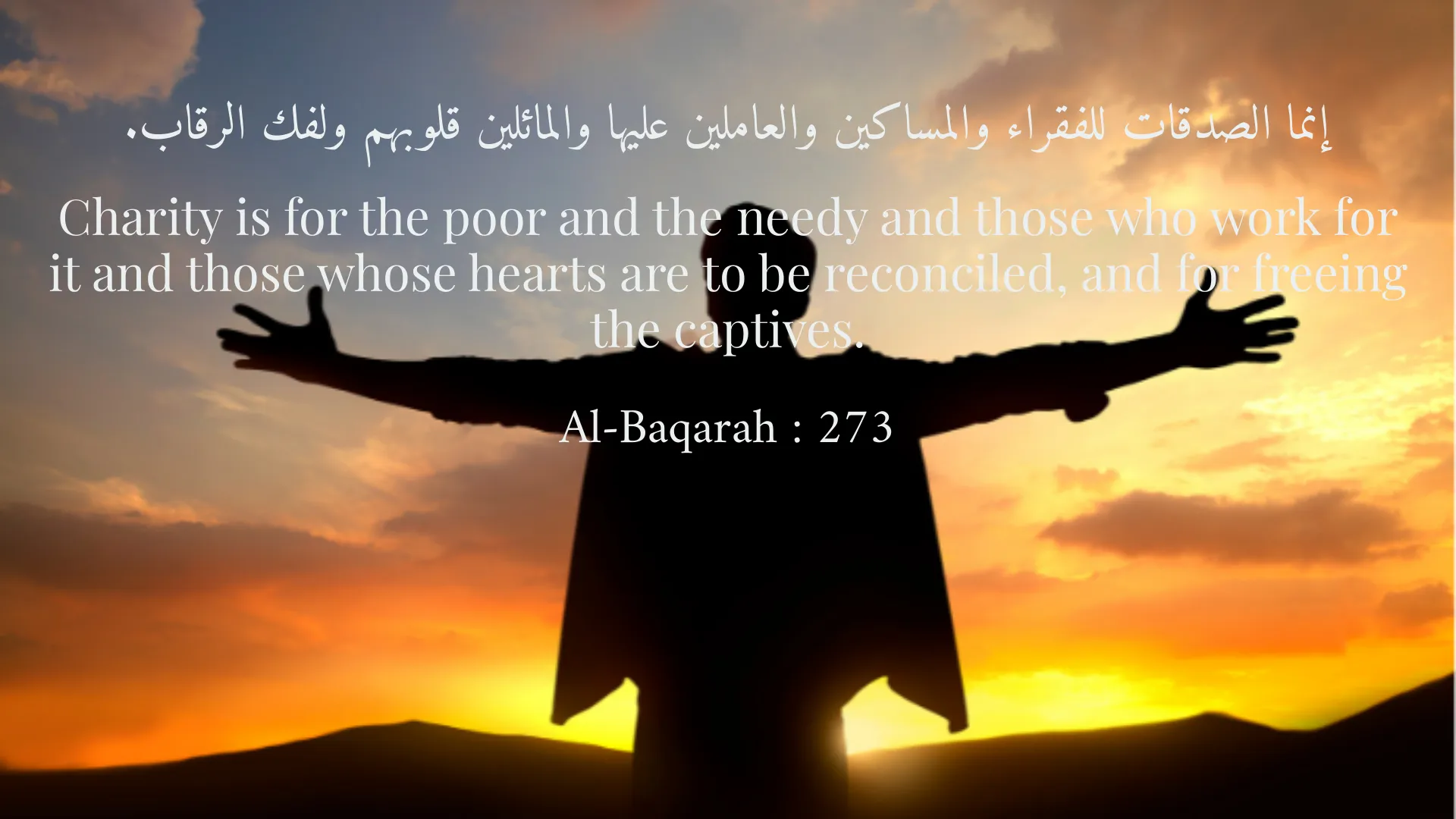
In the Holy Quran, attention to the needy and the poor is considered a fundamental and significant principle of social and moral life. It is through the lens of this profound scripture that we can perceive the importance of charity and assistance to others, particularly those who struggle with poverty and need. The Quran unequivocally emphasizes these values, urging believers to connect with the less fortunate and lend their support, both financially and emotionally. The act of giving charity is not merely regarded as a generous act but is depicted as an essential obligation that fosters not only individual morality but also societal harmony and unity. A prominent reference to this principle is found in Surah Al-Baqarah, verse 273, which states: 'Charity is for the poor and the needy and those who work for it and those whose hearts are to be reconciled, and for freeing the captives.' This verse encapsulates the multi-faceted nature of charity, illustrating that it extends beyond merely providing financial assistance. It encompasses understanding the nuanced plight of the poor, acknowledging their needs, and helping to alleviate their struggles. This holistic perspective ensures that charity becomes a vital conduit for creating a more compassionate society. Furthermore, in Surah Al-Ma'idah, verse 55, Allah states: 'Your allies are only Allah and His Messenger and those who have believed and established prayer and given zakah.' This verse signifies the close relationship between faith and social responsibility. It is clear from this declaration that the believers are not just expected to pray and maintain a connection with God, but they are also called to actively assist those who are less fortunate by performing good deeds. This interdependence between prayer and charitable acts highlights an essential teaching within the Quran: that spiritual fulfillment is intimately tied to social justice. The act of giving, expressed through zakah or charity, serves as a means of purifying one's wealth and soul, indicating that true wealth is not only measured by material possessions but also by one’s ability to positively influence society. The Quran does not only call for assistance to the poor but also urges a deeper understanding and empathy for their situations. This awareness fosters a sense of connection that transcends superficial charity. It encourages believers to engage with the community, creating a unified society where the needs of the marginalized are recognized, and efforts are made collectively to improve their circumstances. This communal approach is vital in combating the pervasive issues of poverty and inequality that afflict many societies today. Moreover, in Surah Al-Insan, verses 8 and 9, Allah describes the characteristics of devoted believers who extend their hands to the poor and the needy: 'And they give food, in spite of their own desire for it, to the needy, the orphan, and the captive. (They say), "Indeed, we feed you only for the countenance of Allah. We wish not from you reward or gratitude."' This selfless act is beautifully framed. The believers who assist the needy do so without any expectation of reward; instead, their initiatives are driven solely by their desire to seek God's pleasure. This passage serves to illustrate that true compassion and benevolence are rooted in sincerity and selflessness. The imperative to uplift the poor and those in need is not only a moral obligation but a pathway to spiritual growth. It is through these acts of kindness that believers can truly experience nearness to God. The Quran highlights that every small act of kindness, every moment devoted to understanding the conditions of the poor, contributes to a larger picture of societal welfare. This collective responsibility nurtures empathy among the populace and fosters a community that is interconnected not only on a material level but on an emotional and spiritual level as well. Examining the implications of these verses, it becomes evident that Islam places significant emphasis on the welfare of the poor as both a spiritual and social duty. In compelling believers to act morally towards the vulnerable, the Quran aims to propagate a culture where there is no room for neglect and indifference. Instead, by uplifting those in need, society can work towards eliminating poverty and fostering economic and social equity. This not only benefits those who receive assistance but also enhances the community's overall well-being and promotes unity. In a world where economic disparities continue to widen and social injustices persist, the teachings of the Quran offer invaluable insights into addressing these contemporary issues. The call for believers to recognize the conditions of the poor and extend their support creates an inclusive environment conducive to promoting equality and justice. By embracing these values, individuals become agents of change, fostering an environment where social issues such as poverty are addressed with urgency and compassion. Ultimately, being aware of the conditions faced by the poor is not merely an act of charity; it is an integral aspect of one's faith journey. By responding to their needs, believers fulfill their spiritual responsibilities, promote community welfare, and experience the profound joy that comes from helping others. In striving to connect with the suffering of those around us, we not only adhere to the moral teachings of the Quran but also contribute to a more harmonious and just society. In conclusion, the Quran’s emphatic call to attend to the needy is not just a matter of charity; it embodies the paramount values of empathy, unity, and responsibility that are essential for both individual and societal wellbeing. This focus on charity and social justice serves as a reminder that true faith is characterized by active engagement with the community and genuine concern for those who face hardship. Therefore, by practicing these principles, believers can hope to secure God’s pleasure and promote a life that reflects the harmony and compassion that Islam idealizes.
Related Verses
إنما الصدقات للفقراء والمساكين والعاملين عليها والمائلين قلوبهم ولفك الرقاب.
Charity is for the poor and the needy and those who work for it and those whose hearts are to be reconciled, and for freeing the captives.
Al-Baqarah : 273
إنما وليكم الله ورسوله والذين آمنوا الذين يقيمون الصلاة ويقيمون الزكاة.
Your allies are only Allah and His Messenger and those who have believed and established prayer and given zakah.
Al-Ma'idah : 55
ويُطْعِمُونَ الطَّعَامَ عَلَى حُبِّهِ مِسْكِينًا وَيَتِيمًا وَأَسِيرًا.
And they give food in spite of [their] desire for it to the needy, the orphan, and the captive.
Al-Insan : 8
Short Story
Once upon a time, a man named Hassan was walking through the streets of the city, observing his surroundings. He noticed that some people were suffering greatly and were in need of aid. Hassan decided to help them. Day by day, he increased his charitable works, and through this action, not only did he find peace in his heart, but he also fostered love and friendship in his community. He realized that being aware of the plight of the poor and extending a helping hand to them was not only a religious duty but also a sign of humanity and love for others.