Quranic Answer
Compassion is one of the most prominent characteristics of human beings, defining not only our interpersonal relationships but also our moral landscapes. In the context of Islamic teachings, compassion emerges as a fundamental trait deeply embedded within the fabric of the faith's ethical and social guidelines. The Holy Quran, which is the sacred text of Islam, repeatedly emphasizes the importance of mercy and compassion, calling upon its followers to embody these virtues in their daily lives. Thus, understanding compassion through an Islamic lens becomes essential not only for personal development but also for the advancement of society as a whole. One of the notable verses in this regard is found in Surah Ar-Rahman, where it states: "Is there any reward for good other than good?" This verse encapsulates the essence of reciprocity in human interactions, reminding us that the good we do for others is not merely an isolated act but creates a cycle of positivity that ultimately returns to us. This is a powerful reminder that acts of kindness are not futile; instead, they enrich our lives and foster mutual respect and love within our communities. Compassion in this framework extends beyond surface-level kindness; it is about fostering a deep sense of consideration for others, recognizing their struggles, and helping with genuine intent. In Surah Yusuf, verse 92, we find another profound message about forgiveness and acceptance, where Prophet Yusuf tells his brothers, "No blame will there be upon you today; Allah will forgive you." This powerful proclamation illustrates that forgiveness and mercy are not only valued but preferred over anger and resentment. In a compassionate society, relationships between individuals are invariably warmer and more amicable, marked by understanding rather than judgment. A society grounded in compassion frequently engenders a culture of empathy, where individuals actively support one another in times of hardship. Such a community sees people stepping forward to provide assistance, emotional support, and practical help, reinforcing the bonds that tie them together. This can lead to fewer conflicts and reduced social problems, fostering an environment where individuals feel safe and secure. By prioritizing compassion, we can substantially enhance the quality of life for everyone, leading to a more harmonious existence. Moreover, compassion aligns not just with moral principles in Islam, but also serves as a cornerstone for social justice and equity within communities. The teachings of Islam encourage its adherents to promote a spirit of love and empathy, to practice charity, and to engage in acts that uplift the marginalized and vulnerable members of society. Such actions resonate deeply within the Quranic ethos, as it calls on individuals to extend help to those in need and to cultivate relationships enriched by mutual respect and understanding. By fostering compassion, we weave a community fabric that protects rather than alienates, embraces instead of excludes. One of the greatest embodiments of compassion within Islamic history is none other than the Prophet Muhammad (peace be upon him). His life exemplifies compassion in myriad ways, encompassing all facets of human interaction. As stated in Surah Al-Anbiya, verse 107: "And We have not sent you, [O Muhammad], except as a mercy to the worlds." This declaration signifies that the mercy of the Prophet is not limited to humanity but encompasses all of God's creation, indicating a comprehensive approach to compassion that transcends boundaries of species, culture, and social status. In essence, the Prophet serves as a recurrent model for Muslims, urging them to emulate his level of kindness, understanding, and responsiveness. The lessons we learn from the compassionate nature of the Prophet Muhammad can influence our individual behaviors and collective practices. His forgiveness towards those who wronged him, his kindness towards the poor and marginalized, and his emphasis on peaceful coexistence in a diverse society are strands that other believers can weave into their daily lives. By embodying these teachings, we can actively contribute to dismantling barriers and fostering peace in our communities. Additionally, engaging in compassionate acts also leads to inner fulfillment; it resonates with our innate need to connect, to be understood, and to make a difference. Studies in psychology have demonstrated that acts of kindness and compassion can significantly elevate mood, reduce stress, and create a sense of belonging among individuals. Thus, by nurturing compassion within ourselves and instilling it in others, we actively participate in creating a healthier environment—both physically and mentally. In practical terms, promoting compassion requires conscious effort. Community initiatives focused on interfaith dialogue, volunteer programs that address local needs, and educational workshops on empathy can serve as platforms for amplifying the message of compassion. Schools, religious centers, and local organizations can curate environments where individuals learn not only the values of compassion but also the skills necessary to enact those values in real-life scenarios. In conclusion, compassion stands as a vital ethical and social component within Islamic teachings, underscoring our responsibility to treat one another with mercy and kindness. It propels us towards enriched relationships, compassion-driven communities, and ultimately a thriving society aligned with moral values. As we integrate compassion into our everyday lives, we fulfill not just our spiritual obligations but also contribute to a world where understanding, empathy, and love reign. Therefore, embracing compassion is not merely an act of goodwill but a necessity engrained in the core of our existence, a task that, when pursued collectively, can yield profound changes for the betterment of society. Through compassion, we find not just healing for ourselves and our relationships, but also a pathway to a brighter, more cohesive future.
Related Verses
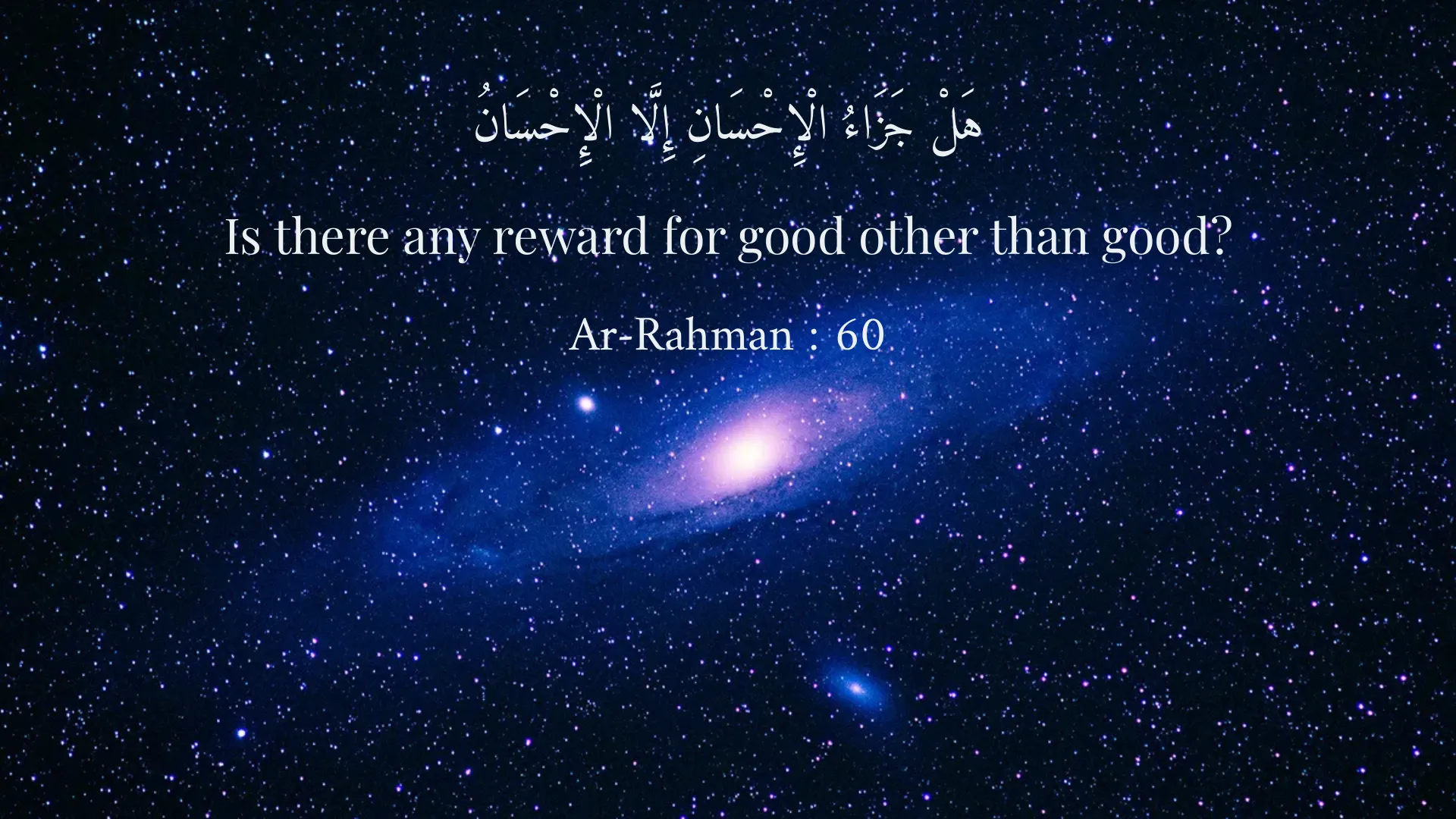
هَلْ جَزَاءُ الْإِحْسَانِ إِلَّا الْإِحْسَانُ
Is there any reward for good other than good?
Ar-Rahman : 60
قَالَ لَا تَثْرِيبَ عَلَيْكُمُ الْيَوْمَ ۖ يَغْفِرُ اللَّهُ لَكُمُ
He said, 'No blame will there be upon you today; Allah will forgive you.'
Yusuf : 92
وَمَا أَرْسَلْنَاكَ إِلَّا رَحْمَةً لِّلْعَالَمِينَ
And We have not sent you, [O Muhammad], except as a mercy to the worlds.
Al-Anbiya : 107
Short Story
One day, Adel, a kind-hearted young man, encountered an orphan child in the market who had a sad face and was asking for food. With compassion and kindness, he took some bread from his bag and gave it to the child. The child looked at Adel with grateful eyes and said, 'May God have mercy on you!' At that moment, Adel felt that his good deed had brought happiness to another, and this feeling made him joyful. His small act sparked great stories of love and mercy throughout his community.