Quranic Answer
The concept of contentment and the significance of halal sustenance is a fundamental theme woven throughout the text of the Holy Quran. In an era of materialism and constant desire for more, these teachings serve as a vital reminder of the importance of gratitude, simplicity, and the pursuit of what is lawful, as prescribed by divine guidance. The Quran emphasizes the necessity of recognizing and being grateful for divine blessings, a sentiment beautifully encapsulated in Surah Al-Rahman, verse 88: 'And proclaim the favor of your Lord.' This verse encourages individuals to openly acknowledge the blessings they receive and to cultivate an attitude of thankfulness. Contentment, as highlighted in the Quran, goes beyond mere acceptance of one's circumstances; it is a profound acknowledgment of the bounties of Allah. True contentment arises when one’s heart is aligned with the understanding that all that is granted to them, be it material wealth or spiritual growth, is a bestowal from the Creator. The Quran instructs its followers that being content with halal sustenance reflects not only an individual’s good intentions but also their unwavering faith in God. Contentment fosters a positive mindset that allows individuals to appreciate their lives irrespective of their material possessions. In Surah Al-Baqarah, verse 172, Allah commands believers to consume what is lawful and to avoid what is forbidden. This instruction is not just a guideline for dietary practices; it extends to all aspects of life, including moral conduct and ethical decisions. The impact of consuming halal sustenance on the health of both the body and soul cannot be underestimated. Halal, meaning permissible in Arabic, embodies the principles of purity and cleanliness. Opting for halal brings a sense of peace and satisfaction, nurturing both physical well-being and spiritual tranquility. Furthermore, the Quran elucidates that halal sustenance serves as a foundation for blessings in life and contributes to a state of inner peace. When individuals engage in practices that align with divine instruction, they often experience an intensified sense of purpose and fulfillment. This poignant connection between halal sustenance and contentment prompts believers to reflect on their dietary choices not merely as matters of nutrition but as critical factors influencing their overall spiritual and emotional disposition. Historically, figures such as Imam Ali (PBUH) have consistently echoed these teachings. His lifelong pursuit of simplicity and contentment is encapsulated in his famous saying, 'The greatest wealth is contentment.' Imam Ali's wisdom highlights that the true essence of wealth is not derived from material possessions but rather from a heart filled with gratitude and satisfaction in what one has. This philosophy stands as a guiding principle for anyone seeking to cultivate a fulfilling and meaningful existence. Moreover, contentment with halal sustenance has profound implications for social interactions. Individuals who embrace a life of modesty, guided by gratitude for what they possess, tend to radiate positivity and inspire hope in others. Their calm demeanor and peaceful disposition create a ripple effect, nurturing an environment where community spirit thrives. Content individuals often become role models for those around them, demonstrating that true happiness lies not in amassing riches but in cultivating a wholesome relationship with Allah and the world. The Quran further emphasizes that contentment and gratitude not only enhance personal well-being but deeply enrich communal ties. When individuals live in harmony with Islamic teachings, they contribute to a peaceful society characterized by mutual respect and understanding. Content people are more likely to engage in acts of kindness and generosity, promoting a supportive environment for all. In the modern context, where rapid consumerism often distorts human values, returning to the principles of halal sustenance and contentment has never been more crucial. In a world inundated with advertisements promoting the message that happiness is found through material accumulation, the Quran's teachings demystify this notion. It unveils a path of sincere contentment rooted in faith, divine blessings, and ethical living. Furthermore, these principles provide a model for human life, reminding individuals that spiritual wealth and fulfillment can indeed coexist with worldly existence. To cultivate contentment, it's essential for believers to continually seek knowledge and understanding of their faith. Regular engagement with the Quran and authentic teachings of the Prophet Muhammad (PBUH) fosters a deeper awareness of life’s purpose and the importance of gratitude. Additionally, embracing practices like dhikr (remembrance of Allah) and gratitude journaling can cultivate a mindset attuned to recognizing and appreciating the innumerable blessings encountered daily. As society navigates through complexities and challenges, embracing the Quranic approach toward halal sustenance and contentment will empower individuals to lead a life enriched by faith, peace, and community harmony. The Quran's teachings on contentment are not merely for personal reflection; they furnish rounded advice applicable to our day-to-day struggles, guiding humanity toward a path where ethical, harmonious living becomes the norm. In conclusion, the exhortation to be content with halal sustenance is a timeless principle that resonates throughout the annals of history and remains profoundly relevant in contemporary society. By adhering to these values, believers can foster a life devoid of greed and despair, ultimately finding solace in the deep-rooted contentment that only comes from faith in Allah and appreciation of His bounties.
Related Verses
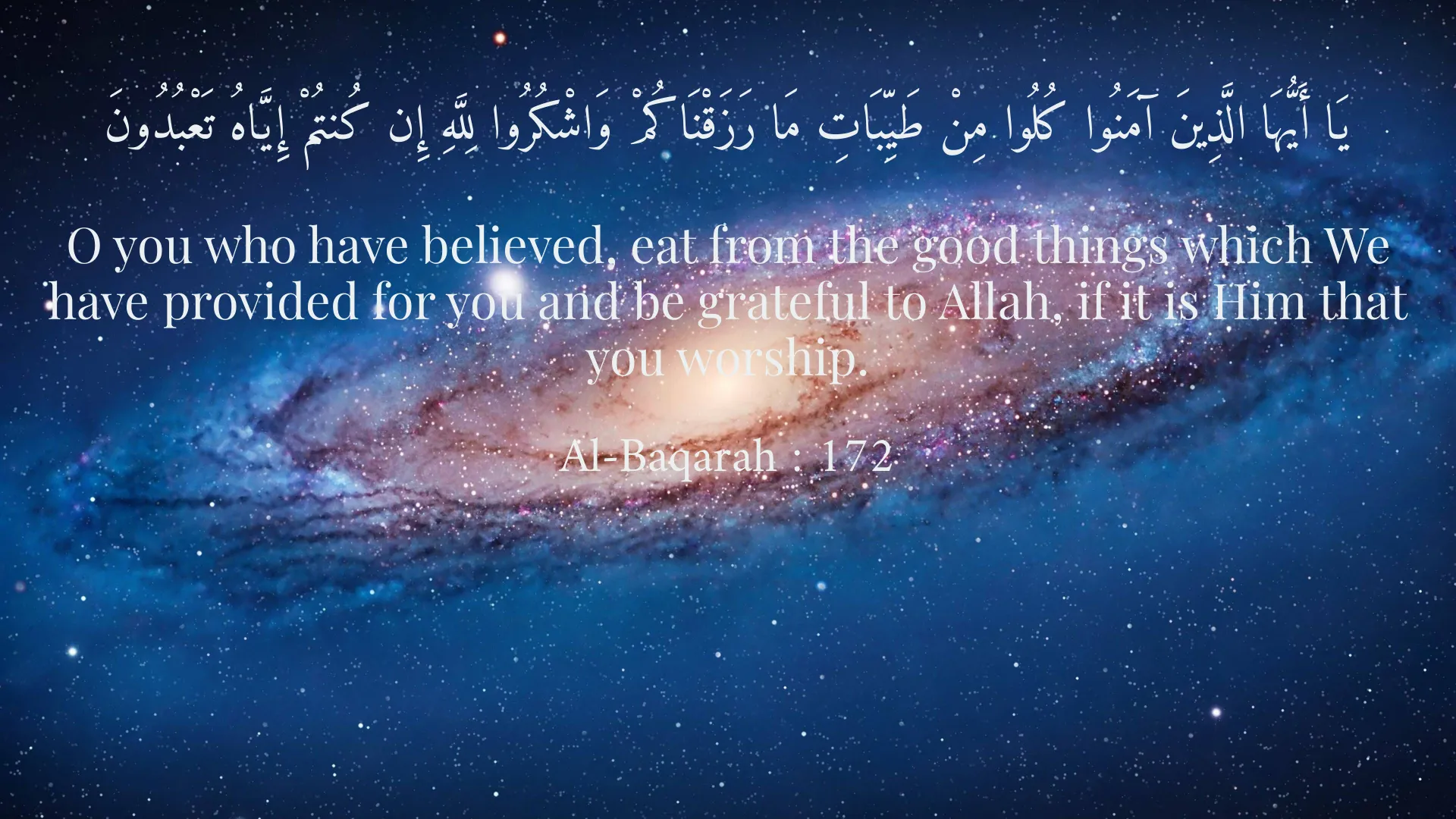
يَا أَيُّهَا الَّذِينَ آمَنُوا كُلُوا مِنْ طَيِّبَاتِ مَا رَزَقْنَاكُمْ وَاشْكُرُوا لِلَّهِ إِن كُنتُمْ إِيَّاهُ تَعْبُدُونَ
O you who have believed, eat from the good things which We have provided for you and be grateful to Allah, if it is Him that you worship.
Al-Baqarah : 172
وَ أَمَّا بِنِعْمَةِ رَبِّكَ فَحَدِّثْ
And on the favor of your Lord, proclaim.
Ta-Ha : 88
Short Story
One day, Adel was sitting in his garden, pondering how he could achieve more happiness. He recalled the verses of the Quran and decided to embody contentment by only utilizing halal sustenance. Through effort and trust in God, Adel found peace and satisfaction in his life, inspiring his friends along the way.