Quranic Answer
Honesty is one of the fundamental principles of human life that is emphasized in the Holy Quran and numerous other religious and philosophical texts throughout history. Honesty serves as the foundation upon which trust and integrity are built, and it plays a crucial role in nurturing both social relationships and personal development. As we delve into the significance of honesty in light of the teachings of the Quran, we can glean profound insights that can guide us in our everyday lives, fostering a sense of purpose and community. From the outset, it is essential to understand that honesty is not merely a moral preference but rather a divine command. In Surah Al-Baqarah, verse 283, Allah commands the believers to conduct their transactions with honesty and trust. This passage underscores the idea that whenever we engage with others, whether in business or personal contexts, we are called to embody truthfulness and integrity. The implication of this command extends beyond mere words; it encapsulates the essence of ethical behavior in all aspects of life. The emphasis on honesty in economic transactions is vital. By promoting honest dealings, the Quran aims to build a society where trust prevails, leading to healthier relationships among individuals and groups. When transactions are conducted transparently and honestly, they create an environment that fosters mutual respect and cooperation. Such an environment becomes a breeding ground for positive interactions, ultimately enhancing social cohesion and stability. Dishonesty, on the other hand, breeds distrust, which can lead to chaos and conflict within a community. Therefore, the Quran’s directive on honesty becomes paramount for both individuals and societies. Moreover, honesty transcends social relationships and extends into one’s personal life. In Surah An-Nahl, verse 90, Allah instructs believers to maintain justice, engage in good deeds, and act honestly. This verse highlights that honesty is not only about external transactions; it is also about internal integrity. To be honest with oneself means to recognize one’s strengths and weaknesses, to acknowledge personal flaws, and to strive for self-improvement. A person who is honest with themselves is better equipped to face challenges, learn from mistakes, and grow as an individual. This internal honesty naturally radiates outward, influencing interactions with others and creating a ripple effect of trustworthiness. Furthermore, the Quran emphasizes that being honest with oneself is the foundation for exhibiting honesty towards others. If an individual can practice self-honesty, they are more likely to adhere to honest interactions in their dealings with others. This alignment between one’s inner thoughts and external actions constitutes a harmonious existence, paving the way for greater integrity and authenticity. In contrast, when individuals deceive themselves, they often extend that deception to their relationships, leading to discord and discontent. In essence, the practice of honesty can foster deeper connections and trust among individuals. Trust serves as the cornerstone of any meaningful relationship, whether familial, friendly, or romantic. When people are honest with one another, they cultivate an atmosphere of safety and mutual respect, wherein they feel empowered to express their thoughts and emotions openly. Such relationships are characterized by vulnerability, understanding, and empathy, creating bonds that are resilient and enduring. Equally important is the acknowledgment that honesty is not a virtue confined to the teachings of Islam. It is a shared value recognized across numerous cultures and religions. Most spiritual and ethical traditions emphasize the importance of truthfulness, morality, and integrity as cornerstones for a peaceful and productive community. By embracing honesty, one transcends the boundaries of religious and cultural differences and commits to a universal ethical standard that promotes a just society. Additionally, the Quran teaches that the sincere practice of honesty can lead to a better quality of life. Honesty cultivates inner peace, as individuals do not have to constantly navigate the complexities and anxieties that arise from deceitfulness. A life grounded in truth leads to genuine connections, personal fulfillment, and a sense of responsibility towards oneself and others. In turn, this accountability can inspire others to embrace honesty in their own lives, creating a domino effect that reverberates through communities. Ultimately, Allah states in Surah Al-Mu'mun, verse 8, that true believers are those who fulfill their promises and are honest in both their words and actions. This verse serves as a powerful reminder of the moral obligation that every believer carries in their quest for spiritual and ethical fulfillment. The call to honesty is not a mere suggestion; it is an essential component of faith that shapes how believers interact with the world. In conclusion, honesty is not simply an attribute that can be turned on or off, but rather a way of life that encompasses every aspect of an individual's existence. The teachings of the Quran reaffirm the importance of honesty in personal relationships, community interactions, and one’s inner life. By nurturing honesty within ourselves, we pave the way for more cohesive relationships, stronger communities, and ultimately, a more just society. As we navigate the complexities of our lives, let us strive to uphold the principles of honesty and integrity, embracing the profound impact it can have on our lives and the lives of those around us. Honesty is a virtue that transcends the barriers that divide humanity. It is a powerful tool that can lead us toward mutual understanding, respect, and a collective pursuit of goodness. As we embrace honesty in our lives, we honor the divine command to live truthfully, fostering an environment where trust and solidarity can flourish.
Related Verses
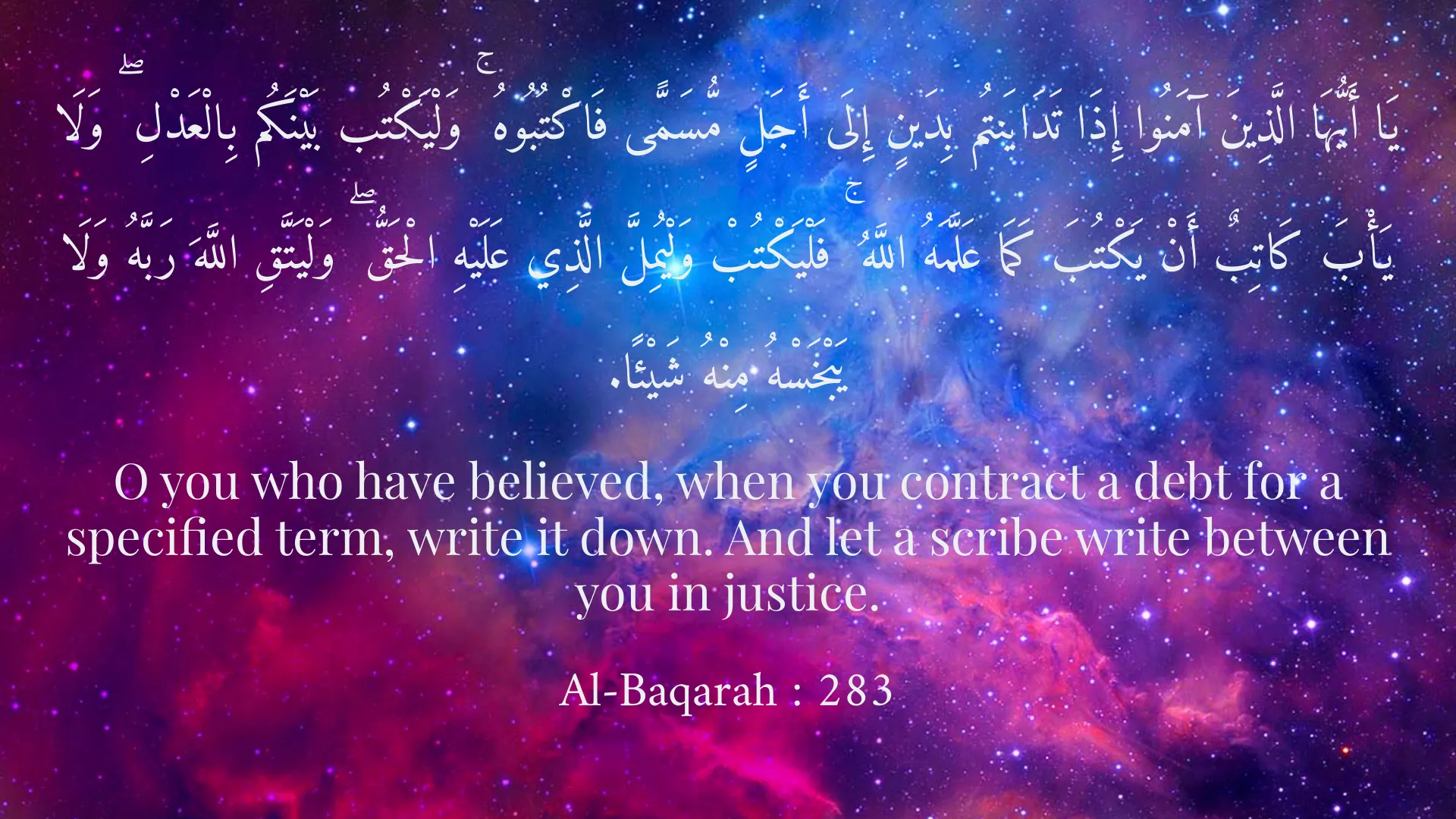
يَا أَيُّهَا الَّذِينَ آمَنُوا إِذَا تَدَايَنتُم بِدَينٍ إِلَى أَجَلٍ مُّسَمًّى فَاكْتُبُوهُ ۚ وَلْيَكْتُب بَيْنَكُم بِالْعَدْلِ ۖ وَلَا يَأْبَ كَاتِبٌ أَنْ يَكْتُبَ كَمَا عَلَّمَهُ اللَّهُ ۚ فَلْيَكْتُبْ وَلْيُمِلَّ الَّذِي عَلَيْهِ الْحَقُّ ۖ وَلْيَتَّقِ اللَّهَ رَبَّهُ وَلَا يَبْخَسْهُ مِنْهُ شَيْئًا.
O you who have believed, when you contract a debt for a specified term, write it down. And let a scribe write between you in justice.
Al-Baqarah : 283
إِنَّ اللَّهَ يَأْمُرُ بِالْعَدْلِ وَالإِحْسَانِ وَإِيتَاءِ ذِي الْقُرْبَىٰ ۖ وَيَنْهَىٰ عَنِ الْفَحْشَاءِ وَالْمُنكَرِ وَالْبَغْيِ ۚ يَعِظُكُمْ لَعَلَّكُمْ تَذَكَّرُونَ.
Indeed, Allah commands you to render trusts to whom they are due and when you judge between people to judge with justice.
An-Nahl : 90
وَالَّذِينَ هُم بِأَمَانَاتِهِمْ وَعَهْدِهِمْ رَاعُونَ
And they who are to their trusts and their covenant due.
Al-Mu'mun : 8
Short Story
One day, a man named Hasan decided to pay more attention to honesty in his life. He remembered the verses of the Quran and said, "I must honor my promises and be sincere in my interactions with others." From that day on, Hasan strived to always be truthful, and eventually gained the trust of those around him, creating a better life for himself.