Quranic Answer
The Rights of Others in Islam: Understanding 'Haqq al-Nas' and Its Relevance Today Islam, a faith that has influenced millions around the globe, presents a profound and intricate system of ethics that encompasses various aspects of life. One of the cornerstone principles found in Islamic teachings is the concept of the rights of others, known as 'Haqq al-Nas'. This principle plays a crucial role in guiding the behavior and interactions of Muslims in their daily lives. The Holy Quran, the ultimate source of guidance for Muslims, addresses these rights extensively, emphasizing the importance of respecting others and fostering an environment of justice and compassion. At its core, 'Haqq al-Nas' refers to the rights individuals owe to one another. This encompasses respect for others' property, lives, dignity, and well-being. In practical terms, it means fulfilling the needs of others, maintaining justice, and avoiding any form of oppression. Islam teaches that one's faith is strongly interconnected with how they treat others and to truly embody the teachings of Islam, one must prioritize the rights of others. The Quranic Perspective on Rights of Others The Holy Quran serves as a comprehensive guide to understanding 'Haqq al-Nas'. Specifically, Surah An-Nisa (Chapter 4), verse 58, encapsulates the essence of this concept: "Indeed, Allah commands you to render trusts to whom they are due and when you judge between people to judge with justice." This verse is a powerful reminder of the responsibility that comes with being a member of a community. Trusts, whether they pertain to property or personal relationships, must be upheld, and justice should be the lens through which interactions are viewed. Furthermore, the Quran admonishes believers against any form of injustice or oppression. In Surah Al-Baqarah (Chapter 2), verse 188, it states: "And do not consume one another's wealth unjustly or send it [in bribery] to the rulers in order that [they might aid] you [to] consume a portion of the wealth of the people in sin, while you know [it is unlawful]." This teaching emphasizes the significance of ethical dealings and integrity in financial matters, encouraging individuals to earn their wealth through legitimate means and to respect the rights of others in all transactions. Islamic teachings facilitate understanding the ethical framework within which Muslims are encouraged to operate in their daily lives. This includes abstaining from actions that could potentially harm others, promoting equity and fairness, and ensuring that one's own desires do not infringe upon the rights of others. Sensitivity Towards the Rights of Others Being sensitive to the rights of others resides at the heart of a harmonious social life. When individuals learn to respect the rights of those around them, they contribute to a more just and peaceful society. Sensitivity comes from empathy and understanding the experiences of others. It is about acknowledging that everyone has their own struggles and challenges and choosing to be compassionate in the face of those struggles. This sensitivity can be cultivated through various means, whether educational programs or community activities focused on promoting mutual respect. Such practices not only help in developing individual character but also strengthen communal bonds, fostering an environment of support and solidarity. When people feel valued and respected, it creates a society built on trust, which is necessary for peaceful coexistence. Moreover, the repercussions of honoring the rights of others extend beyond interpersonal relationships. In doing so, we fulfill a fundamental aspect of our humanity and reflect our faith. Muslims are reminded that the way they treat others influences their relationship with Allah, and thus actions toward others are a reflection of one's spirituality. The Impact of Upholding the Rights of Others The act of honoring the rights of others can lead to countless blessings in one's life. When individuals prioritize the rights of others, they often experience increased feelings of contentment and fulfillment. The community flourishes as trust and cooperation take root, paving the way for collective progress. In workplaces, respecting colleagues' rights can lead to higher morale and productivity, whereas in educational institutions, it fosters an environment conducive to learning and development. Conversely, neglecting the rights of others can have detrimental effects, creating a cycle of mistrust and resentment. This can lead to conflict and social unrest, disrupting the fabric of society that holds people together. Understanding and integrating 'Haqq al-Nas' in our lives can act as a powerful antidote to societal issues that arise from selfishness and greed. By committing ourselves to ethical behavior and fairness, we lay the foundation for a society wherein everyone can thrive. Conclusion In conclusion, the rights of others, or 'Haqq al-Nas', represent a foundational aspect of Islamic faith that is crucial for personal growth and societal harmony. The teachings of the Quran underscore the importance of respect, justice, and responsibility when it comes to the rights owed to others. As Muslims strive to embody these principles in their daily lives, they contribute to a culture that uplifts individuals and enriches communities. By becoming sensitive to the needs and rights of others, we can create a peaceful and prosperous existence grounded in mutual respect and understanding. Therefore, honoring the rights of others not only affirms our humanity but is also a testament to our faith and leads to a life filled with blessings and fulfillment.
Related Verses
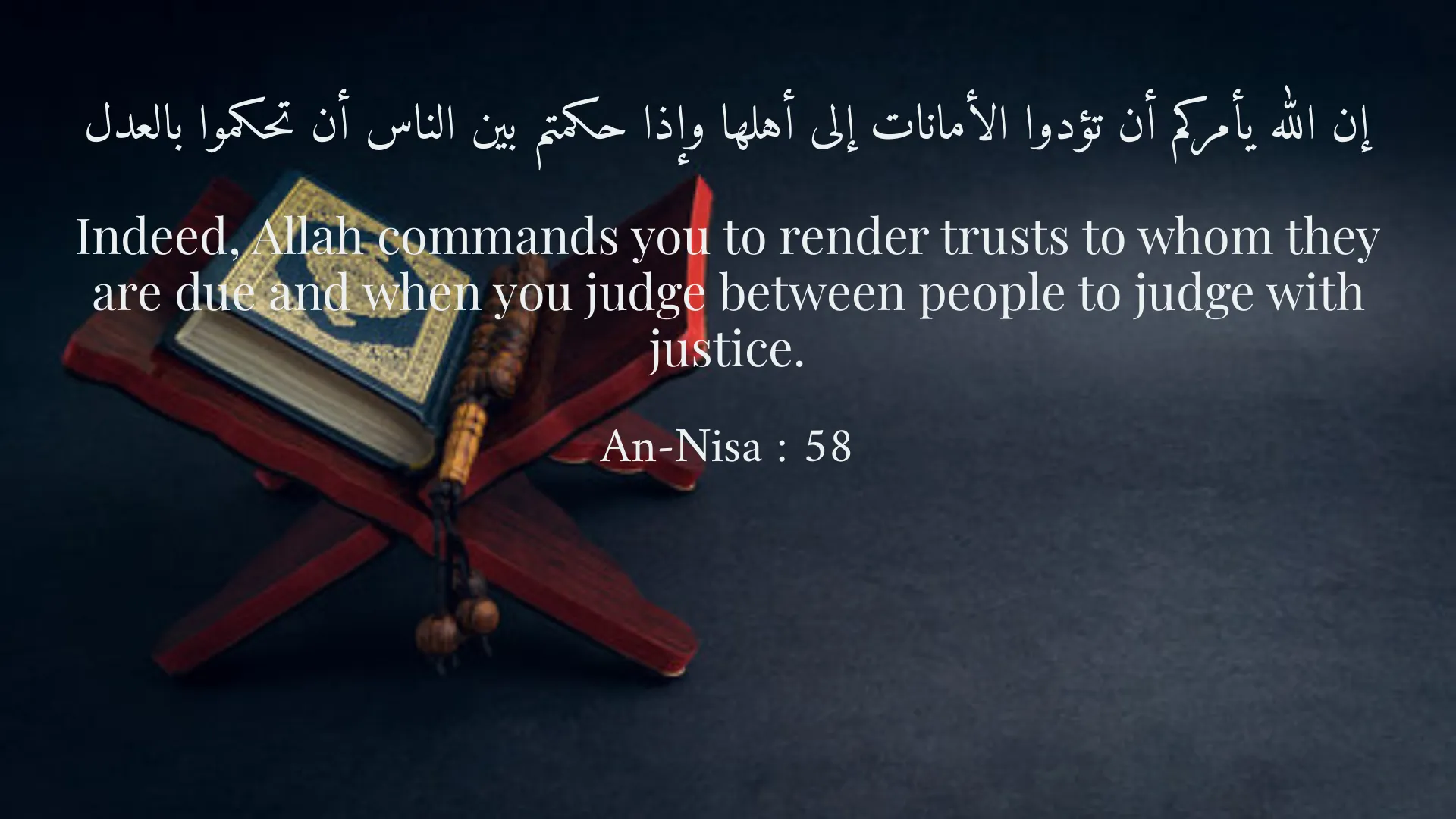
إن الله يأمركم أن تؤدوا الأمانات إلى أهلها وإذا حكمتم بين الناس أن تحكموا بالعدل
Indeed, Allah commands you to render trusts to whom they are due and when you judge between people to judge with justice.
An-Nisa : 58
لا تأكلوا أموالكم بينكم بالباطل
And do not consume one another's wealth unjustly.
Al-Baqarah : 188
Short Story
One day, two friends named Ali and Hasan were discussing life and values. Ali told Hasan, "My friend, I always try to respect the rights of others. It gives me peace of mind." Hasan agreed, saying, "Yes, being sensitive to the rights of others has always made me a better person. We should always strive to maintain respect and fairness in our interactions with others." Thus, they decided to support each other in staying true to this principle in their lives.