Quranic Answer
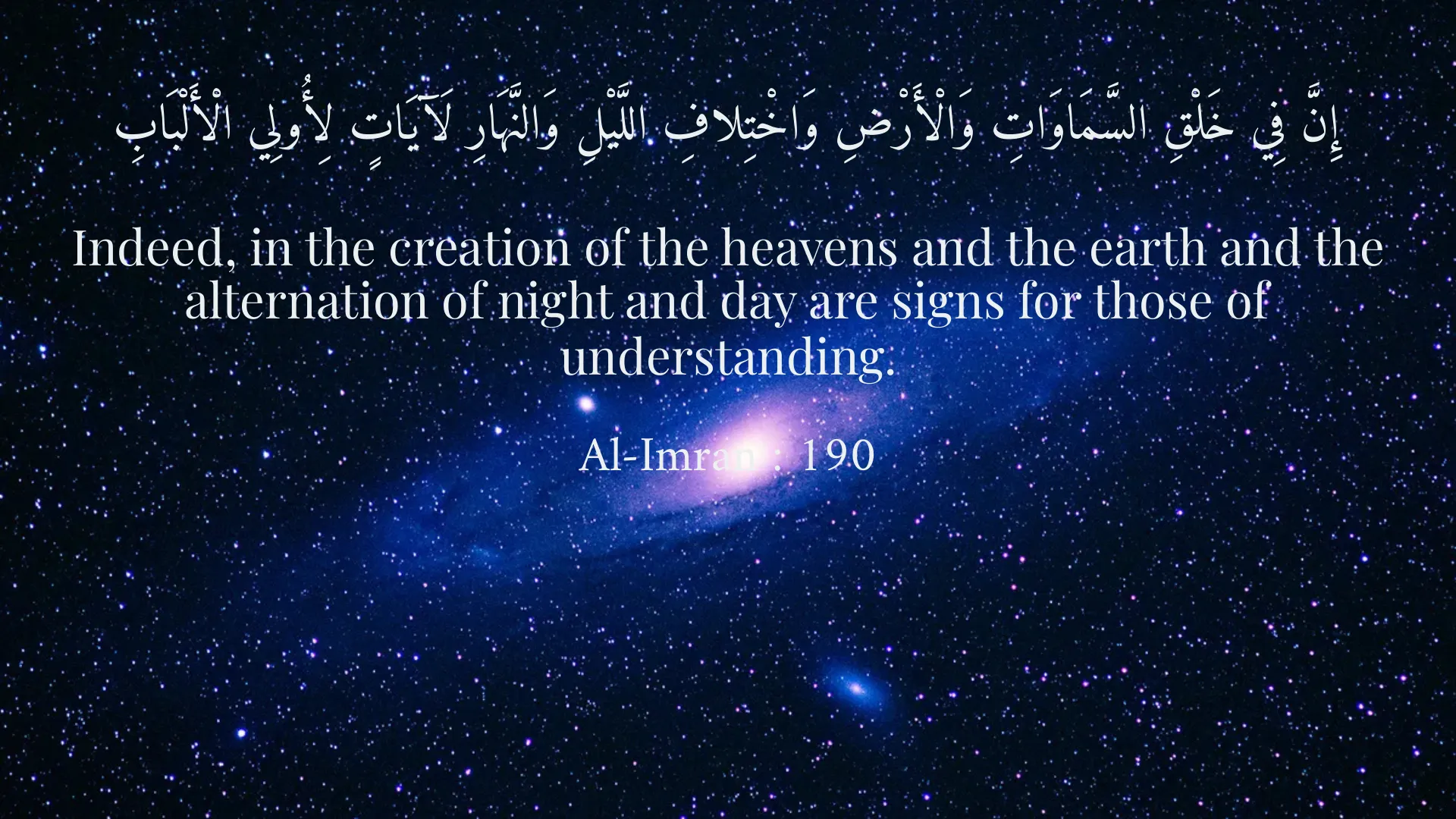
In the Holy Quran, thinking and contemplation are described as pivotal qualities that define true believers. As we delve into the text, we find that the Quran encourages Muslims to engage in deep reflection and contemplation, allowing them to derive wisdom from the world around them. One striking verse found in Surah Al-Imran, verse 190, encapsulates this notion beautifully: 'Indeed, in the creation of the heavens and the earth and the alternation of night and day are signs for those of understanding.' This verse serves as a reminder that the universe itself is filled with signs that prompt us to reflect, understand, and contemplate our existence and surroundings. The act of thinking critically about these signs is not merely a passive activity; rather, it is an essential part of the believer's journey. By reflecting on the natural phenomena that occur around us, we gain insight into our lives and learn from our experiences. The Quran urges followers to observe the wonders of creation, to connect the dots between the divine signs embedded in nature, and to use that knowledge to better their lives. In a world that is often overwhelmed by noise, chaos, and distractions, these divine instructions to reflect allow believers to find a sense of calm and purpose in their existence. Engaging with the beauty of the cosmos, the cycle of life, and the laws that govern nature can lead one to profound realizations about the existence of God and the purpose of life itself. Contemplation, as a practice, allows us to distance ourselves from the trivialities of everyday life and connect with the deeper meanings that lie beneath. Furthermore, in verse 26 of Surah Al-Baqarah, Allah states: 'Indeed, Allah is not shy to present an example, even that of a mosquito or what is above it.' This profound verse underscores the expansive range of lessons one can draw from even the humblest of creatures. It emphasizes that wisdom can be gleaned from the smallest of signs and occurrences, reminding us to maintain a perspective that values both the minute and the grand. The willingness of Allah to utilize such seemingly insignificant examples shows how every aspect of creation holds value and a message for us to contemplate. Contemplation and critical thinking serve as tools for personal growth and self-improvement. When we actively engage our minds in the process of reflection, we cultivate a deeper understanding of morality, ethics, and social responsibility. These teachings remind us that thinking is not just an intellectual exercise but a necessary component for navigating the complexities of life. In moments of contemplation, we are invited to question our choices, evaluate our behavior, and strive for growth in both our personal and communal spheres. In societies that prioritize rapid success and instant gratification, the Quran’s call to think might stand in stark contrast. However, this encouragement to engage in deep thought grants believers a framework to make informed decisions grounded in ethical values. It leads to a life characterized by purpose and mindfulness rather than mere reactionary behavior or superficial pursuits. Furthermore, reflecting on the lessons in the Quran fosters a continual desire for knowledge acquisition. Believers are encouraged to expand their understanding of not just religious texts but also the sciences, history, and cultural studies. The Quran promotes holistic education where faith and knowledge coexist, permitting individuals to flourish on multiple fronts. Pursuing education with a spirit of contemplation allows for the integration of spiritual insights with worldly knowledge, bridging the gap that often exists between religious and secular studies. As believers engage in this lifelong process of learning and growth, they inevitably become more attuned to the needs of their communities. The insights gleaned from contemplation can help foster a sense of responsibility towards societal issues ranging from poverty to social injustice. When coupled with a commitment to ethical behavior, the contemplative practice makes individuals agents of change in their surroundings. The teachings of the Quran remind us that serving humanity is one of the highest forms of worship, and it is through thoughtful reflection that we can best serve our fellow beings. In our contemporary world, where distractions abound and time to reflect is often seen as a luxury, these teachings serve as crucial reminders of the need for deliberate thought in our everyday lives. As believers, we are encouraged to carve out moments of silence amidst the noise—to meditate on our experiences, our decisions, and our relationships. In doing so, we gain clearer insights that can navigate us through life's trials and tribulations. In conclusion, the Quran clearly highlights thinking and contemplation as vital components of a believer’s journey. By reflecting on the signs of creation and employing critical thinking in various aspects of life, individuals not only enhance their personal growth but also foster positive change in society. Contemplation opens the doors to wisdom, serving as a duty that every believer should actively pursue. This journey is not merely for personal gain, but rather, it is a collective responsibility that strengthens our communities and uplifts humanity. As the world continues to evolve, the timeless wisdom of the Quran remains a guiding light, reminding us that through thoughtful reflection, understanding, and action, we can collectively build a brighter future for ourselves and those around us.
Related Verses
إِنَّ فِي خَلْقِ السَّمَاوَاتِ وَالْأَرْضِ وَاخْتِلافِ اللَّيْلِ وَالنَّهَارِ لَآيَاتٍ لِأُولِي الْأَلْبَابِ
Indeed, in the creation of the heavens and the earth and the alternation of night and day are signs for those of understanding.
Al-Imran : 190
إِنَّ اللَّهَ لَا يَسْتَحْيِي أَنْ يَضْرِبَ مَثَلًا مَّا بَعُوضَةً فَمَا فَوْقَهَا
Indeed, Allah is not shy to present an example, even that of a mosquito or what is above it.
Al-Baqarah : 26
Short Story
In ancient times, a young man named Hasan pondered in the lush meadows. He turned to the verses of the Quran and decided to think more deeply about every subject. Soon, Hasan realized how beautiful and meaningful the world around him was. He looked at life’s challenges with contemplation and made more conscious decisions. This not only improved his own life but also encouraged others to think.