Quranic Answer
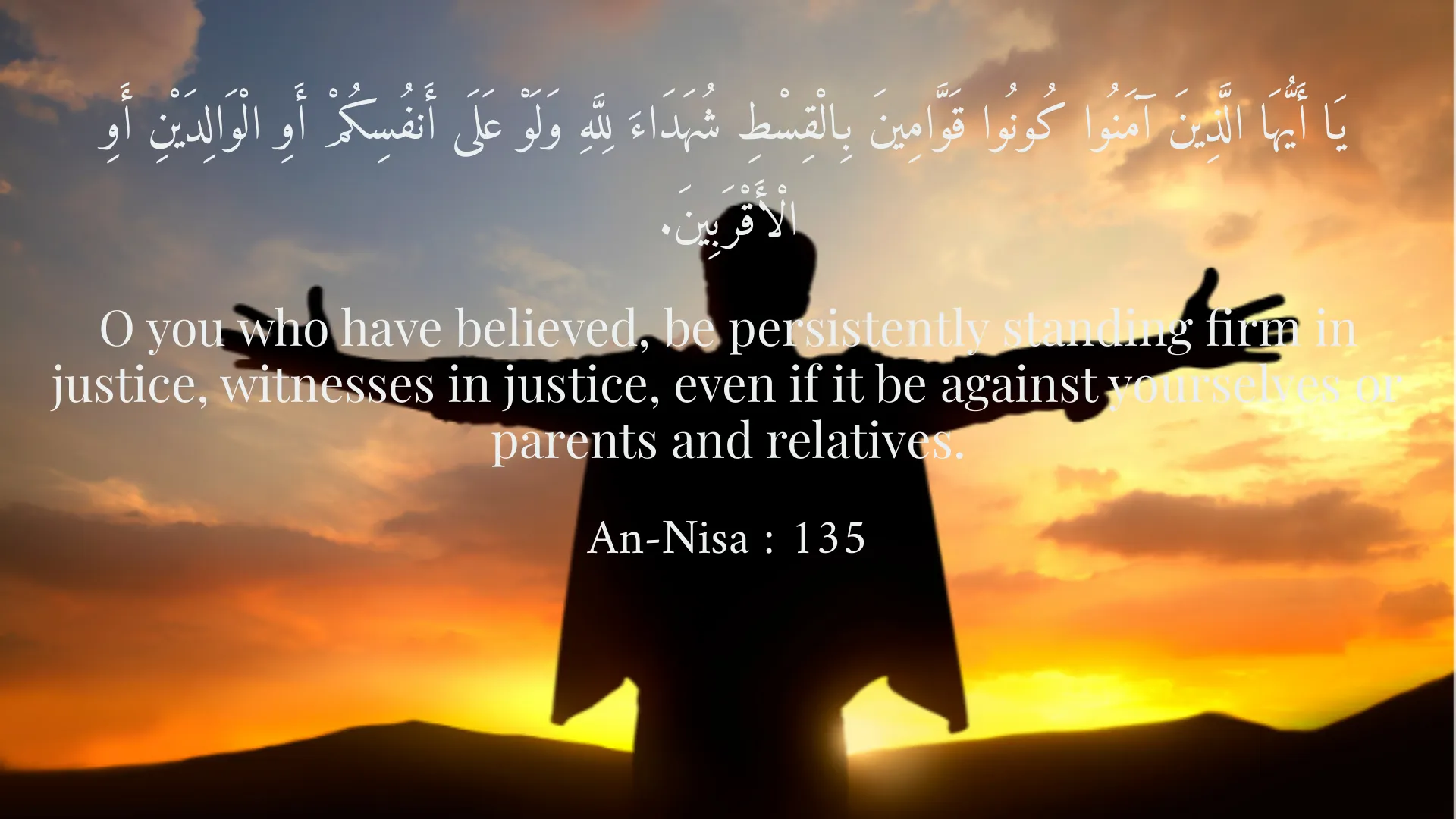
In the Holy Quran, injustice is introduced as one of the major sins, and God has taken a definitive and strong stance against it. Across various verses, the Quran emphasizes the importance of justice, urging believers to act with integrity and fairness. This emphasis on justice is not only a spiritual guideline but also a foundational principle in establishing a moral society. The Quran's teachings advocate for the upholding of justice as a sacred duty, underscoring its pivotal role in personal and communal life. In Surah An-Nisa, verse 135, Allah commands, 'O you who have believed, be persistently standing firm in justice, witnesses in justice, even if it be against yourselves or parents and relatives.' This verse serves as a critical reminder of the obligation to uphold justice even in the face of personal repercussions. It calls believers to embrace an unwavering commitment to fairness, stressing that justice must be upheld at all times, regardless of the situation's complexity. This profound message reinforces the idea that justice is inherently linked to one's faith and moral character. The implications of this verse extend beyond mere exhortation; they challenge individuals to reflect on their values and actions. By commanding believers to testify impartially, even against their own kin, the verse dismantles biases and promotes a justice system built on truth rather than familial loyalty or societal pressure. It places a higher moral value on justice, urging individuals to act upon their convictions, thereby laying the groundwork for a more equitable society. Injustice, on the other hand, has dire consequences, affecting not just individuals but the broader community. When injustice prevails, it breeds corruption, distrust, and social unrest. The Quranic perspective on justice emphasizes that injustice creates a rippling effect, leading to societal disintegration. The consequence of tolerating or supporting injustice stirs an environment where exploitation can thrive, and the vulnerable are often left to suffer silently. This understanding aligns with the Quranic vision of a just society where rights are respected, and everyone is afforded dignity and respect. Furthermore, Surah Al-Ma'idah, verse 8 reiterates this commitment to justice: 'O you who have believed, be persistently standing firm in justice, witnesses for Allah, even if it be against yourselves or parents or relatives.' This repetition in divine instruction underscores the gravity of justice as a cornerstone of Islamic ethics. It embodies not only the moral obligation of an individual but also places an emphasis on the social responsibility of every believer. This inclusive approach highlights that justice extends its reach to all aspects of life, making it a vital concept within Islam that transcends personal interests. Detesting injustice is not an isolated sentiment; it is an active pursuit towards creating a balanced and ethical society. In the context of Muslim teaching, standing firm against oppression is seen as a testament of faith. The Quran compels believers to confront injustices regardless of their source, dictating that silence in the face of wrongdoing reveals a moral failure that can permeate societal norms. Thus, not only do believers have the responsibility to uphold justice, but they are also mandated to educate and inspire others to reject injustice, thereby developing healthy, supportive communities. In addition to collective societal impacts, injustice also takes a personal toll. When individuals remain passive in the face of oppression, they inadvertently contribute to the perpetuation of injustice. This phenomenon creates a cycle that becomes increasingly difficult to break. Each instance of silence or inaction further normalizes the act of injustice, leading to an environment where it becomes acceptable to exploit others. The responsibility lies heavily on the shoulders of believers to challenge this cycle actively, reinforcing the need for personal accountability and courage. In conclusion, the Holy Quran's strong denunciation of injustice serves as a clarion call for Muslims to embrace justice not only as a legal obligation but as a moral imperative essential for the well-being of individuals and society. Through a commitment to uphold justice, believers can counteract the forces that seek to undermine societal morality and integrity. By standing against oppression, engaging in honest practices, and fostering a culture of justice, individuals align themselves with divine will, cementing a legacy of fairness and respect for all. In every circumstance, whether personal or societal, the intrinsic duty to detest injustice remains a fundamental tenet that must guide and inspire the actions of Muslims everywhere.
Related Verses
يَا أَيُّهَا الَّذِينَ آمَنُوا كُونُوا قَوَّامِينَ بِالْقِسْطِ شُهَدَاءَ لِلَّهِ وَلَوْ عَلَى أَنفُسِكُمْ أَوِ الْوَالِدَيْنِ أَوِ الْأَقْرَبِينَ.
O you who have believed, be persistently standing firm in justice, witnesses in justice, even if it be against yourselves or parents and relatives.
An-Nisa : 135
يَا أَيُّهَا الَّذِينَ آمَنُوا كُونُوا قَوَّامِينَ بِالْقِسْطِ شُهَدَاءَ لِلَّهِ.
O you who have believed, be persistently standing firm in justice, witnesses for Allah.
Al-Ma'idah : 8
Short Story
One day, a man was talking in the market with his friends. One of his friends spoke about an act of injustice, and he became very upset. He recalled the verses of the Quran that condemn oppression and told his friends, 'Let us stand against injustice and testify for the rights of others!' This statement not only made his friends aware but also encouraged him to act justly in his personal life.