Quranic Answer
Forgiveness and mercy are fundamental principles that play a pivotal role in shaping our lives, relationships, and spiritual beliefs. Throughout history, various cultures and religions have extolled the virtues of forgiveness, recognizing its power to mend not only individual hearts but also entire communities. In the context of Islam, these principles hold particular significance, deeply intertwined with the teachings of the Holy Quran and the life of the Prophet Muhammad (peace be upon him). This article delves into the multifaceted nature of forgiveness and mercy, exploring their implications on personal well-being, social harmony, and spiritual development. The Holy Quran serves as a profound source of wisdom, emphasizing the importance of forgiveness. One of the most salient verses related to this theme is found in Surah An-Nur, verse 22, where Allah reminds believers of the imperative to forgive others. The verse states, "Let them pardon and overlook. Would you not like that Allah should forgive you? And Allah is Forgiving and Merciful." This powerful message underlines that forgiveness is not merely a moral duty; it is intertwined with the concept of divine mercy. Those who can forgive others are closer to attaining Allah's forgiveness, thus illuminating the interconnectedness of human compassion and divine grace. Forgiveness, as articulated in Islamic teachings, is also a reflection of one's humanity and generosity. It involves letting go of anger, resentment, and the desire for revenge. When we choose to forgive, we free ourselves from the burdens that weigh down our hearts and minds. Holding onto grudges often leads to negative impacts on our mental and emotional health; it fosters bitterness and can escalate into chronic stress or depression. Conversely, through forgiveness, we can liberate ourselves from the negative emotions that cloud our perception of others and the world around us. Forgiveness, ultimately, acts as a catalyst for inner peace and tranquility. The Quran also addresses the qualities of righteousness and piety in relation to forgiveness. In Surah Aal-Imran, verse 134, Allah highlights the attributes of those who are virtuous, stating that they "spend in the cause of Allah during ease and hardship and who restrain anger and who pardon the people. And Allah loves the doers of good." This verse reiterates that mercy and forgiveness are not only about personal redemption; they are integral to the fabric of a righteous character. By embodying these values, individuals cultivate an environment conducive to understanding and empathy. Forgiveness further extends its reach beyond the individual, fostering better and healthier relationships within families, friendships, and communities. By encouraging forgiveness, we lay the groundwork for mutual respect and trust. In relationships where forgiveness is practiced, communication flourishes, and conflicts can be resolved constructively. The process of forgiving helps build resilience and solidarity among individuals, creating a more cohesive social unit. This aligns with the broader Islamic principle of promoting harmony and peace amongst humanity, reinforcing the idea that a strong community thrives on compassion and understanding. The act of forgiveness is not without its challenges, and it can often be difficult to put into practice. Significant wrongs, betrayals, and injustices can evoke deep hurt, making the act of forgiveness feel overwhelming. However, it's essential to recognize that forgiveness is a gradual process, rooted in personal reflection and the willingness to move forward. In the Quran, Allah acknowledges human imperfections and encourages believers to seek forgiveness for themselves as well. This reciprocal cycle creates a sense of empathy towards the flaws of others, encouraging us to embrace compassion. Moreover, the life of the Prophet Muhammad (peace be upon him) serves as a shining example of how forgiveness and mercy can be applied in real-life situations. Throughout his prophetic mission, he faced numerous challenges, including hostility and persecution. Yet, he consistently demonstrated a remarkable capacity for forgiveness. His treatment of those who wronged him, including his adversaries, emphasizes the transformative impact of forgiveness. One notable instance involves the people of Ta’if, who rejected his message and treated him harshly. Instead of seeking vengeance, the Prophet (pbuh) prayed for their guidance and well-being, displaying an unparalleled level of mercy. By following his footsteps, believers can aspire to cultivate similar qualities in their own lives. In contemporary society, the message of forgiveness remains as relevant as ever. We are constantly confronted with conflicts, whether on a personal, societal, or global scale. Embracing forgiveness can initiate a powerful ripple effect, paving the way for healing and reconciliation. When individuals choose to forgive, they disrupt the cycle of hatred and retribution, allowing for understanding and compassion to flourish. This principle not only caters to personal relationships but can also extend to larger social issues, promoting peace among diverse communities. Additionally, forgiveness can have significant psychological benefits. Studies have shown that individuals who practice forgiveness frequently experience lower levels of stress, anxiety, and depression. By releasing the grip of past grievances, individuals can engage more fully in their present lives, enhancing both their emotional health and interpersonal relationships. This aligns beautifully with the Islamic perspective that prioritizes personal growth, spirituality, and emotional well-being. In conclusion, forgiveness and mercy stand as foundational principles that not only enrich our personal lives but also contribute to the wellbeing of society at large. The messages conveyed in the Holy Quran, coupled with the exemplary teachings of the Prophet Muhammad (peace be upon him), guide us toward a path filled with compassion and understanding. By embracing forgiveness, we unlock the potential for personal healing, stronger relationships, and a more harmonious community. Ultimately, the act of forgiving becomes a profound expression of our humanity, showcasing our ability to rise above adversity and promote a world built on love, mercy, and acceptance.
Related Verses
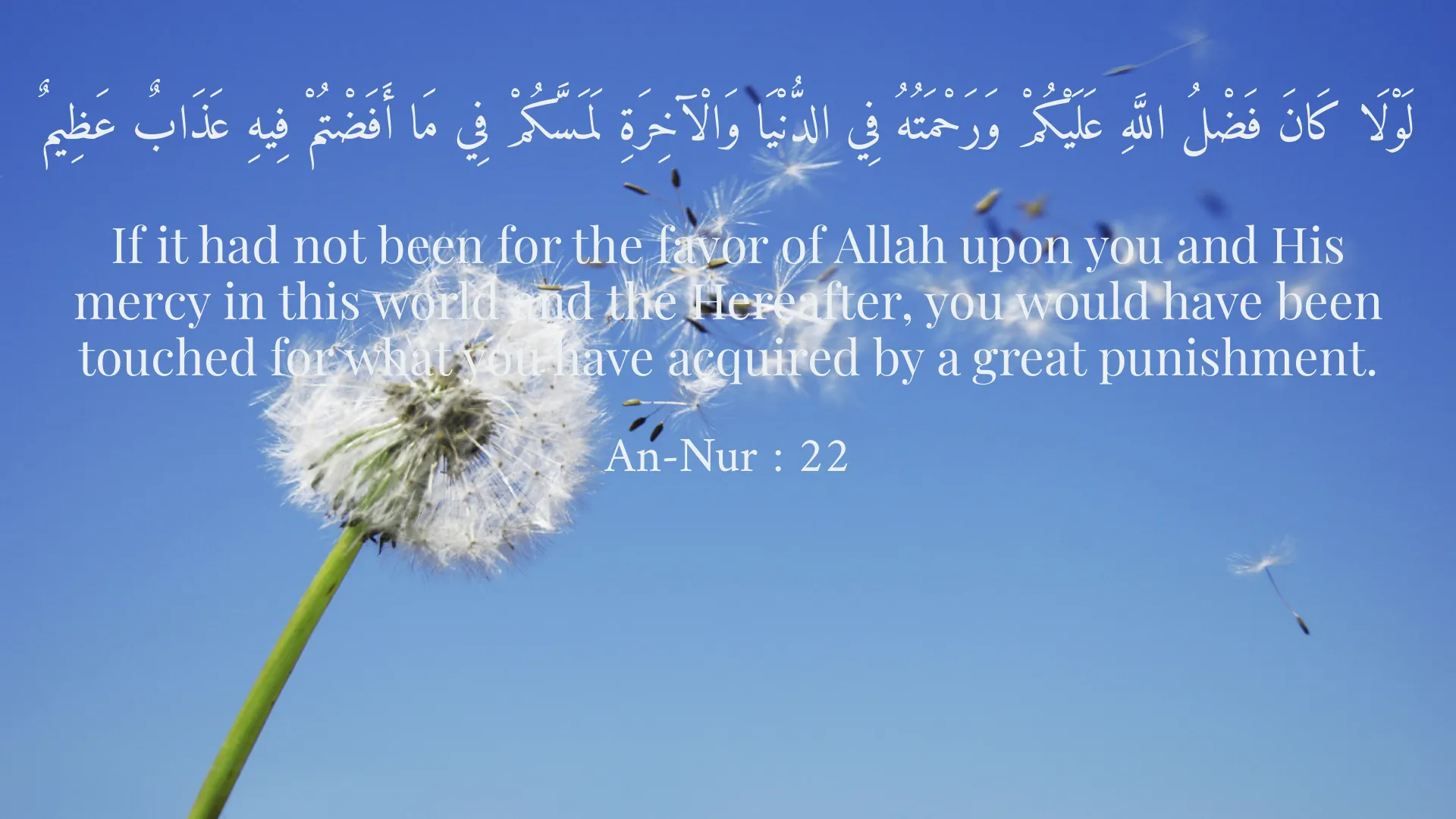
لَوْلَا كَانَ فَضْلُ اللَّهِ عَلَيْكُمْ وَرَحْمَتُهُ فِي الدُّنْيَا وَالْآخِرَةِ لَمَسَّكُمْ فِي مَا أَفَضْتُمْ فِيهِ عَذَابٌ عَظِيمٌ
If it had not been for the favor of Allah upon you and His mercy in this world and the Hereafter, you would have been touched for what you have acquired by a great punishment.
An-Nur : 22
وَالَّذِينَ يُنفِقُونَ فِي السَّرَّاءِ وَالْضَّرَّاءِ وَالْكَاظِمِينَ الْغَيْظَ وَالْعَافِينَ عَنِ النَّاسِ ۗ وَأَفْضَلُ اللَّـهِ يُحِبُّ الْمُحْسِنِينَ
And those who spend in ease and hardship and who restrain anger and who pardon the people - and Allah loves the doers of good.
Aal-Imran : 134
Short Story
Once upon a time, there was a man living in a town who held a grudge against one of his neighbors. Every day as he passed by that neighbor's house, he would remember a bad memory and feel upset. One night, he dreamt of a verse from the Quran that said, 'Forgive and be forgiven'. The next morning, he decided he would definitely forgive his neighbor. When he did this, he experienced not only a sense of relief and peace but also established a new relationship with his neighbor. This story shows that forgiveness benefits not only others but ourselves as well.