Quranic Answer
### The Sin of Lying in Islam: A Comprehensive Exploration Lying is often regarded as one of the gravest sins sanctioned by many religions around the globe, and in Islam, it is strongly condemned in the Quran. This article delves into the significance of honesty in Islam by analyzing verses from the Quran, exploring the detrimental effects of lying, and emphasizing the importance of fostering a culture of truthfulness among Muslims. #### The Quranic Perspective on Lying In the Quran, lying is addressed with clarity and emphasis, reflecting the overarching theme of truthfulness in Islam. One of the pivotal verses discussing this issue is Surah Al-Baqarah, verse 42, where Allah commands believers not to mix truth with falsehood. This instructive verse implores followers of Islam to prioritize truth and integrity in their lives, illuminating the path of righteousness. The act of lying deviates individuals from the straight path and can lead not only to personal turmoil but also to the disintegration of interpersonal relationships. Lying is not merely a minor offense; it alters how one’s character is perceived by others. It eats away at the fabric of trust, which is essential for any society to flourish. When individuals deceitfully present themselves, they inadvertently erode the trust that lies at the core of human relationships. The Quran emphasizes the significance of truthfulness as a cherished trait, particularly in Surah Al-Ahzab, verse 70, where Allah extols honesty and truthfulness as essential qualities for believers. #### The Consequences of Lying The ramifications of lying extend far beyond personal morality. Deceit can lead to significant negative consequences affecting one's spiritual health and social standing. Trust is paramount in any interaction—be it familial, social, or professional. When someone is caught lying, it not only damages their reputation but can also impact their relationships with friends and family. In many cases, a single lie can serve as the foundation for a cascade of further dishonesty, leading individuals down a path fraught with guilt, anxiety, and insecurity. Lying is notably characterized as one of the attributes of hypocrites in the Quran. In Surah At-Tawbah, verse 107, Allah describes individuals who outwardly claim to support Islam yet harbor deceit and trickery within their hearts. This hypocrisy is a powerful reminder that the act of lying transcends mere words; it culminates in actions that contradict the ethical stance one claims to uphold. Such individuals are cautioned against since they primarily cater to their self-interests at the expense of the truth. #### Truthfulness as a Fundamental Aspect of Faith The Quran makes it unequivocally clear that hating lies and promoting honesty is integral to the faith of a Muslim. A core tenet of Islam is the pursuit of truth, and as such, lying is seen as an affront to ethical and moral values that believers are encouraged to uphold. It is vital to understand that Allah promises support to those who are truthful. Multiple verses within the Quran stress that honesty leads to blessings and rewards, while deceit invites trouble and discord. For example, in Surah Al-Mu’minun, verse 8, Allah defines believers as those who are true to their trusts and their promises. This commitment to truthfulness encourages a sense of community, steadfastness, and loyalty that are essential for a healthy society. #### Fostering Honesty in Our Lives As Muslims, we are called to reflect on the values espoused in the Quran and to embody them in our daily lives. Promoting honesty is essential not only for our personal spiritual growth but also for contributing to a constructive and harmonious community. Community integrity is fortified when individuals commit to truthfulness and transparency. The practice of honesty also facilitates self-improvement. When we choose to live truthfully, we cultivate a sense of self-worth and responsibility. Honesty encourages accountability, helping us recognize our faults while providing a foundation for seeking forgiveness and enhancing our relationships with others. Moreover, when honesty is woven into the social fabric of a community, it fosters an environment where individuals feel safe and valued, thus promoting cooperation and mutual respect. #### The Path to Spiritual Growth In conclusion, the imperative to promote honesty and detest lies is not merely moralistic; it is spiritual. Striving for honesty helps Muslims draw closer to Allah, fostering a deeper connection with their faith. The Quran serves as a guide in this endeavor, reminding believers of the significance of honesty and the existential risks posed by deceit. As we navigate the complexities of life, embodying the principle of truthfulness serves as a pathway to spiritual growth, enhancing our relationship with Allah and elevating the quality of our interpersonal relationships. Ultimately, the call for honesty in Islam is a call for integrity—not just in individual conduct but also in the collective ethos of the Muslim community. By committing to these principles, we can aspire to create a world that values truth and trust—an essential foundation for peaceful coexistence and spiritual fulfillment. As we move forward, let us remember that our commitment to honesty is a direct reflection of our faith, and in doing so, we can spread the light of truth and righteousness wherever we go.
Related Verses
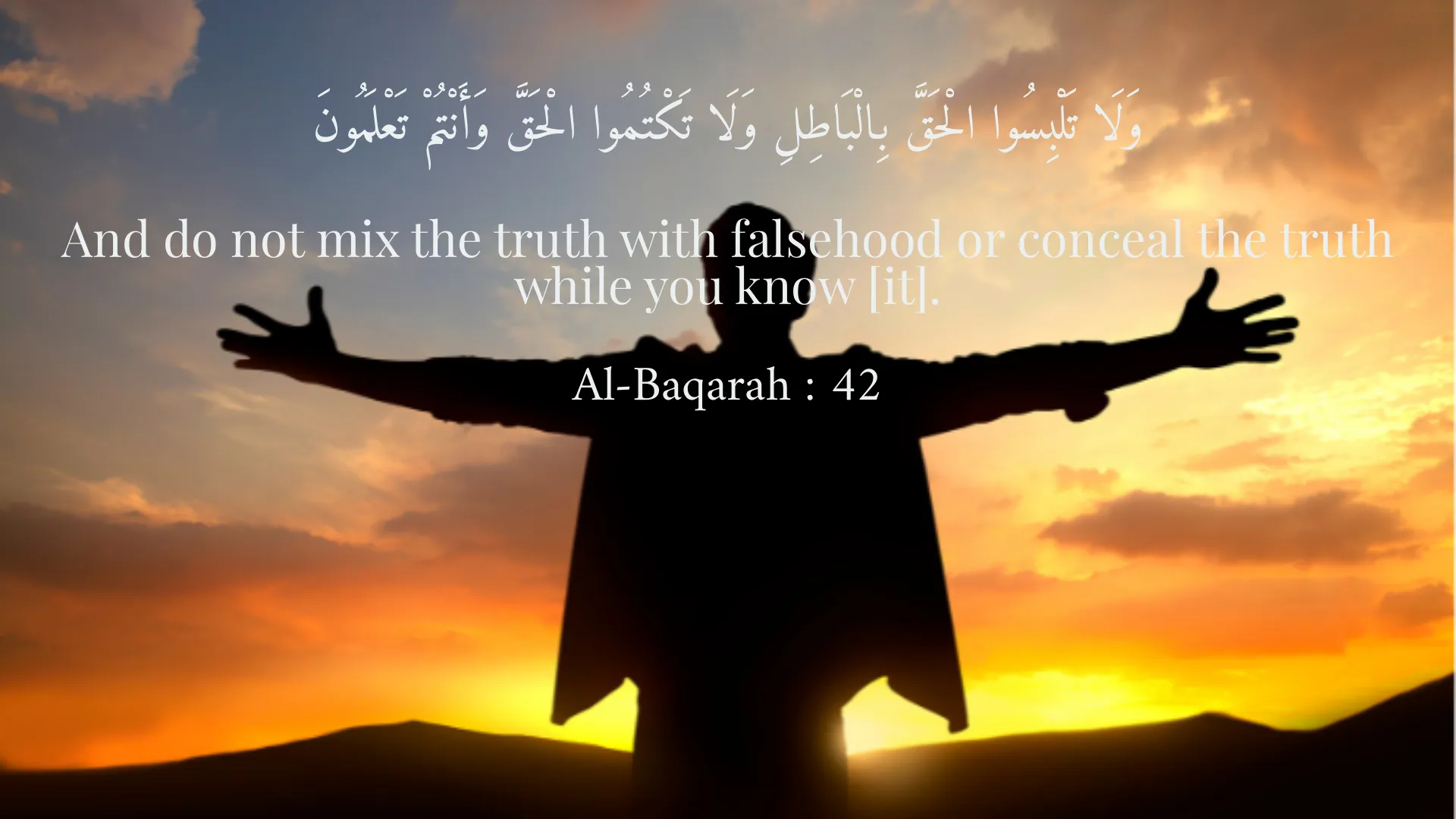
وَلَا تَلْبِسُوا الْحَقَّ بِالْبَاطِلِ وَلَا تَكْتُمُوا الْحَقَّ وَأَنْتُمْ تَعْلَمُونَ
And do not mix the truth with falsehood or conceal the truth while you know [it].
Al-Baqarah : 42
يَا أَيُّهَا الَّذِينَ آمَنُوا اتَّقُوا اللَّهَ وَقُولُوا قَوْلًا سَدِيدًا
O you who have believed, fear Allah and speak words of appropriate justice.
Al-Ahzab : 70
وَالَّذِينَ اتَّخَذُوا مَسْجِدًا ضِرَارًا وَكُفْرًا وَتَفْرِيقًا بَيْنَ الْمُؤْمِنِينَ وَإِرْصَادًا لِمَنْ حَارَبَ اللَّهَ وَرَسُولَهُ مِن قَبْلُ لَأَحْلِفَنَّ إِنْ أَرَادُوا إِلَّا الْخَيْرَ
And [those] who have taken a mosque as a place of danger and disbelief and division among the believers and as a station for one who had fought against Allah and His Messenger before Allah will surely say, 'We intended nothing but good.'
At-Tawbah : 107
Short Story
One day, a young man named Mahdi reflected on lies and their impact on his life. He remembered the Quranic verses that explained how lies could make him a hypocritical character. Thus, he decided to live with honesty and integrity. The moment he started being truthful, he noticed that his relationships improved and he gained others' trust.