Quranic Answer
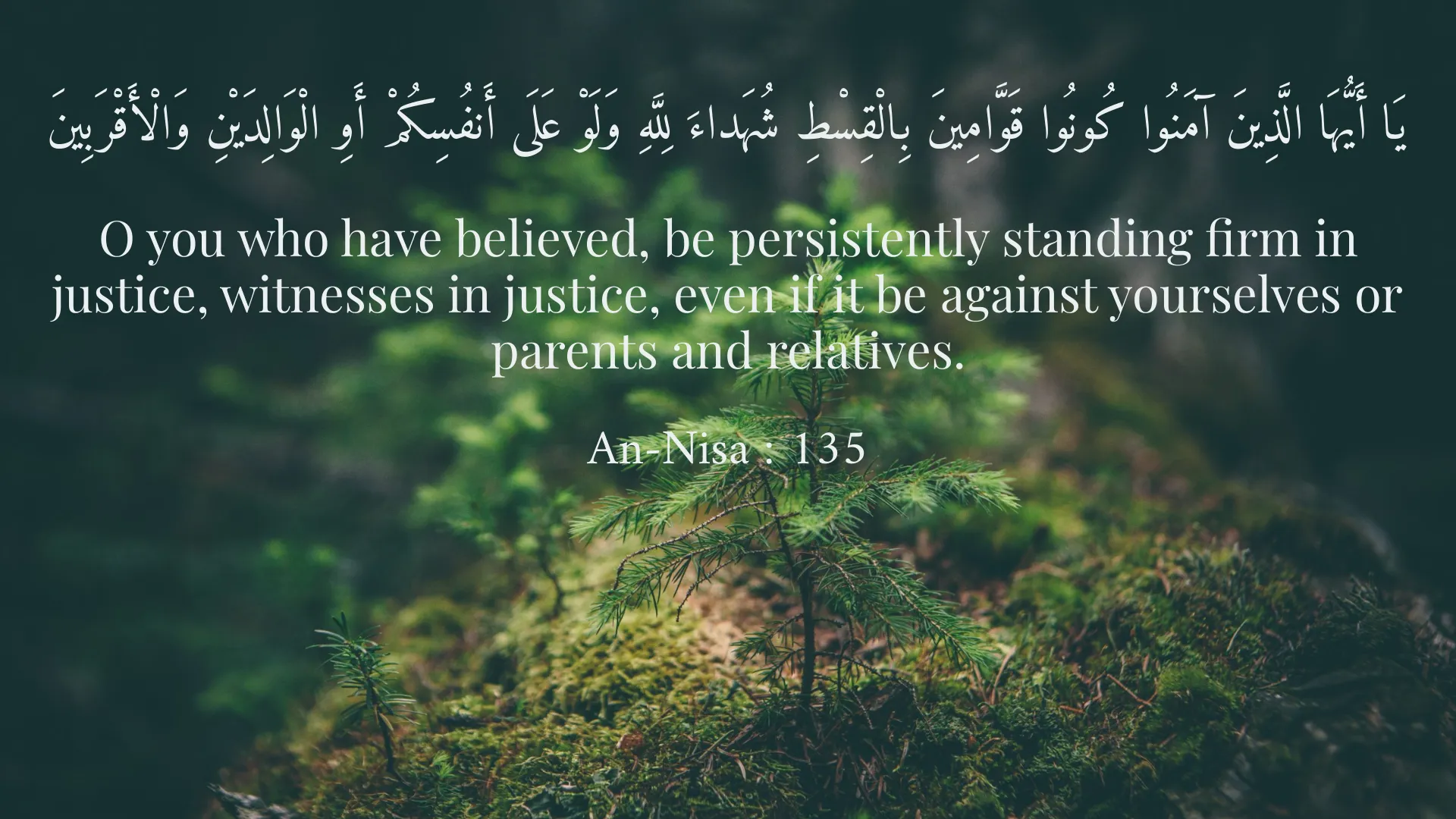
Justice is regarded as one of the cornerstones of human existence in the Holy Quran, the sacred book of Islam. Within its verses, the principle of justice is underscored as a divine directive from Allah (God). Justice is not merely a legalistic concept but rather a comprehensive framework that governs social interaction, individual conduct, and community well-being. In this article, we will explore the multifaceted nature of justice in the Quran, its implications on personal and societal levels, and the critical role it plays in establishing harmony and stability within communities. In Surah An-Nisa, verse 135 of the Quran, Allah commands the believers, 'O you who have believed, be persistently standing firm in justice, witnesses in justice, even if it be against yourselves or parents and relatives.' This verse serves as a profound reminder that justice must prevail even in the face of familial or personal bias. The obligation to uphold justice transcends relationships and personal interests. This can be seen as a call to elevate the principle of fairness above all else. Whether in a court of law or in daily interactions, the Quran insists on a standard of equity that allows no room for partiality or favoritism. By enjoining believers to be witnesses in justice even when it may lead to discomfort or personal loss, the verse encapsulates the rigorous moral demands that justice places on individuals. Practicing justice is fundamental to the recognition and protection of human rights. It ensures that every individual, regardless of their social status or relationship with us, is treated fairly and equitably. In Islam, justice is an actionable principle that demands active engagement. It does not merely call for a theoretical understanding but urges Muslims to translate this value into tangible actions. The idea is that everyone, irrespective of wealth, social standing, or kinship, should receive their rightful due without any discrimination. Thus, justice is meant to create a level playing field where every individual feels valued and respected. Moreover, justice reinforces community cohesion and empathy among its members. In a just society, there is an inherent sense of solidarity, where individuals are more attuned to each other's struggles, feelings, and needs. The Quran highlights this interconnectedness among humans, asserting that justice fosters a supportive environment in which the welfare of all individuals is a shared responsibility. In this light, when justice is pursued, it not only uplifts the downtrodden but also benefits the entire community by cultivating an atmosphere of trust and respect. In addition to promoting social harmony, the Quran emphasizes the necessity of justice in governance and judgment. In Surah Al-Ma'idah, verse 8, Allah further instructs believers: 'O you who have believed, be persistently standing firm in justice, witnesses for Allah, even if it be against yourselves or your parents and relatives. Whether one is rich or poor, Allah is more worthy of both.' This verse illustrates the divine imperative that individuals must act justly, irrespective of their personal biases or societal pressures. The essence of this command is to ensure that justice prevails even when confronted with challenging circumstances, such as familial loyalty or personal gain. This aspect of justice is paramount in establishing lawful systems and conducting fair judgments, particularly in leadership roles and judicial matters. The implications of living a life that prioritizes justice extend beyond individual practices. A society that embraces justice finds itself on a path toward stability and prosperity. Justice cultivates an environment where individuals can thrive mentally and emotionally. When individuals feel secure in the knowledge that their rights are protected and that they are treated fairly, their level of satisfaction and contentment increases. This leads to a more productive society, wherein individuals are motivated to contribute positively to their communities. Conversely, a society that neglects justice strays into chaos and corruption. When justice is absent, the foundations of trust and mutual respect begin to erode, leading to widespread dissatisfaction and unrest. Societal discord fuels division, hostility, and a lack of accountability, which can culminate in unchecked power dynamics and abuse. The absence of justice does not only create an unreliable social fabric; it pushes individuals toward feelings of insecurity and fear. As such, it becomes paramount that justice serves as the guiding principle in all aspects of life. In conclusion, justice is more than a mere principle; it is a fundamental aspect of faith and piety in Islam. The Quran's emphasis on justice highlights its necessity not just for individual conduct but for the overall progression of society. The teachings provided within these sacred texts advocate for a harmonious existence, where every individual is respected, and their rights are protected. The pursuit of justice fosters a robust social framework that nurtures empathy, stability, and collaboration. Therefore, to nurture our communities and promote our personal growth, embracing justice must be at the forefront of our endeavors and aspirations. As believers, it is through our commitment to justice that we embody the essence of our faith and contribute meaningfully to the world around us.
Related Verses
يَا أَيُّهَا الَّذِينَ آمَنُوا كُونُوا قَوَّامِينَ بِالْقِسْطِ شُهَداءَ لِلَّهِ وَلَوْ عَلَى أَنفُسِكُمْ أَوِ الْوَالِدَيْنِ وَالْأَقْرَبِينَ
O you who have believed, be persistently standing firm in justice, witnesses in justice, even if it be against yourselves or parents and relatives.
An-Nisa : 135
يَا أَيُّهَا الَّذِينَ آمَنُوا كُونُوا قَوَّامِينَ لِلَّهِ شُهَدَاءَ بِالْقِسْطِ
O you who have believed, be persistently standing firm in justice, witnesses in justice.
Al-Ma'idah : 8
Short Story
Once upon a time, a man named Hassan lived in a village where no one respected each other's rights. Hassan decided to live a life of piety and justice. He made every effort to uphold justice in every situation and encouraged others to do the same. Gradually, he was able to create positive changes in his community and foster justice.