Quranic Answer
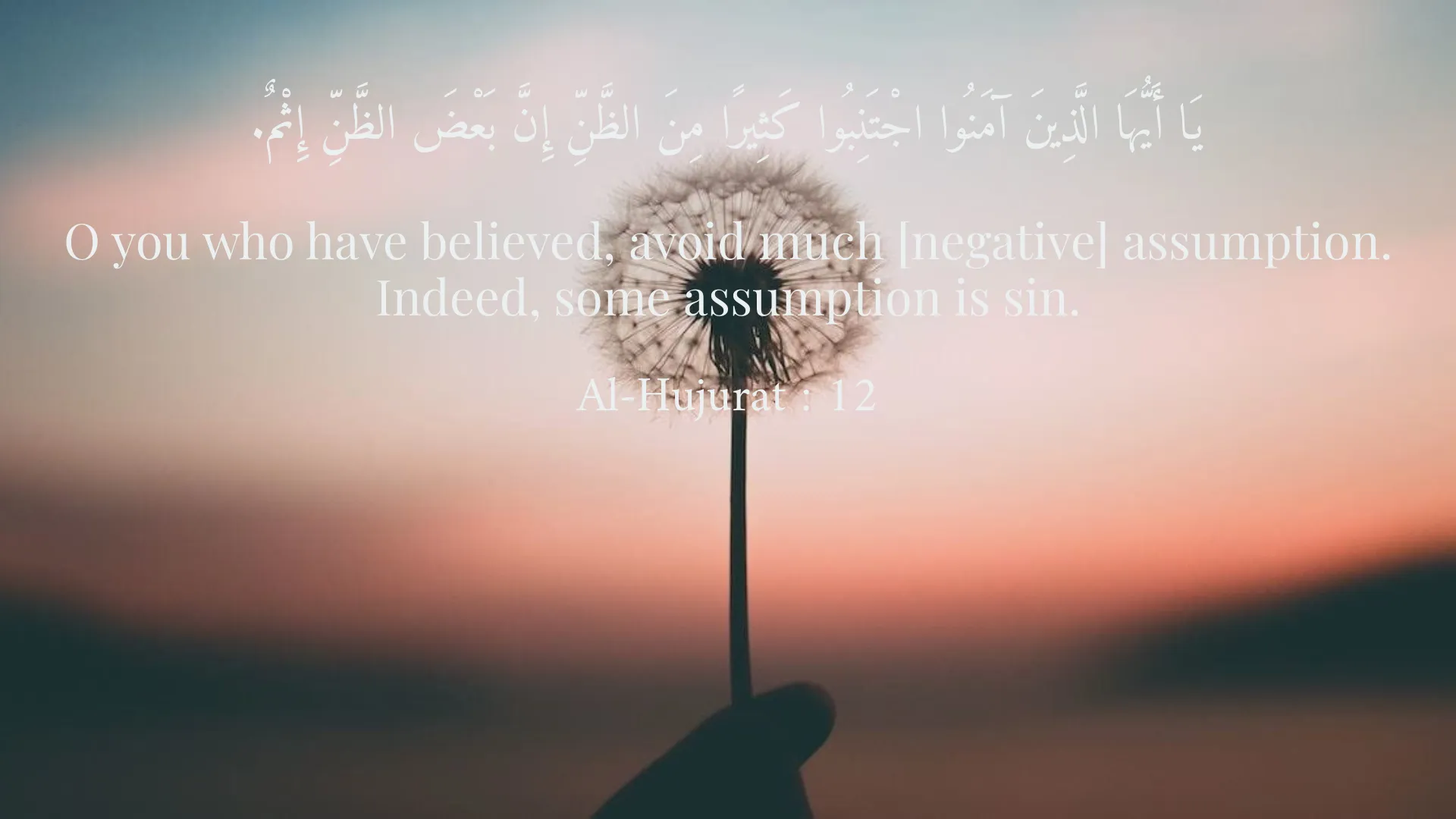
Being suspicious of others can significantly harm social relationships and interactions, leading to a fragmented society where mistrust becomes the norm rather than the exception. Individuals often fail to realize that their perceptions and assumptions about others can shape their reality, creating a vicious cycle of negativity that can escalate quickly. The Holy Quran, as a guiding text for Muslims, provides valuable insights into the importance of maintaining healthy assumptions about one another and underscores the detrimental nature of suspicion. In Surah Al-Hujurat, verse 12, Allah commands the believers, saying: 'O you who have believed, avoid much [negative] assumption. Indeed, some assumption is sin.' This verse serves as a powerful reminder about the implications of harboring unfavorable thoughts toward others. When individuals indulge in negative assumptions, they often lead to gossip and misjudgments, which can chip away at the fabric of society. Misunderstandings often arise from unfounded suspicions, and these can turn friends into foes, families into strangers, and communities into isolated bubbles of distrust. The destructive nature of suspicion is not just a personal failing; it affects the wider community, sowing seeds of discord and division. Moreover, in verse 10 of the same chapter, Allah states: 'The believers are but brothers, so make settlement between your brothers. And fear Allah that you may receive mercy.' This verse emphasizes the important value of unity and cohesion within the Muslim community. Brotherhood, as referred to in the Quran, extends beyond mere familial ties or friendships; it emphasizes a spiritual relationship grounded in mutual respect and understanding. The importance of these verses cannot be overstated, as they advocate for the fostering of relationships built on trust and love. In societies where suspicion prevails, hearts turn away from one another, creating unnecessary rifts and divisions among individuals. Psychologically, humans thrive on connections, which are often built upon trust, kindness, and goodwill. The absence of such elements cultivates an environment characterized by anxiety, stress, and overall unhappiness. Additionally, Allah emphasizes those very attributes—kindness, goodwill, and understanding—throughout the Quran. These principles are intrinsically linked to the act of creating trust while simultaneously avoiding suspicion. When individuals choose to trust one another, they lay the groundwork for a community enriched with love, thereby driving away the shadows of distrust. In nurturing an atmosphere of trust, one can feel the presence of unity, acceptance, and collective growth in their society. Friendships flourish when individuals focus on the positive attributes of each other rather than constructing barriers built on unwarranted doubts and assumptions. The cycle of suspicion not only poisons relationships but also obstructs personal growth and emotional well-being. Cultural studies have consistently shown that societies that place a high value on trust tend to experience lower rates of crime, higher levels of happiness, and greater social cohesion. In many cultures, especially those grounded in religious teachings, community bonds are cherished and prioritized. The Muslim community, in particular, is urged to act as a single entity where disputes are resolved amicably, and issues are addressed through dialogue and understanding. Suspicion creates an environment where gossip can flourish, undermining those bonds that the Quran seeks to celebrate and encourage. Moreover, fostering an environment where kindness prevails can lead to significant benefits not only for individuals but also for the community at large. Acts of kindness generate goodwill, which helps to create a supportive network of relationships. This network is crucial in challenging times when communities must come together to face struggles and adversities. Trust acts as a social lubricant that facilitates cooperation and collaboration, propelling communities toward collective advancement and prosperity. It is essential to remember that every individual carries their own set of experiences and backgrounds. Understanding this diversity is key in fostering a culture of acceptance and compassion, focusing on our shared humanity rather than our differences. Regular acts of kindness, open communication, and a commitment to resolving misunderstandings reinforce the idea that we are all in this together, a collective intertwined in a beautiful tapestry known as society. The concept of avoiding negative assumptions is not restricted solely to interpersonal relationships but extends to how communities engage with the world at large. Mistrust and suspicion can often lead to stereotyping and prejudiced attitudes towards entire groups. In a globalized world, breaking down these barriers of suspicion is more critical than ever, as collective efforts are needed to address larger societal issues such as poverty, injustice, and conflict. Unity, as encouraged in the Quran, should fundamentally guide our interactions—whether on a personal level or on a broader, societal scale. When suspicion decreases, dialogue increases, paving the way for real understanding and cooperation. It is through coexistence and respect for one another that communities can strengthen and thrive, all while keeping in mind that each person's emotions, feelings, and experiences are valid and deserving of recognition. In conclusion, suspicion can have harmful ramifications for social relationships, creating divides among individuals and communities. The lessons derived from the Quran remind us of the importance of maintaining positive assumptions about one another. By striving to cultivate trust, kindness, and goodwill, people can work towards developing healthy, constructive relationships that contribute to a happier, more peaceful society. The journey towards unity and understanding begins with the individual, and only through conscious effort can we hope to foster a community where suspicion has no place, and love prevails.
Related Verses
يَا أَيُّهَا الَّذِينَ آمَنُوا اجْتَنِبُوا كَثِيرًا مِنَ الظَّنِّ إِنَّ بَعْضَ الظَّنِّ إِثْمٌ.
O you who have believed, avoid much [negative] assumption. Indeed, some assumption is sin.
Al-Hujurat : 12
إِنَّمَا الْمُؤْمِنُونَ إِخْوَةٌ ۖ فَأَصْلِحُوا بَيْنَ أَخَوَيْكُمْ ۖ وَاتَّقُوا اللَّهَ لَعَلَّكُمْ تُرْحَمُونَ.
The believers are but brothers, so make settlement between your brothers. And fear Allah that you may receive mercy.
Al-Hujurat : 10
Short Story
One day, a man was sitting in the market when a disrespectful word was exchanged between him and his friend. The man thought maybe his friend had disrespected him. However, upon listening more carefully, he realized that a misunderstanding had occurred. He decided instead of harboring suspicion to speak with goodwill to his friend. This strengthened their relationship and kept them away from wrongful judgments.