Quranic Answer
The Holy Quran, regarded as the ultimate source of guidance for Muslims, emphasizes the importance of avoiding sin and recognizes the profound negative effects it can have on human life. The teachings contained within this divine scripture serve as a blueprint for personal development, moral integrity, and spiritual elevation. This essay will explore the significance of refraining from sinful behavior as emphasized in the Quran, highlight the consequences of sin, and stress the importance of repentance and seeking forgiveness from Allah. Sin, in the Islamic context, is any deliberate action that goes against the commands of Allah. The Quran categorizes sins into major and minor, both of which have dire implications on a person’s spiritual well-being. In Surah Al-Baqarah, verse 81, Allah warns of the repercussions of sinful behavior: 'Yes, indeed; whoever earns evil will be recompensed for it.' This verse underlines a fundamental principle of justice in Islam — every action has consequences. It signifies that the repercussions of sinful acts are twofold: they manifest in the worldly life and extend into the hereafter. The verse serves as a reminder that individuals will be answerable for their deeds, establishing an incentive for people to evaluate their actions carefully. One glaring consequence of habitual sin is the hardening of the heart. The Quran elucidates this point, highlighting that as individuals repeatedly engage in sinful behavior, they become desensitized to the gravity of their actions. This gradual desensitization leads to spiritual apathy, making it exceedingly difficult to fulfill religious obligations, such as prayer, charity, and honoring one's commitments toward others. Once the heart becomes hardened, the propensity for moral decline elevates, distancing the individual from God and from the path of righteousness. In Surah Al-Ma'idah, verse 90, Allah advises believers to stay away from intoxicants and gambling, labeling them as sins that hold no benefit. It reads: 'O you who have believed, indeed, intoxicants, gambling, stone alters [to other than Allah], and divining arrows are but defilement from the work of Satan, so avoid it that you may be successful.' The verse encapsulates the dangers of engaging in behaviors that distract from spiritual growth and lead to moral decay. Intoxicants impair judgment and motive, while gambling can breed greed, deceit, and ruinous financial circumstances. Both can create an atmosphere conducive to further sin, illustrating how bad habits propel individuals further away from the guidance of the Quran. In Islam, maintaining a clear mind and a pure heart is paramount in pursuing a righteous life. Moreover, the concept of repentance — or Tawbah — stands as a crucial facet of the relationship between an individual and Allah. Surah Al-Imran, verse 135, emphasizes Allah's merciful nature towards those who repent for their sins: 'And those who, when they commit an immorality or wrong themselves by transgression, remember Allah and seek forgiveness for their sins — and who can forgive sins except Allah? — and [who] do not persist in what they have done while they know.' This verse portrays the compassionate aspect of Allah, showcasing that His mercy encompasses those sincere in their repentance. It encourages believers to reflect upon their actions, realize their misdeeds, and seek forgiveness as a pathway to redemption. This interplay between sin, repentance, and divine mercy reinforces a sense of accountability among believers. It underscores an essential principle of Islam: while humans are inherently flawed and susceptible to sin, the act of seeking forgiveness serves as a stepping stone toward spiritual renewal. Islam does not delineate an unforgiving deity; instead, it presents Allah as a loving and merciful being who eagerly awaits the return of His wayward servants. Additionally, yielding to sin not only leads to personal detriment but can also have broader implications on one's community and society at large. When individuals engage in sin, it can create a domino effect, influencing those around them negatively. Poor choices can contribute to an environment laden with moral decay and social issues, leading to a collective decline in community standards. This highlights the interconnectedness of individuals within a society — one's actions can derail collective progress, emphasizing a responsibility to remain vigilant against sinful behavior not only for the self but for the greater good of the community. The Quranic exhortations against sin serve as a profound reminder of the need to maintain a strong moral compass. It urges believers to cultivate virtues that promote kindness, justice, and compassion while simultaneously warning against actions that may obstruct spiritual growth. The overarching message is clear: to maintain one's faith and avoid the looming specter of divine punishment, one must actively resist the temptations of sin and continually seek to be better in all facets of life. In conclusion, the numerous verses in the Holy Quran regarding sin and its consequences emphasize a vital principle of Islamic spirituality: sin is a barrier to both individual and communal growth. The Quran does not merely condemn sinful behavior; rather, it provides insights into the detrimental effects of such actions and encourages believers toward repentance and seeking Allah's mercy. The call to resist sin and pursue righteousness is not just a pathway to personal salvation but a collective responsibility that enhances the moral fabric of society as a whole. By embracing these principles, Muslims can foster a closer relationship with Allah, promote spiritual growth, and contribute positively to their communities.
Related Verses
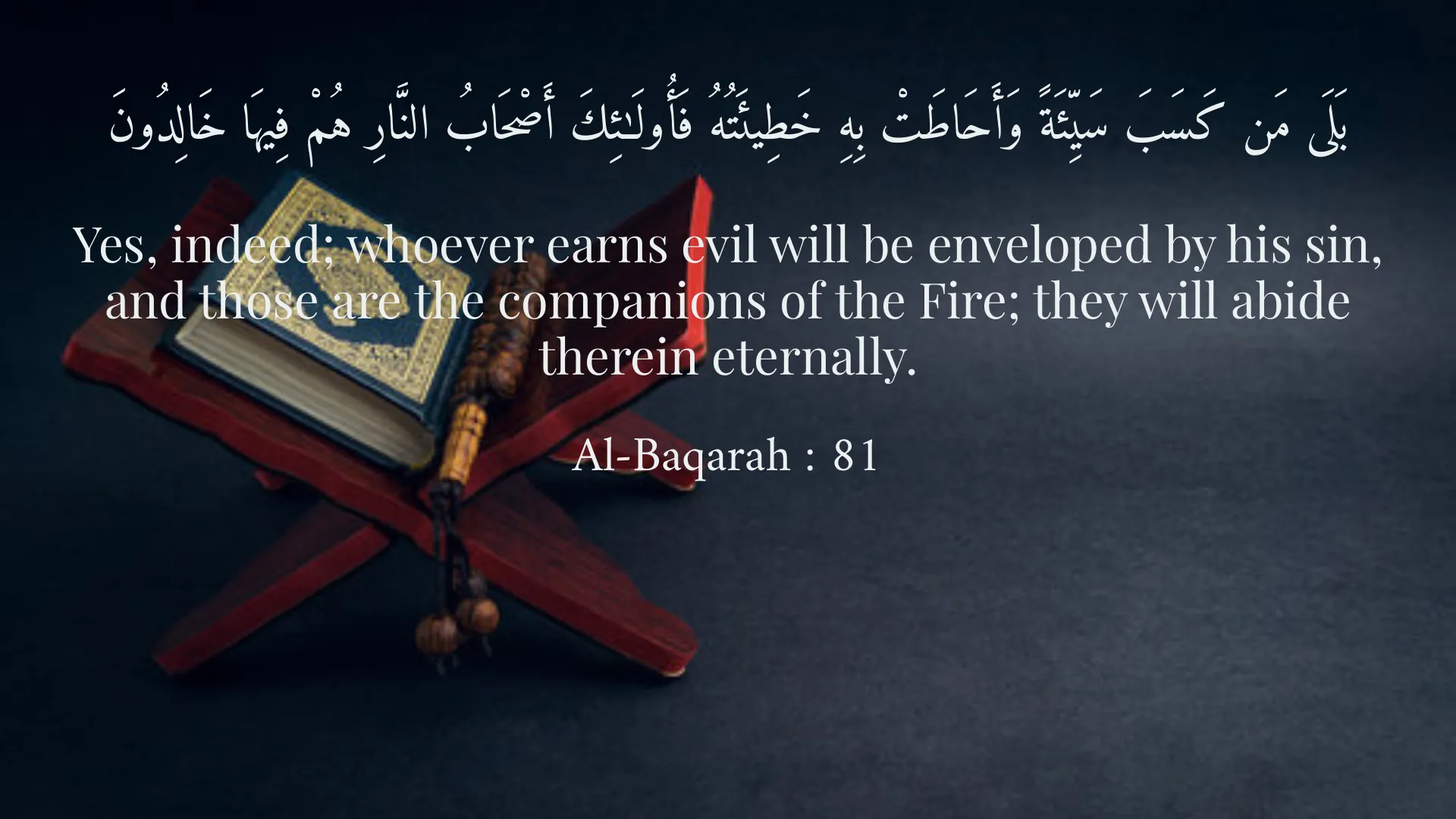
بَلَى مَن كَسَبَ سَيِّئَةً وَأَحَاطَتْ بِهِ خَطِيئَتُهُ فَأُولَـٰئِكَ أَصْحَابُ النَّارِ هُمْ فِيهَا خَالِدُونَ
Yes, indeed; whoever earns evil will be enveloped by his sin, and those are the companions of the Fire; they will abide therein eternally.
Al-Baqarah : 81
يَا أَيُّهَا الَّذِينَ آمَنُوا إِنَّمَا الْخَمْرُ وَالْمَيْسِرُ وَالْأَنْصَابُ وَالْأَزْلَامُ رِجْسٌ مِّن عَمَلِ الشَّيْطَانِ فَاجْتَنِبُوهُ لَعَلَّكُمْ تُفْلِحُونَ
O you who have believed, indeed, intoxicants, gambling, [sacrificing on] stone alters [to other than Allah], and divining arrows are but defilement from the work of Satan, so avoid it that you may be successful.
Al-Ma'idah : 90
وَالَّذِينَ إِذَا فَعَلُوا فَاحِشَةً أَوْ ظَلَمُوا أَنفُسَهُمْ ذَكَرُوا اللَّهَ فَاسْتَغْفَرُوا لِذُنُوبِهِمْ وَمَن يَغْفِرُ الذُّنُوبَ إِلَّا اللَّهُ وَلَمْ يُصِرُّوا عَلَى مَا فَعَلُوا وَهُمْ يَعْلَمُونَ
And those who, when they commit an immorality or wrong themselves by sinning, remember Allah and seek forgiveness for their sins - and who can forgive sins except Allah? And [who] does not persist in the offense while they know.
Al-Imran : 135
Short Story
Once there was a man named Ahmad. Ahmad had become accustomed to minor sins, thinking that they had no significant impact on his life. However, one day during a conversation with a friend, he realized that he needed to return to God. He decided to set aside these bad habits and dedicate himself to the worship of God. After some time, he noticed that his life had completely changed, filled with peace and contentment. He understood that Allah is always close to those who repent and found comfort in staying away from sin.