Quranic Answer
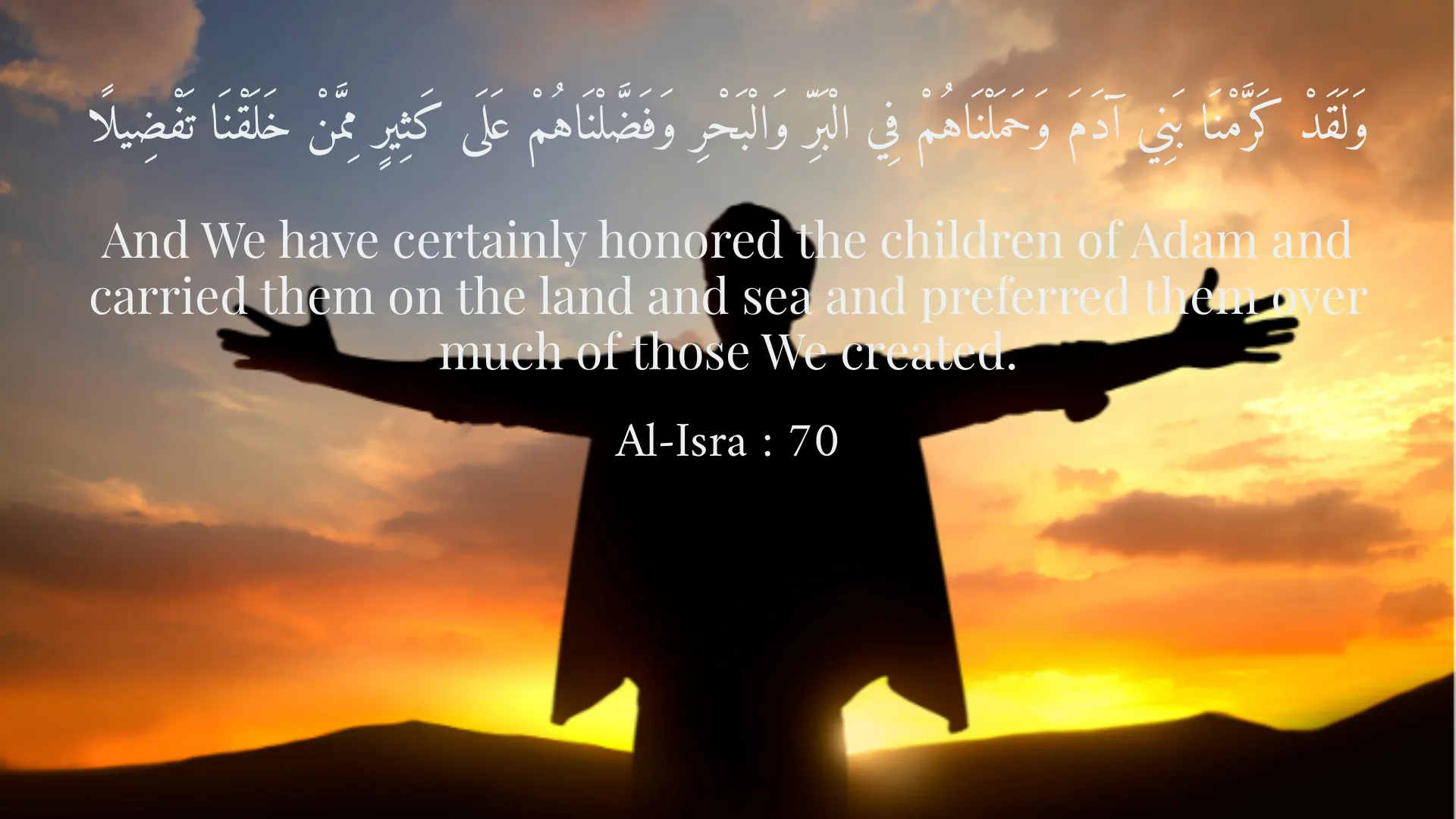
Human dignity is a fundamental principle that is recognized and emphasized in many cultures and religions around the world. In Islam, this principle is profoundly rooted in sacred texts, notably the Holy Quran. The Quran teaches that all humans are endowed with inherent dignity and honor by their Creator, a concept that is articulated in several verses. Among these, Surah Al-Isra (17:70) states: 'And We have certainly honored the children of Adam and carried them on the land and sea and preferred them over much of those We created.' This powerful verse highlights not only the intrinsic value placed on human beings but also the unique role that humans play within creation, signifying a special status granted by God. To truly understand the magnitude of this statement, one must consider the implications of being honored by the Creator. This honor encompasses not only physical existence but also moral and spiritual dimensions, suggesting that every person holds a unique place in the divine tapestry of life. The recognition of humanity’s dignity requires us to approach others with respect and kindness, acknowledging their worth as individuals created by God. In this context, belittling or demeaning another person is not merely an interpersonal failure; it is a profound disregard for the dignity bestowed by the Creator on every human being. The Quran's insistence on human dignity leaves no room for mockery or contempt among individuals. In Surah Al-Hujurat (49:11), the believers are explicitly instructed: 'O you who have believed, let not a people ridicule [another] people; perhaps they may be better than them.' This verse reinforces the core idea that every human being, regardless of their social status, ethnicity, or any other characteristic, deserves to be treated with respect. Mockery and belittlement are acts that undermine societal harmony, poison relationships, and foster division and hatred among people. By discouraging believers from engaging in ridicule, the Quran promotes a culture of mutual respect and understanding, crucial elements for a harmonious community. When we belittle others, we are not only failing to uphold their dignity but, ironically, we are also diminishing our own. Engaging in contemptuous behavior reflects poorly on the belittler, revealing a lack of self-awareness and moral integrity. It is essential to recognize that those who foster animosity and engage in acts of belittlement often do so out of insecurities or personal shortcomings. The Quran thus challenges individuals to rise above petty grievances and promote kindness instead. Moreover, this teaching is not exclusive to interpersonal relationships. The principle of respecting humanity extends to broader societal interactions, including how we treat people from different backgrounds, beliefs, and ways of life. Society thrives when individuals focus on what unites them rather than what divides them. Respecting each person's dignity allows communities to flourish and coexist in peace, fostering an environment where dialogue and mutual understanding can thrive. Furthermore, the Quran provides guidelines on dealing with disagreements or conflicts. Instead of resorting to ridicule or belittlement, individuals are encouraged to engage respectfully and constructively. This approach lays the foundation for peaceful resolutions and collaboration, reinforcing the idea that even in instances of conflict, each party deserves to be treated with respect and dignity. The encouragement to maintain a spirit of coexistence is a vital tenet of Islamic teachings. The Quran emphasizes the value of community and urges believers to work towards a common good while honoring each person's rights and dignity. By doing so, the teachings of the Quran pave the way for a civil society where conflicts are resolved through dialogue rather than derision. This foundation of respect is paramount as it cultivates an atmosphere of trust and understanding, essential for lasting peace and communal harmony. In the larger context, the implications of upholding human dignity resonate far beyond individual interactions. They speak to the ethical and moral responsibilities that come with being part of a community and society. Our actions—whether rooted in respect or contempt—can significantly influence the collective atmosphere, shaping the experiences of those around us. The responsibility to uplift and honor others is not just an individual task but a communal obligation. Each act of kindness and respect contributes to the wellbeing of society as a whole, while acts of belittlement can fracture relationships and create lasting divisions. The Quran’s teachings against belittlement serve as a reminder of the importance of empathy and compassion in our daily lives. It challenges us to look beyond superficial differences and recognize our shared humanity. By fostering a culture of respect, we create environments where individuals can thrive, contribute, and connect with one another positively. In conclusion, the condemnation of belittling others found in the Quran emphasizes the intrinsic value and dignity that every human possesses. By honoring this divine gift, individuals can cultivate respect, understanding, and compassion in their interactions. The teachings encourage believers to uplift one another and strive toward a society characterized by respect and dignity for all, thereby enhancing not only individual moral qualities but also the collective harmony of communities. Ultimately, the call to respect and uphold human dignity is as relevant today as it has ever been, providing timeless guidance for navigating the complexities of human relationships and community living.
Related Verses
وَلَقَدْ كَرَّمْنَا بَنِي آدَمَ وَحَمَلْنَاهُمْ فِي الْبَرِّ وَالْبَحْرِ وَفَضَّلْنَاهُمْ عَلَى كَثِيرٍ مِمَّنْ خَلَقْنَا تَفْضِيلًا
And We have certainly honored the children of Adam and carried them on the land and sea and preferred them over much of those We created.
Al-Isra : 70
يَا أَيُّهَا الَّذِينَ آمَنُوا لَا يَسْخَرْ قَوْمٌ مِّن قَوْمٍ عَسَى أَن يَكُونُوا خَيْرًا مِّنْهُمْ ۖ وَلَا تَلْمِزُوا أَنفُسَكُمْ وَلَا تَنَابَزُوا بِالْأَلْقَابِ ۚ بِئْسَ الْاسْمُ الْفُسُوقُ بَعْدَ الْإِيمَانِ ۚ وَمَن لَمْ يَتُبْ فَأُوْلَـٰئِكَ هُمُ الظَّالِمُونَ
O you who have believed, let not a people ridicule [another] people; perhaps they may be better than them. And do not insult one another and do not call each other by [offensive] nicknames. Wretched is the name of disobedience after [one's] faith. And whoever does not repent - then it is those who are the wrongdoers.
Al-Hujurat : 11
Short Story
One day, a man went to the market and encountered someone who called him worthless. The man did not respond and left. When he got home, he asked himself why should we belittle others? He decided from that moment to show respect to everyone and demonstrate positivity towards others. Indeed, we should treat every human with respect and kindness.