Quranic Answer
### The Consequences of Mockery: A Reflection on Islamic Teachings Mockery has long been a method employed by individuals to assert dominance, derive amusement, or distance themselves from others. It transcends cultures, languages, and societies, but its implications are deeply interwoven with religious and ethical considerations. In a world that often prioritizes wit over wisdom, the Holy Quran provides a profound perspective on the act of mocking others, emphasizing the importance of kindness, dignity, and accountability. This article explores the condemnation of mockery in Islam, particularly through the verses of Surah Al-Hujurat and Surah An-Nisa, and highlights the broader social implications of such behavior. #### Understanding the Quranic Condemnation of Mockery In Surah Al-Hujurat, verse 11, Allah specifically admonishes believers against mocking one another, stating, "O you who have believed, let not a people ridicule [another] people; perhaps they may be better than them..." This verse serves as a powerful reminder that our judgments about others are often superficial and flawed. It reminds us that those we mock may possess virtues or qualities that we are blind to because of our unkind actions. This reflects a fundamental principle within Islam: the belief in looking beyond surface appearances and treating others with respect. Mockery is not merely a light-hearted jest; it carries serious ethical implications. It serves to perpetuate an environment of negativity and fosters a culture of disrespect. Within communal interactions, the act of mocking can alienate individuals and lead to divisions within society. This verse of the Quran thus acts as a warning against the perilous consequences of ridicule, highlighting the potential for unintended harm. By mocking others, we blind ourselves to our shortcomings and elevate ourselves above them, often without justification. #### The Spiritual and Emotional Impact of Mockery Mocking someone can overshadow their self-worth and dignity. The repercussions of such behavior spiral beyond mere social faux pas; they cut deep into an individual’s spirit. Those on the receiving end of mockery may experience diminished self-esteem, anxiety, depression, and feelings of isolation. This behavior is not simply socially unacceptable; it can have profound and lasting implications on mental health. The Quran acknowledges the significance of safeguarding each other's dignity and emotional well-being. Surah An-Nisa emphasizes this notion by stating, "And do not ridicule one another..." The repetition of this admonition across different verses underscores its importance within Islamic teachings. Here, the Quran not only prohibits mockery but actively advocates for a culture of respect and compassion. It summons humanity to uplift one another, recognize the value of every individual, and bridge the gaps that may exist between people instead of constructing barriers through ridicule. #### The Social Repercussions of Mockery The act of mockery can have various negative social impacts. When mockery occurs, it can create an atmosphere of hostility and mistrust, preventing meaningful dialogue and collaboration. It deepens existing divides and can lead to social isolation for those who are targeted. In schools, workplaces, and communities, mocking can manifest as bullying or exclusionary behavior, ultimately fostering a toxic environment. In a society where kindness and respect prevail, mockery has no place. Rather, compassion must be cultivated. When individuals are greeted with encouragement and positive recognition instead of derision, it creates a foundation for cooperation and understanding. Such an environment is crucial for personal and communal growth. Therefore, the call to respect one another is not simply a moral edict; it's a foundational necessity for a thriving society. #### Accountability Before Allah An essential tenet within Islam is the belief in accountability before Allah. Every action, including our words and interactions with one another, will be scrutinized when we stand before Him. The reminders provided in the Quran about avoiding mockery compel believers to reflect on their behaviors and strive for a higher moral ground. This acknowledgment of accountability serves as a motivator to treat one another with dignity and respect, for our actions hold weight not just in this life but in the hereafter. Contrary to the temporary gratification that may arise from mocking others, the teachings of Islam implore us to work towards building each other up rather than tearing each other down. With the awareness that we will one day be held accountable for our actions, it becomes imperative to strive for a society grounded in kindness, compassion, and mutual respect. #### Uplifting Each Other: A Call to Action In our daily lives, we have the privilege and responsibility to choose how we treat others. The call to respect one another and avoid mockery necessitates a conscious effort on our part. It may be as simple as offering a kind word of encouragement, recognizing someone's effort, or standing against mockery where we see it. Each of these actions contributes to a culture that prioritizes kindness over cruelty. As believers, we are encouraged to preserve the dignity and honor of every individual. Let us embrace the teachings of the Quran and reaffirm our commitment to treating each other with respect and compassion. By doing so, we not only align our actions with the divine injunctions of our faith but also contribute positively to the fabric of our communities. In conclusion, mockery is explicitly condemned in the Holy Quran, and for several valid reasons. It distorts our perception of ourselves and others, harms the dignity and spirit of those targeted, fosters a toxic social environment, and neglects the significant value of accountability before Allah. As we navigate through our interactions in life, may we choose kindness, may we vow to uplift one another, and may we strive to create a more compassionate society where the principles of Islam guide us towards mutual respect and understanding.
Related Verses
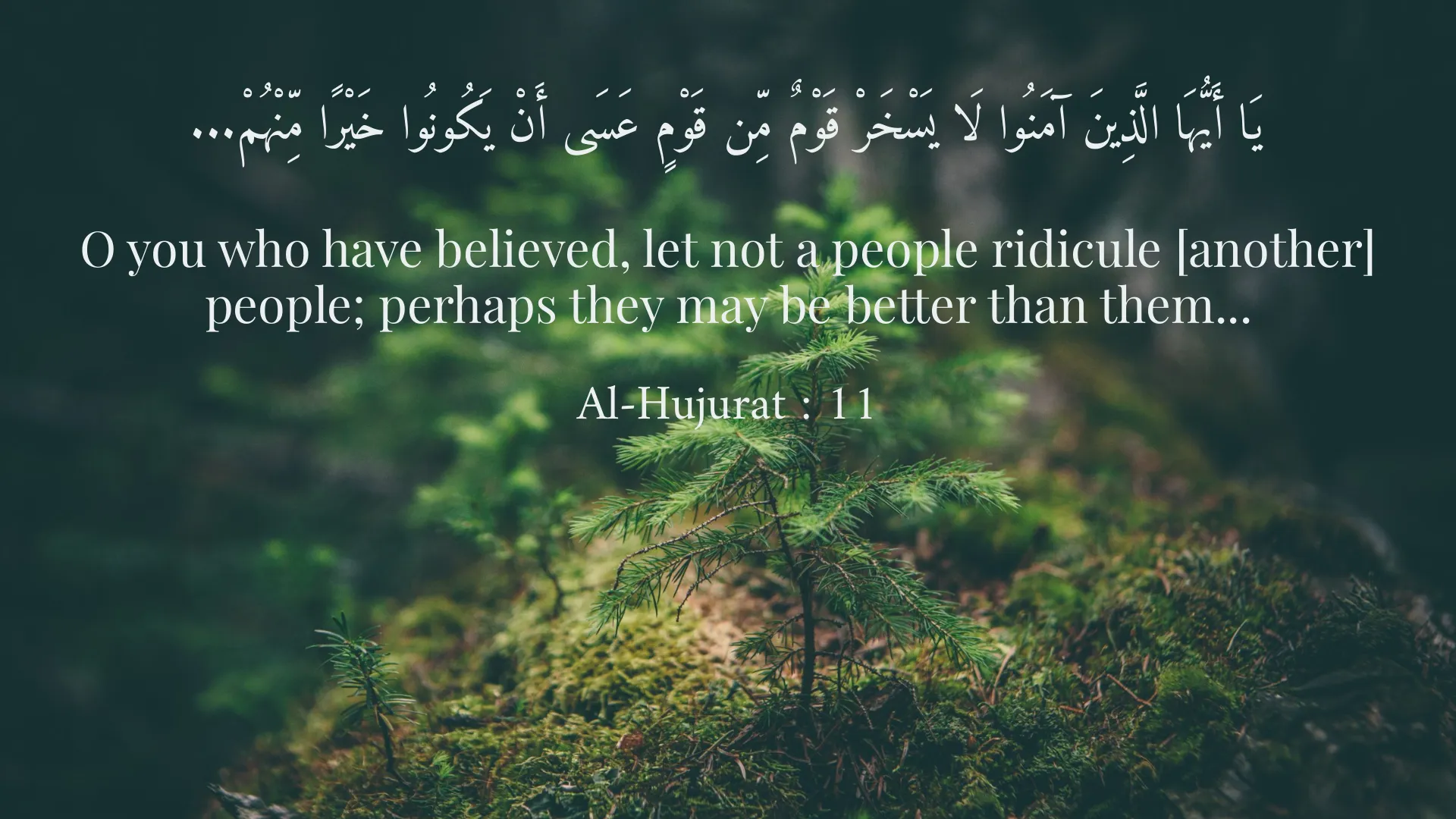
يَا أَيُّهَا الَّذِينَ آمَنُوا لَا يَسْخَرْ قَوْمٌ مِّن قَوْمٍ عَسَى أَنْ يَكُونُوا خَيْرًا مِّنْهُمْ...
O you who have believed, let not a people ridicule [another] people; perhaps they may be better than them...
Al-Hujurat : 11
وَلَا تَسْتَهْزِئُوا أَنفُسَكُمْ
And do not ridicule one another.
An-Nisa : 11
Short Story
One day in a village, a young man named Amir always loved to laugh at and mock his friends. One day, one of his friends told him that this behavior might hurt others, and Amir only laughed in response. Shortly after, Amir mocked one of his friends, and suddenly the friend who was mocked became very upset and distanced himself from Amir. In that moment, Amir realized that this behavior not only alienated him from himself but also hurt others. He decided to prioritize respecting others in his life and never mocked anyone again.