Quranic Answer
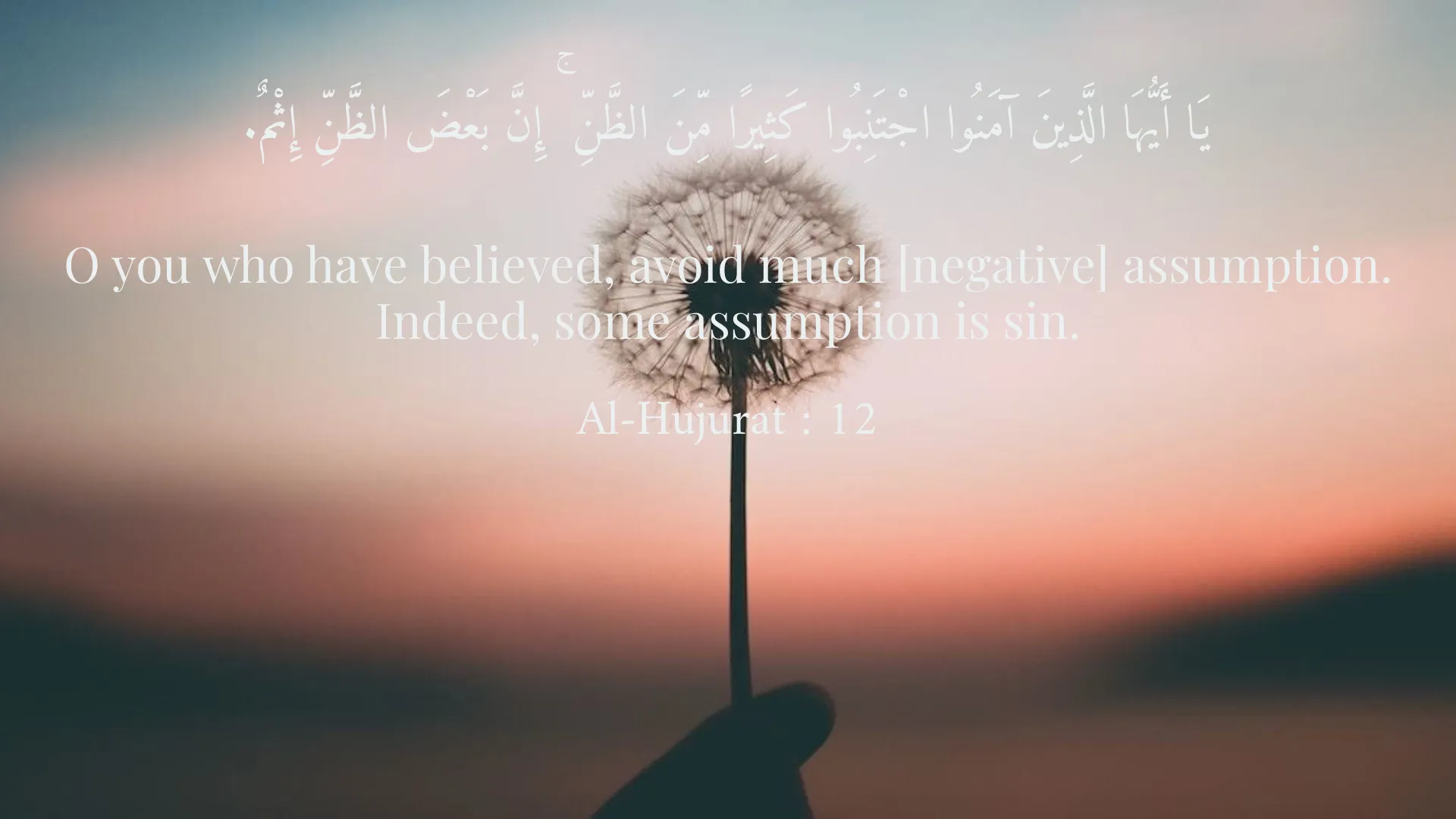
In the Holy Quran, the importance of assessing others' behaviors with caution and fairness is emphasized through a multitude of verses, which guide believers towards ethical conduct and understanding in their interactions. These Islamic teachings serve as a foundation for creating a harmonious society that upholds mutual respect, dignity, and compassion. Among these teachings, a significant verse resides in Surah Al-Hujurat, verse 12, where Allah commands believers, 'O you who have believed, avoid much [negative] assumption. Indeed, some assumption is sin.' This guiding principle prohibits the act of making hasty judgments based on mere assumptions or superficial insights. The verse serves to remind believers that the foundation of our understanding of one another should be rooted in justice and careful consideration, rather than quick and unfounded conclusions that can damage relationships and tarnish reputations. The Quran stresses that entering into a mindset of negativity, suspicion, or presumption can lead to major sins, which jeopardizes both individual faith and communal harmony. In our daily lives, it can often be easy to slip into patterns of negative thinking, which may cause us to view others through a distorted lens. The essence of this verse is to deter believers from that path and promote a more favorable mindset that fosters understanding, compassion, and connection. Often, the human instinct might push an individual to make snap judgments about a person's actions or behaviors without fully understanding their circumstances, personal struggles, or intentions behind their decisions. This verse serves as a sobering reminder of the heavy consequences that such actions can carry. Furthermore, in Surah Luqman, verse 18, Allah states: 'And do not avert your face from people in contempt, nor go about in the land exultantly. Indeed, Allah does not like everyone self-deluded and boastful.' Here, the Quran promotes humility and emphasizes respect for others, regardless of one’s social status or wealth. Conceit can distance individuals from sincere relationships by fostering an atmosphere of judgment and oppression. The advice to avoid arrogance and complacency serves as a tenet that can lead to more profound connections among people. When humility reigns, it allows a nurturing space where individuals can flourish together as a community rather than a mere congregation of individuals. The messages presented in these verses invite believers to embrace a holistic approach to human relationships, wherein the notions of fairness, mutual understanding, and empathy take precedence over wrongful assertions and arrogance. The common thread throughout these teachings is the necessity for introspection and the recognition that our judgments and interactions have the power to uplift or create discord. Thus, faith in God becomes intricately linked with moral conduct, urging individuals to reflect on their actions and consider how they impact those around them. In this regard, the teachings found within the Quran are not only meant as religious guidelines but also as pragmatic ethical frameworks for dealing with relationships. The understanding that harmful judgments can deter individuals from divine mercy is an important reminder of the relationship between human interactions and spiritual well-being. When one is immersed in wrongful thinking or conducts unfair assessments of others, they risk stepping away from God’s forgiveness and mercy, which are imperative for any believer in their lifelong journey towards spiritual fulfillment. In addition, the consequences of making baseless judgments extend beyond personal spirituality. They can ripple through the fabric of social structures, leading to divisions, discrimination, and conflicts within communities. The harmful impact of negative assumptions can fracture relationships, as they often result in mistrust and resentment. When individuals allow unwarranted suspicions to influence their judgments about others, they create a cycle of negativity that can be hard to break, ultimately undermining the spirit of brotherhood and sisterhood that the Quran so profoundly advocates. Moreover, it is essential to acknowledge that wrong judgments may stem from innate misunderstandings or cultural differences. An open heart and mind can aid in recognizing these differences and allow for deeper connections between individuals from diverse backgrounds. The verses from the Holy Quran act as essential reminders for believers to pause and reflect on their judgments before taking action. The call to prioritize compassion and understanding speaks volumes about the values that should anchor our social fabric. In conclusion, the teachings highlighted in the Holy Quran regarding judgments and interactions with others unveil an essential path for believers. The verses from Surah Al-Hujurat and Surah Luqman compel us to seek fairness and humility in every interaction, reminding us that our thoughts and actions do indeed hold weight in both spiritual and communal circles. By cultivating an attitude of understanding, humility, and respect, believers can foster an environment where mercy, compassion, and forgiveness thrive—not just in their personal lives but within their communities as well. This ethical paradigm is indispensable to developing a society where all individuals feel valued, respected, and understood. The essence of faith in God inherently requires believers to demonstrate these characteristics in their everyday lives, maintaining fairness and compassion as cornerstones of their relations with others. Truly, these teachings serve as a reflective mirror urging individuals towards self-improvement and social harmony.
Related Verses
يَا أَيُّهَا الَّذِينَ آمَنُوا اجْتَنِبُوا كَثِيرًا مِّنَ الظَّنِّ ۚ إِنَّ بَعْضَ الظَّنِّ إِثْمٌ.
O you who have believed, avoid much [negative] assumption. Indeed, some assumption is sin.
Al-Hujurat : 12
وَلَا تُصَعِّرْ خَدَّكَ للنَّاسِ وَلَا تَمْشِ فِي الأَرْضِ مَرَحًۭا إِنَّ اللَّهَ لَا يُحِبُّ كُلَّ مُخْتَالٍ فَخُورٍ.
And do not avert your face from people in contempt, nor go about in the land exultantly.
Luqman : 18
Short Story
One day, a man named Reza thought about his life and wondered why he sometimes judged others. Remembering the verses of the Quran, he decided to treat others with kindness instead of judgment. He realized that when he looked at others with understanding and love, life became more beautiful.