Quranic Answer
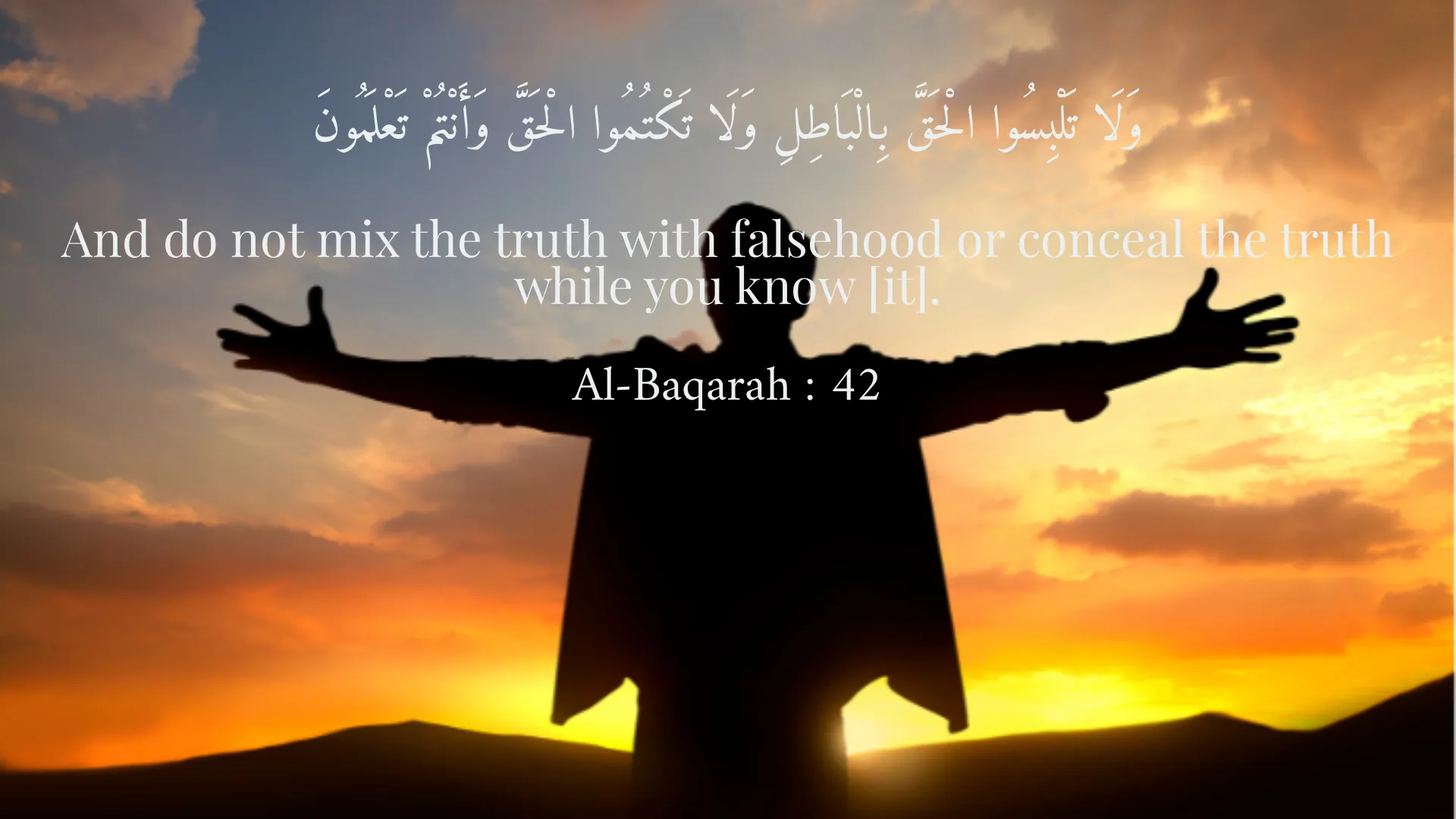
Lying is a practice that has deeply rooted connotations across various cultural, social, and religious spectrum. In the Islamic faith, lying is particularly condemned and viewed as a serious transgression. The Quran, which is the holy book of Islam, emphasizes the importance of truthfulness and integrity among its followers. This is crucial not only for personal moral development but also for the maintenance of community relationships. The Quran explicitly states the dire consequences of lying, demonstrating that even lies told in jest can have significant repercussions on one's religious and social standing. In Surah Al-Baqarah, verse 42, Allah addresses the believers by declaring, "And do not mix the truth with falsehood or conceal the truth while you know [it]." This profound verse not only underscores the importance of honesty in interactions but also highlights the necessity of being aware of the truth. The innate human tendency to bend or distort the truth for convenience or amusement is challenged here; Allah establishes that one must never intertwine truth with falsehood. The consequences of such actions can be far-reaching, resulting in damaged trust and confusion among individuals who rely on each other for honesty and transparency. Trust is the bedrock of any relationship—be it familial, professional, or social. When lying becomes a part of one’s behavior, no matter the intent, it can erode the very foundation of trust. A liar risks losing credibility and respect, and when this happens, the relationships that are built on that trust may face turmoil and discord. The breakdown of trust can lead to misunderstandings, conflicts, and a general sense of insecurity within a community. In essence, lying, even as a form of humor, can generate significant miasmas that poison interpersonal relationships and compromise community harmony. Furthermore, in Surah Al-Ankabut, verse 68, Allah states, "And who is more unjust than one who invents a lie about Allah...?" This verse implies that lying is not merely a personal flaw but also a spiritual offense that misrepresents the divine truth. By fabricating lies, one not only harms their own standing with God but also misleads others regarding their beliefs. This misrepresentation can carry severe ramifications, as it disrupts the sanctity of faith and creates an environment of suspicion and misinformation. The act of lying, therefore, goes beyond the individual; it affects the community as a whole. In a religious framework, adhering to truthfulness is a sign of faith and righteousness. Believers are encouraged to engage in honest discourse and behavior, promoting a culture of integrity. This cultural backdrop not only fosters mutual respect but also nurtures a sense of belonging and interconnectedness among individuals. The Quranic exhortation to avoid falsehood encourages Muslims to cultivate a community where honesty prevails, leading to positive interactions and collaborations. Moreover, the potential psychological effects of lying ought to be highlighted. Individuals who make lying a habit might experience a conflicted conscience, guilt, or a sense of isolation from their peers. The inherent human need for acceptance and belonging can be undermined by the act of deception. While a lie may provide immediate gratification or amusement, it ultimately detracts from deeper, more fulfilling connections that are grounded in authenticity and truth. To nurture positive outcomes in interpersonal relations, it is crucial that individuals resist the temptation to resort to dishonesty, even in jest. A joking lie can lead others to question the authenticity of all your communications. A moment of laughter may cost you far more in trust and reputation than you initially consider. Instead of indulging in blunders of falsehood, we should embrace honesty, as it can create moments that are genuinely enriching and positive for both the individual and the community at large. It's essential to reflect on how our words and actions impact others. Engaging in discussions that promote honest perspectives encourages personal growth and community well-being. Instead of hiding behind jokes that could mislead or confuse others, we should champion truths that uplift our interactions and establish a healthy community environment. On a practical level, actively choosing to be honest involves cultivating self-discipline and being mindful of the language we use. In a world filled with distractions and misleading information, being a beacon of truth can influence those around us. By modeling integrity, we become examples to others, creating a ripple effect that ultimately fosters a culture of honesty within our communities. In conclusion, the Quran firmly admonishes against lying, emphasizing its repercussions and urging believers to remain steadfast in truthfulness. The reality is that entrenched honesty nurtures trust, fortifies relationships, and cultivates a positive community atmosphere. Aside from the spiritual implications of lying, one must consider the broader societal repercussions that can arise from even small untruths. By adhering to the principles set forth by Allah, we can successfully contribute to a harmonious, trusting, and truthful community. Thus, let us embrace truth in every aspect of our lives, remembering that even the smallest moments of honesty can lead to vastly positive outcomes.
Related Verses
وَلَا تَلْبِسُوا الْحَقَّ بِالْبَاطِلِ وَلَا تَكْتُمُوا الْحَقَّ وَأَنْتُمْ تَعْلَمُونَ
And do not mix the truth with falsehood or conceal the truth while you know [it].
Al-Baqarah : 42
وَمَنْ أَظْلَمُ مِمَّنْ افْتَرَى عَلَى اللَّهِ كَذِبًا
And who is more unjust than one who invents a lie about Allah?
Al-Ankabut : 68
Short Story
One day, two friends were chatting, and one joked that it was better to tell a lie. The other friend stopped him and said, 'Remember, honesty and truthfulness are always better. Keep in mind that lying, even in jest, can lead to distrust. Let's always speak the truth!' This conversation helped both friends to value honesty more from that day forward.