Quranic Answer
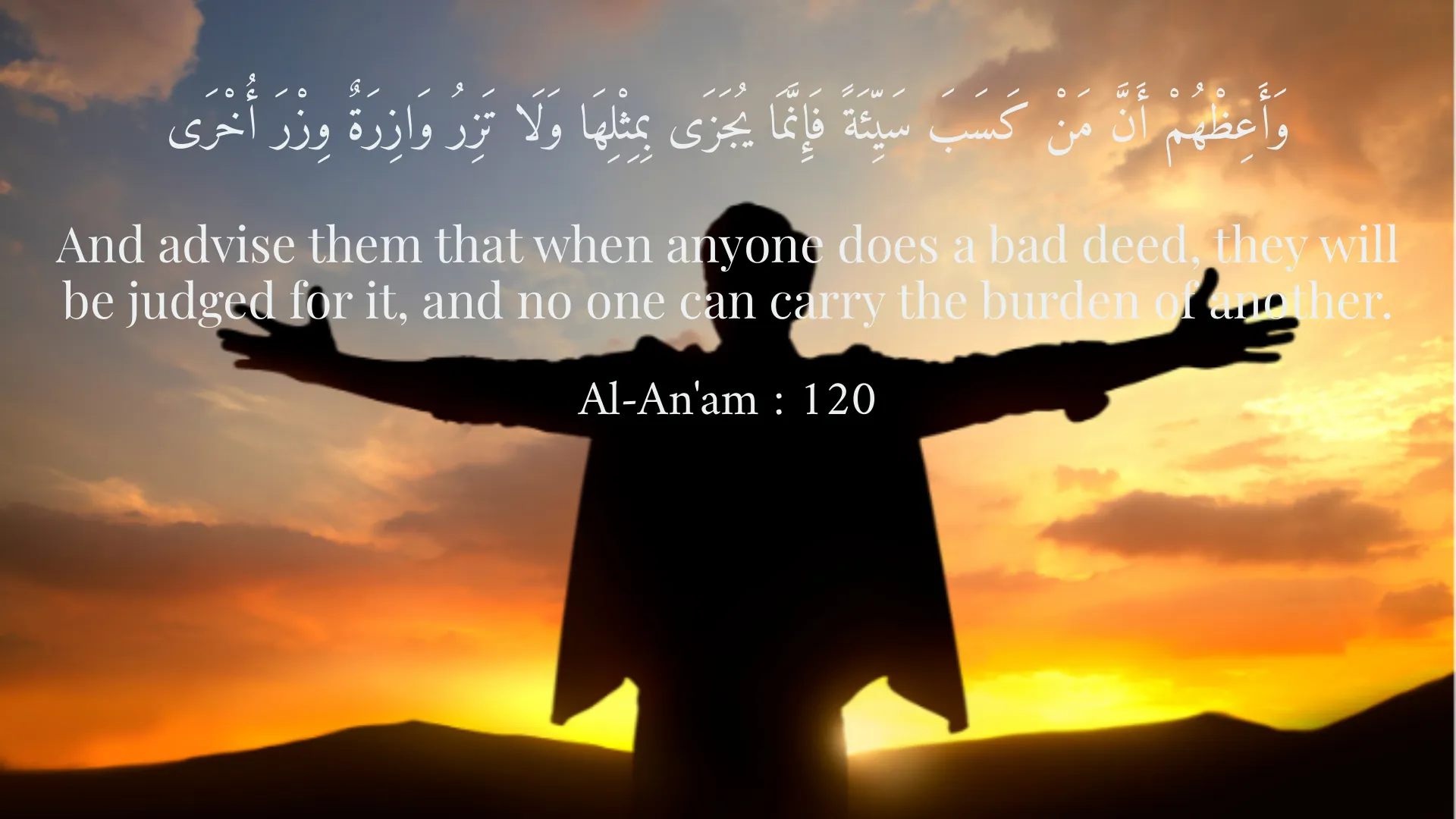
In the Holy Quran, the text serves as both a guide and a warning for believers regarding the implications of sin, even those considered minor. The significance of understanding sin and its consequences is illustrated by various verses, most notably in Surah Al-An'am, verse 120, where Allah states: 'And advise them that when anyone does a bad deed, they will be judged for it, and no one can carry the burden of another.' This verse serves as a sobering reminder that every action, regardless of its magnitude, carries weight in the eyes of Allah, and that accountability is an inherent part of the spiritual journey. The assertion that 'a sin is a sin' underscores the sacred doctrine that no transgression is insignificant or trivial. While it may be easy for individuals to dismiss minor sins as inconsequential, the reality is that these small misdeeds can have ripple effects that lead to larger spiritual dilemmas. The Prophet Muhammad (peace be upon him) also emphasized this principle by stating: 'Avoid small sins, for by avoiding small sins, a person can protect themselves from major sins.' This advice highlights a proactive approach to spiritual health, urging believers to maintain a vigilant awareness of their actions and their potential paths. Understanding the mechanics of sin, especially minor sins, is crucial to preserving one’s faith and relationship with Allah. In addressing the consequences of these small transgressions, it is essential to recognize that they often act as gateways to greater sins. Each time a minor sin is committed without reflection or remorse, the barrier to committing more egregious sins becomes lower. Thus, by neglecting these small issues in our spiritual lives, we inadvertently open ourselves up to significant spiritual harm. Verse 53 of Surah Al-Zumar reiterates this theme of accountability and repentance: 'Say, O My servants who have believed! Fear your Lord. For those who do good in this world is good and the earth of Allah is spacious. Indeed, the patient will be given their reward without account.' This verse emphasizes that although minor sins exist, Allah has provided believers with the opportunity for repentance and rectification of their paths. However, this divine mercy does not negate the necessary caution that individuals must exercise in their everyday behaviors. It acts rather as a call to responsibility—encouraging individuals to harness their capabilities to stay true to the moral standards set forth in their faith. One of the pivotal reasons why minor sins should not be disregarded is due to their capacity to corrupt the heart and weaken one’s faith over time. The spiritual journey is not merely about avoiding large sins, but cultivating a state of piety that encompasses the avoidance of all forms of sin. As minor sins accumulate, so does their ability to dull one's sensitivity to wrongdoing, making it easier to commit larger offenses. This slow erosion can lead to a state of spiritual complacency, where the sinner becomes desensitized to the wrongness of their actions, thereby deepening the void in their relationship with God. A practical illustration of this concept can be observed in daily life. When individuals justify minor lapses in judgment—whether it be a small lie, gossiping, or neglecting a prayer—over time, such actions can accumulate, clouding one's moral judgment and leading to a more habitual state of disobedience. This accumulation can result in a disconnect from one’s spiritual core, leaving individuals vulnerable to larger transgressions that can be devastating to their faith. The teachings of the Quran and the hadith encourage believers to be vigilant and proactive in their spiritual lives. The consequences of even the smallest sins serve as a reminder that maintaining one’s faith requires diligence and reflection. Engaging in self-assessment is crucial; by regularly evaluating one’s actions and their alignment with Islamic teachings, believers can more readily identify and eliminate even the minor sins that threaten their spiritual well-being. Moreover, there is a profound relationship between minor sins and spiritual awareness. An individual who actively seeks to avoid minor sins tends to develop a heightened sense of consciousness regarding their actions, fostering an environment where sin is less likely to thrive. This proactive approach promotes accountability, reflection, and an enduring commitment to self-improvement. A community-centric approach can also be influential in addressing the implications of minor sins. Engaging in discussions around the impact of sin—whether in study circles, community meetings, or religious sermons—can play a vital role in nurturing a conscientious attitude towards one’s actions. In emphasizing collective awareness and responsibility, community members can encourage one another to hold each other accountable, ultimately leading to a purer environment rich with spiritual growth and resilience against the lure of sin. In conclusion, the warnings regarding minor sins in the Holy Quran are significant and profound. They call upon believers to cultivate a mindset characterized by vigilance and reflection regarding their actions, regardless of their perceived severity. The passages emphasize personal responsibility, the potential for corruption within the heart, and the vital nature of repentance, guiding individuals on their spiritual journeys. It is a reminder that every act—whether great or small—matters in the scope of one’s faith and relationship with Allah. By nurturing an awareness of even the slightest misdeeds, one can safeguard not only their spiritual integrity but also foster a deeper connection with the Divine. Ultimately, the principle that no sin is too minor serves as a cornerstone for a life lived in true submission and devotion.
Related Verses
وَأَعِظْهُمْ أَنَّ مَنْ كَسَبَ سَيِّئَةً فَإِنَّمَا يُجَزَى بِمِثْلِهَا وَلَا تَزِرُ وَازِرَةٌ وِزْرَ أُخْرَى
And advise them that when anyone does a bad deed, they will be judged for it, and no one can carry the burden of another.
Al-An'am : 120
قُلْ يَا عِبَادِيَ الَّذِينَ آمَنتُمْ اتَّقُوا رَبَّكُمْ لِلَّذِينَ أَحْسَنُوا فِي هَذِهِ الدُّنْيَا حَسَنَةٌ وَأَرْضُ اللَّهِ وَاسِعَةٌ إِنَّمَا يُوَفَّى الصَّابِرُونَ أَجْرَهُمْ بِغَيْرِ حِسَابٍ
Say, O My servants who have believed! Fear your Lord. For those who do good in this world is good and the earth of Allah is spacious. Indeed, the patient will be given their reward without account.
Az-Zumar : 53
Short Story
One day, a young man named Salim felt troubled because of a minor sin he had committed. He recalled the verses of the Quran and realized that every sin, big or small, could affect his soul. Salim decided to compensate for that sin by helping others every day, and through repentance, he sought to relieve himself from the burden of that sin. Not only did he feel better with this act, but it also strengthened his connection with God.