Quranic Answer
The Holy Quran is a profound source of guidance not only for the spiritual life of Muslims but also for their worldly conduct, including the essential relationship between humans and the environment. The text of the Quran explicitly acknowledges the value and importance of nature and the environment, underscoring the crucial role that the natural world plays in the lives of all beings. As environmental concerns have become increasingly urgent in modern society, many are turning back to these ancient texts to seek wisdom on how to live harmoniously with the Earth. One of the core teachings of the Quran is the emphasis on God's creation. This concept is rooted in the belief that everything in the universe is interconnected, and that humans have a significant responsibility to ensure the sustainability of the world around them. In Surah Al-An'am, verse 38, it is stated: 'And there is no creature on [or within] the earth, nor a bird that flies with its wings, except [that they are] communities like you.' This verse reflects a beautiful vision of life — a tapestry woven from diverse life forms, all equally deserving of respect and protection. It reminds us that we share the planet with countless other creatures, each with its role in the ecological framework. The significance that Allah has granted to living creatures indicates that all are part of a life cycle that demands our careful stewardship. The Quran positions Muslims as stewards (khalifah) of the Earth, giving them a sacred duty to preserve the environment. In Surah Al-Baqarah, verse 205, it states: 'And when you go about in the land, seek the bounty of Allah.' This verse highlights the concept that while natural resources should be utilized for humanity's benefit, this should be done in a responsible manner that does not compromise the ecological balance. It calls upon individuals to seek the bounties of nature, but also to understand that this comes with the responsibility to protect and sustain those resources for future generations. This stewardship implies that humans should act ethically and with care towards the environment. The Quran warns against harmful practices and advocates for sustainable living, highlighting the direct connection between humanity and nature. For instance, overconsumption and wastefulness are condemned, as they not only deplete natural resources but also disrupt the delicate balance of ecosystems. Further, the Quran emphasizes that harming nature may lead to dire consequences for humanity itself, encapsulated in the idea that 'if we harm nature, we are essentially harming ourselves.' This poignant message reinforces the notion that our well-being is inextricably linked to the health of the planet. Nature is depicted in the Quran as a source of life — not just for humans, but for all creatures. The diverse ecosystems provide essential services such as clean air, water, and food, all of which are necessary for survival. The Quran emphasizes gratitude towards these blessings, reminding humanity to appreciate and safeguard the environment. In various verses, Allah calls upon people to observe and reflect on the signs of creation — the heavens, the earth, the mountains, the plants, and the animals. Such reflections deepen the appreciation for the environment and encourage individuals to act in ways that honor these divine creations. In today’s world, where issues such as climate change, pollution, and biodiversity loss are prevalent, the Quran’s teachings on nature take on an even greater significance. Many Muslim communities are increasingly following these principles of environmental stewardship. Initiatives to plant trees, conserve water, and reduce waste are becoming more common as a response to the call of the Quran for responsible management of the Earth. Moreover, Islamic organizations and scholars are actively promoting awareness about environmental issues as a religious and ethical concern. One particularly compelling aspect of the Quran's environmentally conscious teachings is the concept of balance and moderation. In Surah Al-A'raf, verse 31, it emphasizes: 'And eat and drink, but be not excessive. Indeed, He likes not those who commit excess.' This principle of moderation has significant implications for environmental sustainability, teaching individuals to avoid overexploitation of resources. The call for moderation extends beyond the individual level and encourages communities and nations to pursue sustainable development practices that ensure ecological health. Furthermore, Islam's connection to nature is also reflected in the practice of maintaining green spaces, gardens, and parks within urban areas. Prophet Muhammad (peace be upon him) was known for his affection towards nature and encouraged planting trees and caring for the environment. These traditions foster an awareness of the beauty and significance of nature in Muslim culture and promote environmental consciousness. In conclusion, the teachings of the Holy Quran underscore the intrinsic value of nature and emphasize humanity's role as guardians of the Earth. The principles of stewardship, respect, moderation, and gratitude are woven into its verses, providing a spiritual framework for environmental ethics. As we face pressing ecological challenges, returning to these ancient texts can guide us in cultivating a more sustainable future. Each individual has the potential to contribute to the preservation of our planet, creating a legacy of environmental responsibility for generations to come. The Quran not only calls for the protection of the environment but also inspires a profound respect for the interconnectedness of all living beings, urging humanity to act in harmony with the natural world.
Related Verses
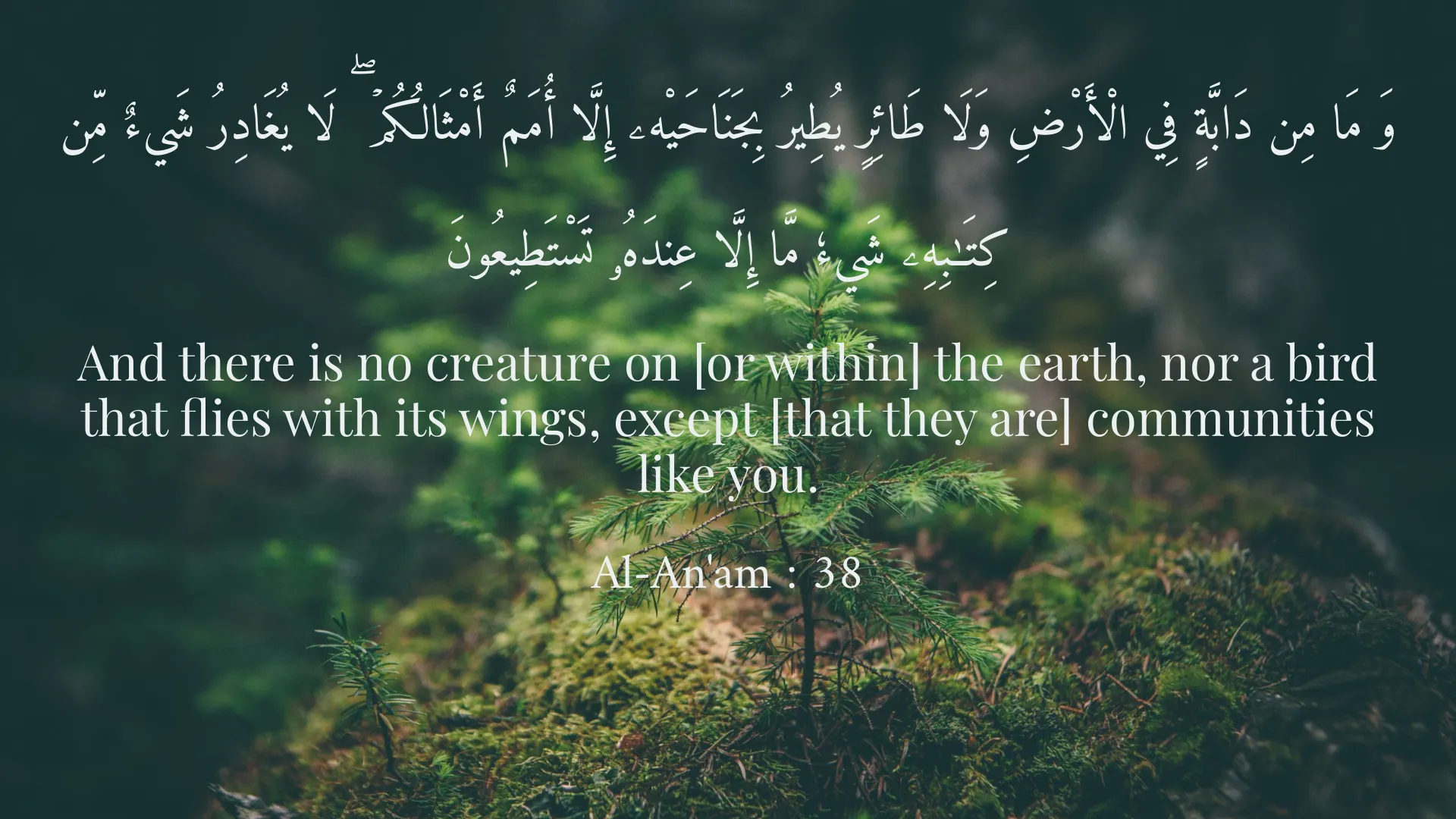
وَ مَا مِن دَابَّةٍ فِي الْأَرْضِ وَلَا طَائِرٍ يُطِيرُ بِجَنَاحَيْهۦ إِلَّا أُمَمٌ أَمْثَالُكُمۡ ۖ لَا يُغَادِرُ شَيءٌ مِّن كِتَـٰبِهِۦ شَيءٗ مَّا إِلَّا عِندَهُۥ تَسْتَطِيعُونَ
And there is no creature on [or within] the earth, nor a bird that flies with its wings, except [that they are] communities like you.
Al-An'am : 38
وَإِذَا حَلَلْتُم بِأَرْضٍ فَابْتَغُوا فِي الْأَرْضِ مِنْ فَضْلِ اللَّـهِ
And when you go about in the land, seek the bounty of Allah.
Al-Baqarah : 205
Short Story
One day, Ali was sitting in a park, admiring the beauty of the trees and flowers. He recalled the verses of the Quran and decided that he must help keep this beautiful nature preserved. Ali began to collect trash from the park and encouraged others to join him. He realized that each of us is responsible for protecting nature and that through such efforts, we can make the world a better place for future generations.